

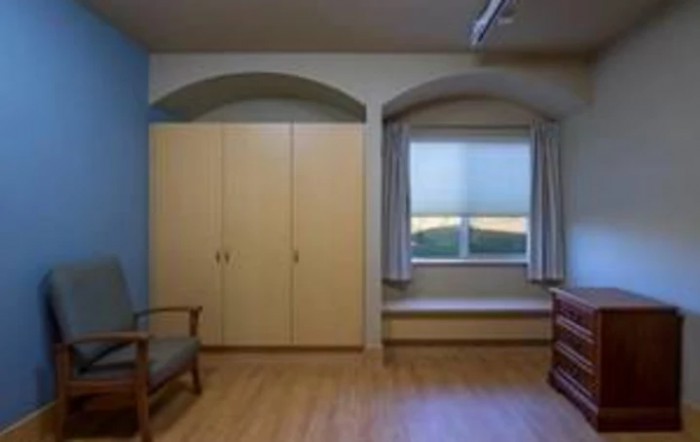


920 Compassion Circle, Anchorage, AK 99504
For more information about senior living options: (866) 208-4318
Overall Review of Providence Extended Care
Pros
 They love Providence Extended Care; it is very nice and neat.
- The services and facility are the best.
- They highly recommend Providence Extended Care.
Cons
 Things had changed and many services were lacking during the reviewer's stay.
- The reviewer described the facility as a very bad place to have one’s parents.
- Staff denied the reviewer access to his mother.
- Police were called on the reviewer, who says he never did anything wrong.
- The reviewer stated that he was not a criminal and sought an explanation of any alleged infraction.
- The reviewer felt ashamed and criticized the staff for mistreating families, saying such employees should not work in such a facility.
Review
Providence Extended Care in Anchorage is best suited for families seeking a clean, well-maintained environment with solid daily care and a facility that feels orderly and welcoming. The campus earns praise for its neat appearance and the impression that residents receive attentive routine services when operations run smoothly. The property has undergone a recent ownership change, now operating under the Polaris Transitional and Extended Care banner, and that transition is a notable backdrop for the current experience. For families who value appearance, predictable housekeeping, and basic medical and personal care, this community often checks important boxes.
Those weighing alternatives should consider whether steady administration and dependable family access are non-negotiable priorities. The experiences tied to management and staff interactions vary: some residents report a well-run environment, while others encounter friction over visitation and perceived responsiveness. If the plan hinges on consistent, respectful engagement with staff and administrators, or if family involvement is central to care decisions, it is prudent to explore other options or demand clear, documented visitation policies and a direct point of contact on the campus.
From a pro standpoint, the strongest threads describe a facility that is physically appealing and capable of delivering solid services. A resident, who expressed strong satisfaction, called it “very nice and neat” with “the services and facility the best,” and several reviewers echo that higher-tier quality. In practice, this translates into well-kept common areas, clean rooms or apartments, and routine care that meets basic expectations. When operations align with staff competency and administration, residents benefit from a seemingly smooth daily rhythm, and families gain confidence from visible pride in the environment.
However, the strongest counterpoint comes from a reported experience that raises red flags about access and respect. A reviewer described being denied by staff from visiting a mother, followed by police involvement and a sense of shame directed at the facility’s personnel. That account highlights real risk in how policies are implemented and how family voices are treated. It also underscores how quickly a well-regarded, pleasant setting can feel alienating if visitation rules are applied inconsistently or if communication with families breaks down. These episodes do not appear universal, but they are consequential enough to demand scrutiny.
Practically, this means decisions should weigh the likelihood of a high-quality physical environment against the possibility of policy friction or care gaps tied to ownership changes. Prospective residents should insist on current, written visitation guidelines, ask for a direct contact in administration for family concerns, and request a candid discussion about staffing stability and turnover. Tours should probe how care plans are customized, how often nurses or aides rotate, and what happens when family involvement is critical to decision-making. For families in Alaska, the choice may hinge on whether proximity to a polished campus and routine services justifies the potential risk of encounter-level disputes.
In sum, Providence Extended Care provides a compelling option for seniors who prize a tidy, well-run setting and reliable daily care, with positive experiences strongly indicating this is a capable community when management and staff function smoothly. The strong caveats center on ownership-related shifts and the possibility of punitive or opaque visitation practices that can erode trust. If these concerns cannot be addressed to the family’s satisfaction, exploring alternatives with clearer policies, steadier governance, and consistently compassionate family engagement is warranted. For many, this community remains a worthwhile fit with the right administrative alignment and proactive communication.
 96 resident community capacity
 Skilled Nursing Facility
 Air-conditioning
 Beauty salon
 Cable or satellite TV
 Computer center
 Dining room
 Fitness room
 Fully furnished
 Gaming room
 Garden
 Housekeeping services
 Kitchenette
 Move-in coordination
 Outdoor space
 Private bathrooms
 Restaurant-style dining
 Small library
 Telephone
 Wellness center
 Wi-Fi/high-speed internet available
 Ted Stevens Anchorage International (8 miles away)
 Community operated transportation
 12-16 hour nursing
 24-hour call system
 Activities of daily living assistance
 Assistance with bathing
 Assistance with dressing
 Assistance with transfers
 Diabetes diet
 Medication management
 Mental wellness program
 Special dietary restrictions
 Concierge services
 Planned day trips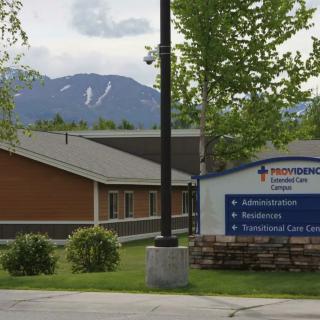


 Comprehensive Insights and Practical Strategies to Help Older Adults Avoid Falls
 6 Crucial Ways an Elder Law Attorney Assists Families
 Navigating the Tax Landscape of Caregiving: Credits, Deductions, and Beyond