For more information about senior living options: (866) 208-4318
3 from 114 reviews
5 stars
34
4 stars
18
3 stars
11
2 stars
12
1 stars
39
Shining Starr Costs & Pricing
Shining Starr offers competitive pricing for its various room types, positioning itself well within the local market. For a semi-private room, the cost is approximately $3,500 per month, slightly higher than Putnam County's average of $3,366 but lower than the state average of $3,683. Studio apartments are priced at $4,000, which is closely aligned with Putnam County's average of $4,062 and more favorable than the West Virginia average of $4,207. The price remains consistent for one-bedroom units as well, with Shining Starr offering them at $4,000 compared to Putnam County's higher rate of $4,301 but below West Virginia's average of $4,017. In terms of private rooms, Shining Starr offers a cost-effective option at $4,000 compared to both county and state averages - $4,100 and $4,794 respectively. Overall, Shining Starr demonstrates a balance between affordability and quality care in comparison to regional competitors.
Floor plans
Shining Starr
Putnam County
West Virginia
Semi-Private
$3,500
$3,366
$3,683
Studio
$4,000
$4,062
$4,207
1 Bedroom
$4,000
$4,301
$4,017
Private
$4,000
$4,100
$4,794
Memory care communities with a similar price nearby
Residents describe staff members as friendly and courteous.
Across multiple reviews, people call out the friendliness and helpfulness of the staff during check-in, unloading, or while getting instructions. Even some low-star reviews still mention that the staff were nice, even when other parts of the experience were frustrating. The consistent takeaway is that communication and day-of help are a bright spot for residents and visitors.
caveat10 reviews mention this
Getting there is stressful
Access and navigation are recurring pain points for people visiting the community.
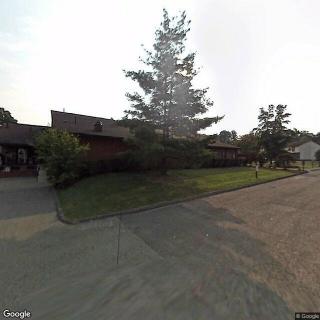
Several reviews say the directions can be difficult, with warnings about not trusting GPS and needing to follow specific entry steps. Others mention the community sits in a residential area with narrow roads and constant traffic, making it harder to approach and line up. While some reviews say it is manageable with the right route, the challenge of finding and entering the location shows up repeatedly.
caveat8 reviews mention this
Overnight parking is a limitation
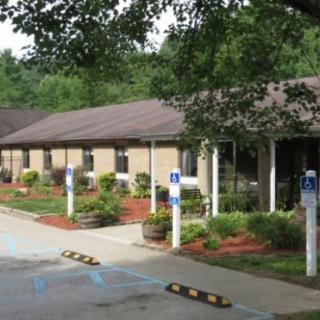
Overnight parking is repeatedly called out as unavailable or very limited.
Multiple reviews explicitly mention no overnight parking, and some add that there is limited staging space. Others describe needing to plan arrival around the posted constraints because long waits can happen after check-in. Overall, reviewers frame parking availability as a constraint that affects planning before coming.
caveat9 reviews mention this
Wait times and slow unloading
Many reviews report long waits during unloading and paperwork.
A recurring complaint is that unloading and release take longer than expected, including reviews citing several hours on the dock. Some people also mention paperwork delays that extend the total time spent after arrival. At the same time, a minority of reviews describe faster in-and-out experiences, which is why timing seems to vary depending on the visit.
How we summarize
Counts show how many written reviews mention each theme; a review can touch several themes, and only frequently mentioned themes are displayed.
Features
Types of Care
Board and Care Home
Memory Care
Amenities
Activities on-site
Devotional services off-site
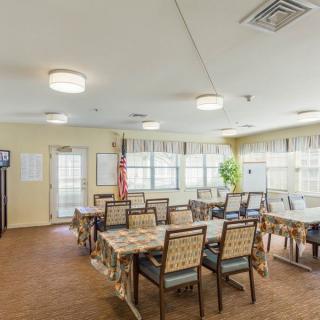
Indoor common areas
Private
Transportation
Yeager (23 miles away)
Care Services
Ambulatory care
Diabetic care
Incontinence care
Medication management
Dining
Meals provided
Activities
Activities on-site
Devotional activities offsite
Nearby Places of Interest
This part of Hurricane, West Virginia, offers a convenient location with various amenities nearby. There are several pharmacies within a short distance, making it easy to access necessary medications and healthcare supplies. In terms of transportation, there are rental car options available close by. Additionally, there is a diverse selection of restaurants in the area, providing plenty of dining choices. For outdoor recreation, there are parks nearby for leisurely walks or picnics. The presence of medical facilities and places of worship offers peace of mind for seniors looking to settle in the area. Overall, this neighborhood provides a mix of convenience and community resources that may be appealing for senior living considerations.
Pharmacies
Fruth Pharmacy (0.4 miles)
Walgreens (0.5 miles)
Walmart Pharmacy (0.7 miles)
Walgreens (3.9 miles)
Fruth Pharmacy (4 miles)
Kroger Pharmacy (4.2 miles)
CVS Pharmacy (6.2 miles)
Transportation
Alamo (0.8 miles)
U-Haul Neighborhood Dealer (2.6 miles)
Enterprise Holdings (4.4 miles)
U-Haul Neighborhood Dealer (6.7 miles)
Restaurants
Farley's Famous Hot Dogs (0.8 miles)
Whiskey Taco (1.4 miles)
Serendipity Cupcake Boutique (1.8 miles)
Teays Valley Subway (3.7 miles)
FireSide Grille (4 miles)
Tudor's Biscuit World (4 miles)
Fat Patty's (4.1 miles)
Parks
Valley Park (1 miles)
Valley Park Splash Park (1.5 miles)
Eleanor Park (8 miles)
Physicians
Dri-Powr Products (1.1 miles)
The Eye Associates (1.9 miles)
Harvey Family Medicine (1.9 miles)
Paul Alex Blair (1.9 miles)
Ratliff David S MD (2.1 miles)
Teays Valley Orthopedic Center (2.2 miles)
Valley Health Huntington (2.4 miles)
Places of Worship
First Baptist Church of Hurricane (1.2 miles)
Church of Jesus Christ of Latter Day Saints (2.9 miles)
First Culloden Missionary Baptist Church (3.3 miles)
Shining Starr offers competitive pricing for its various room types, positioning itself well within the local market. For a semi-private room, the cost is approximately $3,500 per month, slightly higher than Putnam County's average of $3,366 but lower than the state average of $3,683. Studio apartments are priced at $4,000, which is closely aligned with Putnam County's average of $4,062 and more favorable than the West Virginia average of $4,207. The price remains consistent for one-bedroom units as well, with Shining Starr offering them at $4,000 compared to Putnam County's higher rate of $4,301 but below West Virginia's average of $4,017. In terms of private rooms, Shining Starr offers a cost-effective option at $4,000 compared to both county and state averages - $4,100 and $4,794 respectively. Overall, Shining Starr demonstrates a balance between affordability and quality care in comparison to regional competitors.
Medication management ensures that residents receive the correct medications at the right times, which is crucial for maintaining their health and well-being. By carefully monitoring dosages and adherence, staff can prevent potential complications that may arise from missed or incorrect medications, particularly in individuals with cognitive impairments who may struggle to manage their own prescriptions. Incontinence care addresses a significant concern for many individuals with dementia or Alzheimer's disease, as cognitive decline can lead to challenges in recognizing the need for toileting. Providing sensitive and prompt assistance not only maintains dignity but also contributes to physical comfort and hygiene, reducing anxiety and fostering a more secure environment for residents. Together, these features promote a holistic approach to memory care, enhancing the quality of life for those with dementia or Alzheimer's disease.
Nearby Communities
Teays Valley Assisted Living
Hurricane, WV
Small, intimate community with private furnished apartments, 24/7 staff, medication management, nutritious meals (with dietary options), and wellness programs.
Magnolia Assisted Living
Hurricane, WV
3.7 from 3 reviews
Intimate setting with personalized care and comprehensive services.
Putnam Center
Hurricane, WV
4.3 from 81 reviews
Fully furnished apartments with on-site dining, housekeeping, and comprehensive care services.
Teays Valley Assisted Living
Hurricane, WV
3.9 from 7 reviews
Small, intimate assisted living with 24/7 supervision, ADL support, meals, and transport.
Teays Valley Center
Hurricane, WV
4.2 from 126 reviews
Attentive staff, strong rehab support, and clean, comfortable rooms.
Braley Care Homes III
Hurricane, WV
4.8 from 4 reviews
Intimate 16-bed setting with 24/7 supervision, ADL support, meal prep, medication management, and medical transport.
Braley Care Homes II
St. Albans, WV
4.8 from 4 reviews
$3,500 to $4,200 / month
Competitive pricing for private and 1-bedroom options with strong access to nearby healthcare and amenities.
Barboursville Veterans Home
Barboursville, WV
4.2 from 45 reviews
The Village At Riverview
Barboursville, WV
4.3 from 18 reviews
$4,395 to $7,095 / month
Clean, homey community with friendly staff and engaging activities.
VA nursing homes, or Community Living Centers (CLCs), offer tailored long-term care for veterans, featuring medical attention and rehabilitation in a supportive environment. The guide covers facility types, eligibility criteria, financial assistance options, quality of care standards, and alternatives to full-time nursing home placement.
At-home dementia care expenses vary widely based on care levels, location, and caregiver expertise, with monthly costs for home health aides exceeding $4,500 and specialized care potentially surpassing $100,000 annually. While families favor in-home care for its comfort and personalized attention, they must consider financial planning and the challenges of caregiver fatigue.
The article discusses the late stages of dementia, detailing the progression from mild to severe impairment and highlighting key characteristics such as profound cognitive decline and dependency in daily activities. It emphasizes care strategies focused on comfort and dignity, the importance of advance directives, and the emotional support needed for family caregivers facing this challenging journey.
Get PricingAsk A QuestionSchedule A TourContact Senior Advisor
By clicking submit, you agree to our Partner's Terms of Use. You
also consent to receive calls and texts, which may be autodialed, from our Partner. Your consent is not a condition to
using our Partner's service. Please visit our Partner's Privacy Policy for information about their privacy practices.



 Board and Care Home
 Memory Care
 Activities on-site
 Devotional services off-site
 Indoor common areas
 Private
 Yeager (23 miles away)
 Ambulatory care
 Diabetic care
 Incontinence care
 Medication management
 Meals provided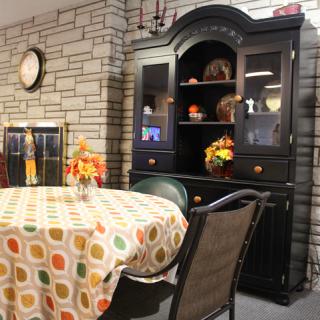
 Small, intimate community with private furnished apartments, 24/7 staff, medication management, nutritious meals (with dietary options), and wellness programs.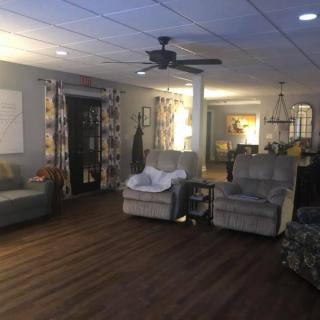

 Comprehensive Guide to VA Nursing Homes: A Crucial Long-Term Care Resource for Veterans
 Estimating the Expenses of At-Home Dementia Care: A Detailed Exploration
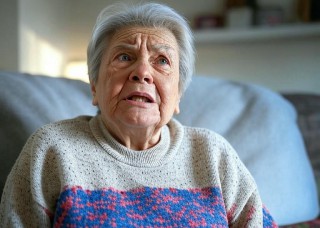 Comprehensive Insights on the Late Stages of Dementia: What to Expect and How to Provide Care