
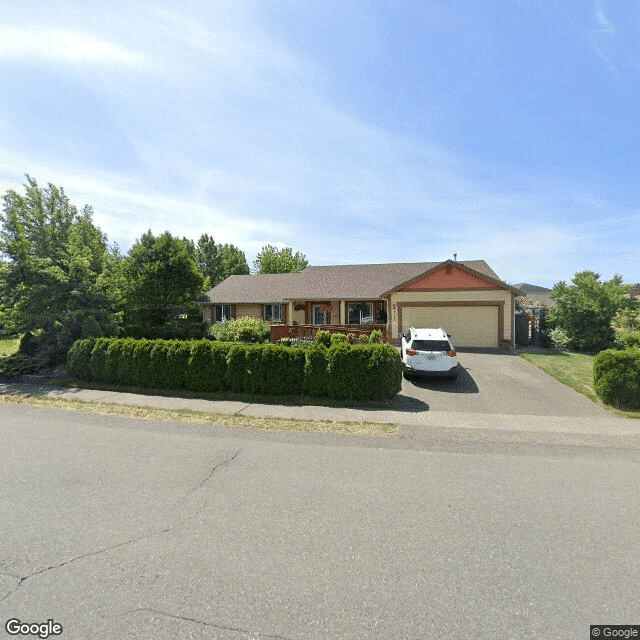
1015 Rockcress Drive SE, Olympia, WA 98513
To contact a resident: (360) 459-4264
For more information about senior living options: (866) 208-4318
Santo Nino AFH Costs & Pricing
Santo Nino AFH offers competitive pricing for its residential care services, with monthly costs that are generally more affordable than both Thurston County and state averages for similar facilities. For those considering semi-private accommodations, Santo Nino's fee of $3,500 is significantly lower than the county's average of $4,280 and the statewide figure of $4,267. When it comes to private rooms and one-bedroom units, Santo Nino maintains a cost of $5,000 for each option; while this aligns with Thurston County's average for private rooms ($4,532), it remains lower than the state average of $4,772. Notably, in terms of one-bedroom units, Santo Nino's pricing is quite reasonable compared to the county's average of $4,085 and the state level of $4,632. Overall, Santo Nino AFH stands out as an appealing choice for families seeking quality care at a more manageable cost.
| Floor plans | Santo Nino AFH | Thurston County | Washington |
|---|---|---|---|
| Semi-Private | $3,500 | $4,280 | $4,272 |
| 1 Bedroom | $5,000 | $4,085 | $4,634 |
| Private | $5,000 | $4,532 | $4,774 |
Memory care communities with a similar price nearby
-
from +$500 / mo

Canterwoods Estate AFH
$4,000 to $5,500 / month4.9 miles away -
About the same

Ahadi Care Adult Family Home
$3,500 to $4,000 / month23.7 miles away -
About the same
Brooks Blessings Adult Family Home
$3,500 to $5,500 / month18.2 miles away -
from -$500 / mo
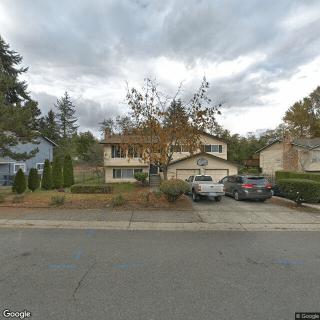
Meridian AFH II
$3,000 to $3,500 / month24.8 miles away -
from -$405 / mo

The Young House
$3,095 to $6,000 / month12.1 miles away
Overall Review of Santo Nino AFH
Pros
 The home is clean.
- A caregiver is on staff full time.
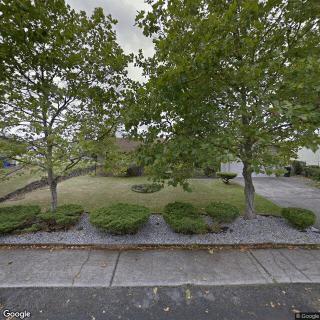
- The grounds are nice.
Cons
 They did not meet Erlinda.
- There were no vacancies.
- The starting rate of $4000 plus level of care is expensive.
Review
Santo Nino AFH in Olympia is best suited for seniors who want a compact, home‑like setting with a consistent caregiver presence and a well‑maintained, comfortable environment. This is a place for residents who value daily routines, personal attention, and a quieter living rhythm over the bustle and breadth of a larger campus. The ownership model, a small operation that also runs another AFH nearby, offers a sense of stability and a ready network if a transition within the same family of homes becomes desirable. For families prioritizing intimate care, predictable housekeeping, and a familiar, human-scale atmosphere, Santo Nino presents a strong fit.
Those needing immediate placement or a broader array of services should consider alternatives. The lack of vacancies means placement is contingent on a future opening, which can prolong uncertainty during a critical transition. The current pricing, around $4,000 per month plus any level-of-care charges, puts Santo Nino at the higher end of private AFH costs. Families weighing options should compare nearby AFHs with openings and larger assisted living communities that can guarantee a room quickly, as well as programs that offer more expansive social or rehabilitative services.
On balance, the core advantages, clean, orderly living spaces, and grounds that feel safe and welcoming, couple with a caregiver on site full time to deliver reliable day-to-day support. The intimate setting often translates into more personalized attention and a quicker, more familiar staff-resident rapport than in bigger facilities. The price reflects the staffing model and the small, controlled environment, so the value rests on the expectation of steady supervision and routine rather than on abundant amenities. The ownership’s dual AFH footprint can be a practical advantage, signaling continuity if a move within the network becomes necessary; yet it does not erase the reality of waiting for a bed.
To decide wisely, families should obtain a clear and current view of the wait times, exact level-of-care requirements, and how rates may evolve as needs change. It is essential to tour the home, meet the caregiving team, and scrutinize daily routines, mealtimes, medication management, and safety protocols. Ask for a transparent fee schedule that excludes hidden charges and clarifies what constitutes a move to the next care tier. Given the ownership structure, request details on transfer options within the network and how continuity of care is managed if a resident’s care needs escalate.
Compared with other Olympia options, Santo Nino’s value hinges on personalization over breadth. For seniors whose families can tolerate a wait and who can justify the premium for a home setting with full‑time staff, the appeal is meaningful: a less institutional feel, greater visibility into staff, and a consistent, small-community atmosphere. For those who require immediate placement, more robust programming, or a lower monthly cost, alternative AFHs or larger campuses may deliver faster admission and a broader slate of services, even if that means trading some of the intimate, homey feel.
In practical terms, Santo Nino AFH is a deliberate, high‑quality waiting‑list option rather than a turnkey solution. It excels for families who can align timing with openings and who value a stabilized, caregiver-forward environment over the speed of placement. It is not the right choice for those chasing aggressive pricing, immediate beds, or expansive activity rosters. The upside, clean living spaces, continuous care, and a stable, nearby owner network, must be weighed against the downside: the inevitability of a vacancy timeline and the premium price. When a bed becomes available, the decision should be guided by whether the resident’s care needs align with the site’s full‑time caregiving model and the comfort of a truly home‑like setting.
 Board and Care Home
 Memory Care
 Activities off-site
 Bath tubs
 Devotional services off-site
 Indoor common areas
 Outdoor common areas
 Private
 Private bathrooms
 Respite or short term stays offered
 Wheelchair accessible showers
 Diabetic care
 High acuity care
 Incontinence care
 Medication management
 Kosher


 When to Transition from Assisted Living to Memory Care: Key Indicators, Steps, and Finding the Right Community
 Understanding the Distinctions: Assisted Living and Memory Care Explained
 How to Communicate with a Loved One Living with Dementia: 10 Supportive Strategies