
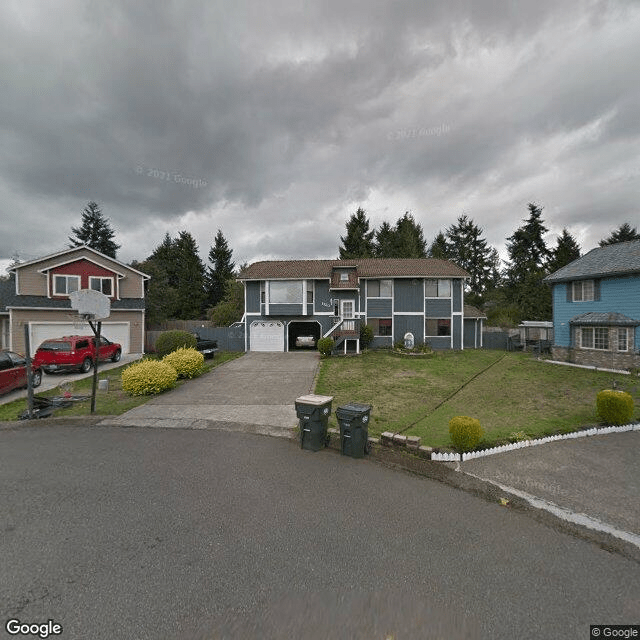
1130 Canna Court SE, Olympia, WA 98513
To contact a resident: (360) 438-1951
For more information about senior living options: (866) 208-4318
Ravancho AFH Costs & Pricing
Ravancho AFH offers a competitive pricing structure for its various room types when compared to the broader costs in Thurston County and the state of Washington. For a semi-private room, Ravancho stands at $4,000 per month, which is notably lower than the county average of $4,280 and the state average of $4,267. When it comes to private accommodations, however, Ravancho's price of $5,500 exceeds both the county's average of $4,532 and the state's average of $4,772. Additionally, for those seeking a one-bedroom option, Ravancho's rate of $7,000 significantly surpasses both local and state figures - $4,085 in Thurston County and $4,632 statewide. This pricing analysis highlights that while Ravancho AFH provides an attractive option for semi-private living arrangements, its costs for private and one-bedroom spaces may warrant consideration in relation to available alternatives within the region.
| Floor plans | Ravancho AFH | Thurston County | Washington |
|---|---|---|---|
| Semi-Private | $4,000 | $4,280 | $4,272 |
| Private | $5,500 | $4,532 | $4,774 |
| 1 Bedroom | $7,000 | $4,085 | $4,634 |
Memory care communities with a similar price nearby
-
About the same
Canterwoods Estate AFH
$4,000 to $5,500 / month5.1 miles away -
from -$500 / mo

Ahadi Care Adult Family Home
$3,500 to $4,000 / month23.2 miles away -
from -$500 / mo
Brooks Blessings Adult Family Home
$3,500 to $5,500 / month18.6 miles away -
from +$305 / mo
Penrose Harbor at Heron's Key
$4,305 to $7,332 / month21.4 miles away -
from +$200 / mo
The Lodge At Mallard's Landing
$4,200 to $5,500 / month20.4 miles away
Overall Review of Ravancho AFH
Pros
 The caregiver is very experienced at helping families.
- She understands processes, can translate, and helps advocate.
- She cares about the grandmas and grandpas she tends to.
- The house is clean, mom is always clean and presentable, and there is always a helper at hand.
- The staff is very friendly, extremely patient, and well trained.
- The caregiver has a lot of experience in helping people with Alzheimer's.
- Her knowledge and advice have been extremely helpful in decision-making for families.
- The caregiver communicates regularly and mom has regular visitors.
- Everything feels more manageable knowing mom is safe and cared for.
- The facility is clean and feels like a family home; there are no weird smells; there are always staff with the residents.
- Ravancho AFH is enthusiastically recommended to anyone; an incredibly positive experience with exceptional care, warm environment, and a dedicated staff who go above and beyond.
- The home is clean, neat, and the residents look happy.
Cons
 Things are unpredictable and resources are hard to understand.
- The room available is too small but well appointed with an electric recliner and hospital bed.
- Best caregiver fit, very small community space.
- Shared bedroom.
Review
This community is best suited for families seeking Alzheimer’s-focused, highly personalized care in a warm, small-community setting. Ravancho AFH thrives on a homelike atmosphere where residents are known individually, and care teams are deeply experienced with dementia. The environment is clean and presentable, with a steady stream of staff at hand and an emphasis on consistent, meaningful interaction. For families navigating the unpredictable needs of a loved one with memory loss, this is a place that translates complex care decisions into manageable daily routines, while keeping a steady line of communication open.
Those weighing alternatives should consider options if privacy, space, or medical intensity are primary priorities. The lived experience here is intensely intimate, but the available room configuration is limited, with at least one shared bedroom noted as a drawback by families seeking more private accommodations. For residents who require larger private living spaces, or for families who want a facility with broader on-site medical resources, a bigger assisted living or a dedicated memory-care unit may be a more fitting match. Likewise, if ongoing oversight from licensed nursing staff around the clock is essential, it’s prudent to compare how different communities structure medical coverage and on-call arrangements.
The strongest positives center on the staff’s dementia expertise and the personalized, family-like care model. Reviewers repeatedly highlight a caregiver-led approach that is skilled, patient, and intimately attuned to Alzheimer’s needs. The staff’s ability to translate process complexity into clear guidance is a recurring relief for families, accompanied by regular updates and visible advocacy for residents. The home’s cleanliness, the absence of odors, and the impression of safety, along with the presence of staff with residents at all times, combine to reduce family anxiety markedly. Regular visitors, active engagement in outings, and a steady pace of activities contribute to a sense of purpose and normalcy for residents.
These strengths offset the main con of limited physical footprint in several practical ways. The small, intimate setting allows for rapid response to interventions and a high touch level that larger facilities often struggle to sustain. The documented ease of communication with the care team and with the owner-manager means concerns are addressed quickly, decisions are explained, and families feel in the loop. In situations where a loved one requires vigilant supervision, the tight-knit environment can be a protective asset, not a liability. The downside of a compact space is real, but the demonstrated devotion, technique, and hands-on involvement of the caregiver leadership mitigate it by delivering consistency and trust.
From a practical perspective, prospective residents should verify room configurations and privacy options during visits, while weighing the visible benefits of the care model. The consensus in the reviews is that the caregiver’s passion and listening skills translate into high-quality daily life for residents, with aseptic technique and careful attention to health and safety noted as particular strengths. The emphasis on small-group dynamics, frequent family communication, and structured activities, combined with field trips and social engagement, paints a picture of a community where cognitive and emotional well-being are actively supported. For families where those elements matter most, the trade-off on space often feels worthwhile.
Bottom line: Ravancho AFH offers a compelling choice for families prioritizing dementia expertise, a home-like ambiance, and rigorous, caring staff who treat residents as individuals. It is especially well-suited for those who value close family communication and a highly personalized approach over private square footage or the breadth of services found in larger campuses. If privacy, larger rooms, or extensive on-site medical resources are non-negotiable, alternatives should be explored. A visit should be followed by concrete questions about room options, staffing patterns, and how memories are woven into daily activities, so the fit can be confirmed with confidence.
 Board and Care Home
 Memory Care
 Activities off-site
 Bath tubs
 Beautician on-site
 Devotional services off-site
 Indoor common areas
 Outdoor common areas
 Private
 Respite or short term stays offered
 Diabetic care
 High acuity care
 Incontinence care
 Medication management
 Kosher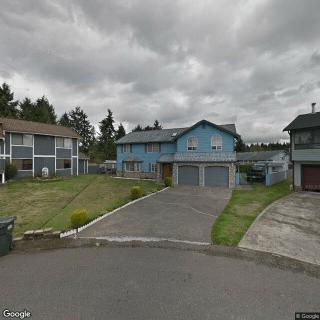

 How and When Medicaid May Cover Assisted Living Costs
 A Detailed Exploration of Assisted Living Medicaid Waivers Across the United States
 Exploring the Contrasts Between Assisted Living and Skilled Nursing