
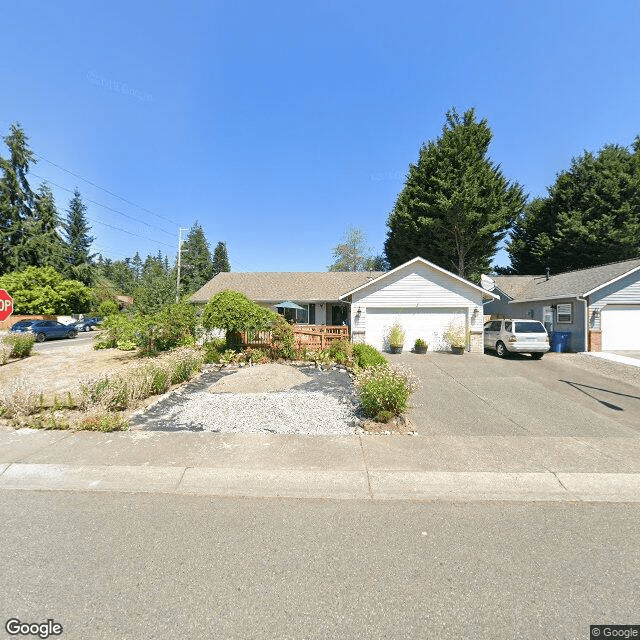
11606 SE 219th Place, Kent, WA 98031
To contact a resident: (253) 631-3663
For more information about senior living options: (866) 208-4318
Golden Angel AFH, LLC Costs & Pricing
Golden Angel AFH, LLC offers a range of accommodation options that are competitively priced when compared to both King County and the broader Washington state averages. For a one-bedroom unit, Golden Angel AFH is priced at $4,800, which is slightly lower than the county average of $5,127 but higher than the state average of $4,632. The semi-private and studio rooms are priced at $5,000 each; these rates exceed the county's averages of $4,430 and $4,464 respectively while still being more attractive than the state averages of $4,267 and $4,126. The private room option stands at $5,500 - this is notably higher than King County's average of $5,034 but still aligns favorably with the statewide average of $4,772. Overall, while some offerings position Golden Angel AFH above local averages, they provide unique value in terms of service quality and care tailored to individual needs.
| Floor plans | Golden Angel AFH, LLC | King County | Washington |
|---|---|---|---|
| 1 Bedroom | $4,800 | $5,127 | $4,634 |
| Semi-Private | $5,000 | $4,430 | $4,272 |
| Studio | $5,000 | $4,464 | $4,128 |
| Private | $5,500 | $5,034 | $4,774 |
Memory care communities with a similar price nearby
-
from +$950 / mo

Fieldstone Rolling Bay and Fieldstone Memory Care
$5,750 to $8,895 / month23.0 miles away -
from +$700 / mo

Twin Lake Adult Family Home
$5,500 to $6,500 / month11.2 miles away -
from -$800 / mo

Riverton Home Care
$4,000 to $5,000 / month6.9 miles away -
from -$800 / mo
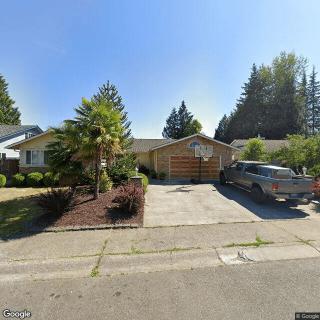
Gentle Care Home
$4,000 to $5,500 / month4.1 miles away -
from +$200 / mo
Peace and Pleasant Care Adult Family Home II
$5,000 to $6,000 / month3.6 miles away
Overall Review of Golden Angel AFH, LLC
Pros
 It is regarded as one of the best AFHs the reviewer has ever seen, with the grandmother receiving the best care any human could give.
- The reviewer offers heartfelt thanks to Golden Wings AFH.
Cons
 They should consider going elsewhere if they care about their loved one’s long-term survival.
- They couldn’t get their mother out fast enough.
Review
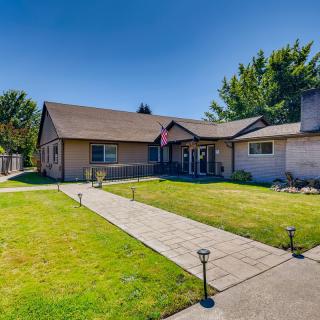
Golden Angel AFH, LLC in Kent, Washington is best suited for families seeking a small, home-like setting where care is intensely personal and day-to-day routines feel like a private household. This community works well for seniors whose health is stable enough to require daily assistance but does not demand constant, high-intensity medical management. It appeals to families that prize warmth, familiarity, and direct access to caregivers who know the resident’s preferences, quirks, and daily rhythm. In such a setting, residents often experience meaningful companionship, a predictable schedule, and a sense of belonging that larger campuses rarely deliver. For those whose loved ones need robust medical oversight, rapid crisis response, or highly structured safety protocols, this option should be evaluated with caution.
Who may want to consider alternatives is clear. For seniors needing frequent physician oversight, complex medication management, or specialized care, such as memory care with secure environments or high-acuity nursing support, the variability suggested by mixed reviews can be a serious drawback. The ratings imply inconsistency in performance across staff and days, and the absence of a broad support network typical of bigger facilities can hinder crisis management. Families facing frequent hospitalizations, significant mobility challenges, or complex care plans should compare with settings that offer on-site nursing staff, routine medical coordination, and formal care pathways. In short, this AFH can work, but not as a substitute for high-need medical care.
On the upside, the strongest appeal lies in individualized attention and a warmth that feels genuine. A reviewer praised the place as among the best AFHs seen, highlighting extraordinary care when staffing aligns. The intimate scale fosters accountability and steady relationships, which often translate into quicker responses to daily concerns and a sense of safety born from familiar faces. Emotional well-being tends to improve when staff know residents well and routines stay consistent. Yet the other side of the coin is real: other voices warn that long-term survival hinges on more formal medical oversight and that transitions or discharges can be abrupt, suggesting potential gaps in safety, continuity, and crisis planning. Those tensions are not hypothetical for families weighing options.
How the positives interact with the negatives matters for decision-making. For residents who primarily need companionship, help with dressing, meal reminders, and light supervision, the strengths, hands-on caregivers, homelike atmosphere, and flexible routines, can significantly elevate daily life and reduce isolation. Those advantages, however, do not fully compensate for limited medical resources or uncertain staffing consistency. The strongest warnings point to safety and reliability concerns: the impression that medical crises may stretch resources, and that planning around transitions may be inefficient. In such cases, a family should demand concrete assurances about medical coordination, emergency procedures, and who takes ownership when rapid decisions are required.
For families weighing this option, a disciplined due-diligence plan is essential. Begin with an in-depth tour, meeting the caregivers and owner, and request current staffing levels, certifications, and any on-site medical support. Seek a written care plan detailing daily routines, medications, and clear emergency steps, plus a transparent discharge policy. Talk with current residents or families about consistency of care and how staff changes affect daily life. Verify licensing status with the state and ask how medical coordination is handled, whether a physician visits, how often, and who oversees medical issues. Finally, compare with larger assisted living or skilled-nursing options in the area to determine which setting best aligns with acuity and safety expectations.
The bottom line is decisive: Golden Angel AFH, LLC can deliver outstanding, person-centered care for residents who fit a low-to-moderate acuity profile and who want a warm, home-like environment with direct caregiver access. It is not a universal fix, and the mixed testimonials warn that long-term safety and reliability should not be assumed. Families prioritizing steady medical oversight, rigorous safety protocols, or highly specialized care should lean toward alternatives with more formal medical structure. When the needs and expectations line up with what a small AFH naturally offers, and when active family oversight is feasible, this community can be a compassionate, worthwhile option worth exploring carefully.
 Board and Care Home
 Memory Care
 Activities off-site
 Bath tubs
 Beautician on-site
 Devotional services off-site
 Indoor common areas
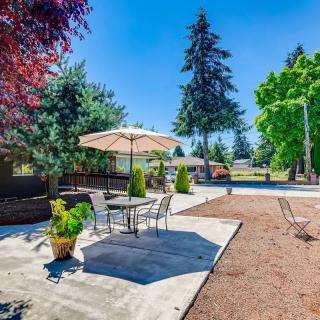
 Outdoor common areas
 Private
 Private bathrooms
 Respite or short term stays offered
 Wheelchair accessible showers
 Seattle-Tacoma International (6 miles away)
 Diabetic care
 High acuity care
 Incontinence care
 Medication management
 Kosher
 Comprehending Evening Confusion in Dementia: Causes, Manifestations, and Support
 Delirium and Dementia: Unraveling the Key Differences
 Are Dementia and Alzheimer's Disease Lethal? A Comprehensive Exploration