
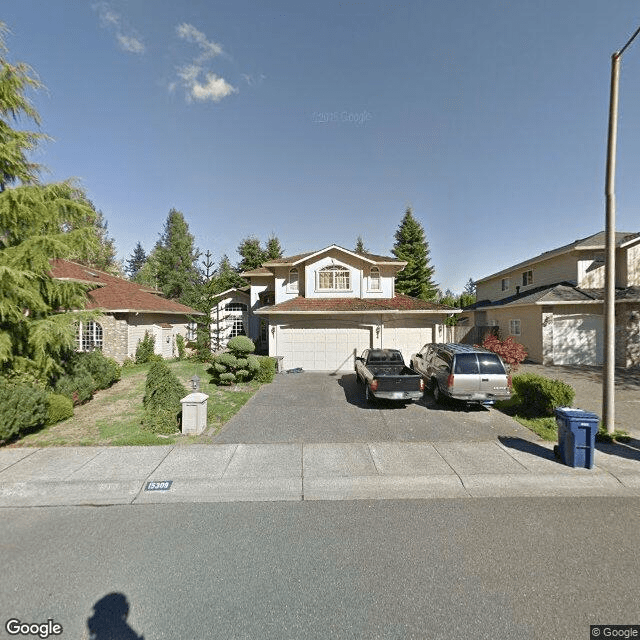
15309 33rd Dr. SE, Mill Creek, WA 98012
To contact a resident: (425) 772-8740
For more information about senior living options: (866) 208-4318
Rose Garden Home Care Inc. Costs & Pricing
Rose Garden Home Care Inc. offers competitive pricing for its services, with monthly costs for private and one-bedroom accommodations both set at $6,000. When compared to average rates in Snohomish County, which are approximately $4,834 for a private room and $5,080 for a one-bedroom, Rose Garden's pricing is notably higher. Similarly, when looking at the broader context of Washington state averages - $4,772 for a private room and $4,632 for a one-bedroom - Rose Garden Home Care Inc. positions itself as a premium service provider in the area. This suggests that clients may be drawn to the unique offerings or quality of care provided by Rose Garden, despite the elevated price point.
| Floor plans | Rose Garden Home Care Inc. | Snohomish County | Washington |
|---|---|---|---|
| Private | $6,000 | $4,834 | $4,774 |
| 1 Bedroom | $6,000 | $5,080 | $4,634 |
Memory care communities with a similar price nearby
-
from +$500 / mo

The Promised Land
$6,500 / month5.9 miles away -
About the same

Home Away From Home LLC
$6,000 to $7,000 / month6.0 miles away -
About the same
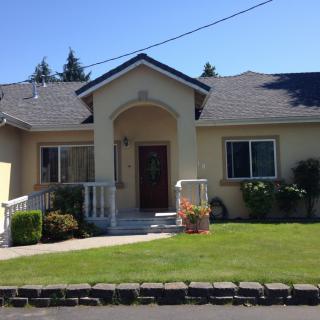
Elderly Home Care
$6,000 to $8,000 / month8.6 miles away -
from -$250 / mo

Fieldstone Rolling Bay and Fieldstone Memory Care
$5,750 to $8,895 / month19.9 miles away -
About the same
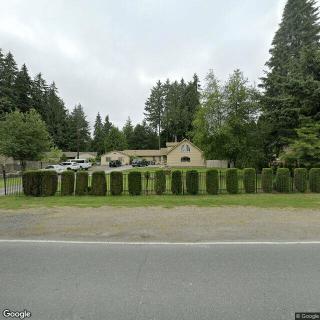
Sunny Side Adult Family Home
$6,000 / month2.3 miles away
Overall Review of Rose Garden Home Care Inc.
Pros
 The home care service is very helpful.
 - The kids love being there.
- The service is friendly and clean.
- Nadia and Leon are energetic and caring people.
- There is definitely a family atmosphere.
Review
Rose Garden Home Care Inc. in Mill Creek is best suited for families seeking a small, home-like care setting where caregivers deliver genuine warmth and close, hands-on attention. The reviews portray a warm, clean environment, with staff who feel like part of a family. Nadia and Leon are highlighted as energetic, caring leaders who set a welcoming daily rhythm. Residents appear comfortable, and family members report real reassurance from the personal connection and regular contact. This is the kind of arrangement that helps seniors avoid the sterile feel of larger campuses while retaining dependable oversight and a sense of belonging.
That said, this option may be less suitable for seniors who require heavy medical oversight, 24/7 supervision, or specialized memory-support services. The publicly available commentary centers on warmth and personal touch rather than institutional-scale amenities, suggesting a lean operation. Families should verify how medications are managed, what level of nursing support exists, and how quickly care plans can adapt to changing needs. For those needing formal structure or on-site professionals around the clock, alternatives such as larger assisted living communities or facilities with dedicated memory care units may be more appropriate.
The strongest advantages, the immediate helpfulness of the care team, the cleanliness and friendliness, and the strong family atmosphere, help offset the potential limitations of a smaller operation. Personal attention reduces stress for relatives and fosters consistency in daily routines, which can be crucial for residents who thrive on predictability. An energetic staff profile signals a culture of engagement, not merely supervision, which tends to translate into more meaningful daily activities and better mood for residents. In short, the human connection is the core asset, and it shows in both how residents appear and how families feel about the arrangement.
However, the limited public detail leaves important questions unanswered. Prospective movers should seek clarity on typical daily schedules, the scope of activities and outings, meal options, transportation arrangements, and what happens after hours. Staffing ratios, training, and backup plans matter, especially when illness or emergencies arise. The lack of explicit information about medical oversight or specialty care means that this setting will likely partner with external professionals rather than provide comprehensive on-site clinical services. Those gaps are precisely why some families prefer a larger operation with built-in medical capabilities.
To determine fit, schedule an in-person visit and observe interactions between caregivers and residents. Ask for a transparent outline of care planning, medication administration procedures, and who is responsible for twenty-four-hour coverage. Request recent references, and discuss pricing, what’s included, what incurs extra charges, and how respite stays are handled. In addition, verify how residents are monitored for changes in health or mood, and how communication with families is handled on an ongoing basis. A clear, proactive plan in these areas is a strong predictor of a smooth transition and ongoing satisfaction.
Overall, Rose Garden Home Care offers a warm, caregiver-driven option that works well for seniors who value a home-like setting and close-knit, responsive support. It shines in creating a trusted environment where families feel connected and residents are treated with personal attention. For families prioritizing a larger campus with extensive on-site medical services, structured programming, or memory-care specialization, alternatives should be pursued. The decision should rest on whether the priority is daily life continuity and emotional comfort, or the certainty of formal medical oversight and broader amenities. In that comparison, Rose Garden stands out as a practical, compassionate first choice.
 Board and Care Home
 Memory Care
 Activities off-site
 Bath tubs
 Beautician on-site
 Devotional services on-site
 Indoor common areas
 Outdoor common areas
 Private
 Private bathrooms
 Respite or short term stays offered
 Wheelchair accessible showers
 Ambulatory care
 Diabetic care
 High acuity care
 Incontinence care
 Medication management
 Meals provided



 Exploring the Contrasts Between Assisted Living and Skilled Nursing
 Vibrant Senior Living: A Comprehensive Guide for Active Older Adults
 Assisted Living and Memory Care: Understanding Their Core Differences