
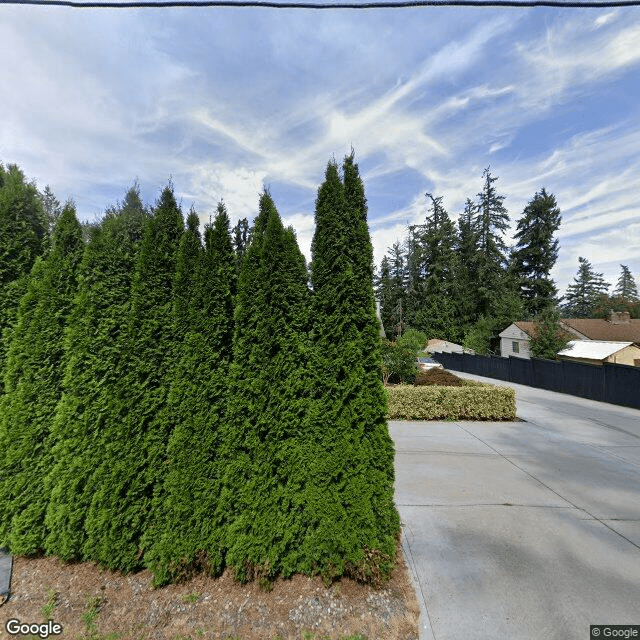
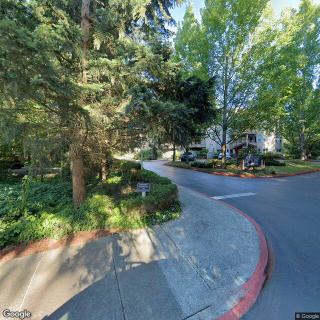
16512 SE Newport Way, Bellevue, WA 98006
To contact a resident: (206) 355-3949
For more information about senior living options: (866) 208-4318
Cascades AFH Costs & Pricing
Cascades AFH offers competitive pricing for its accommodations, with both private and studio rooms priced at $5,000 per month. This cost aligns closely with the average rates in King County, where private rooms are slightly higher at $5,034 but significantly below the statewide average of $4,772. For studio options, Cascades AFH sits above King County's average of $4,464 and Washington state's average of $4,126. Overall, while Cascades AFH's pricing is comparable to local and state averages, it reflects a commitment to providing quality care in a comfortable setting tailored to meet the needs of its residents.
| Floor plans | Cascades AFH | King County | Washington |
|---|---|---|---|
| Private | $5,000 | $5,034 | $4,774 |
| Studio | $5,000 | $4,464 | $4,128 |
Memory care communities with a similar price nearby
-
from +$750 / mo
Fieldstone Rolling Bay and Fieldstone Memory Care
$5,750 to $8,895 / month18.9 miles away -
from +$500 / mo

Twin Lake Adult Family Home
$5,500 to $6,500 / month22.0 miles away -
About the same
Peace and Pleasant Care Adult Family Home II
$5,000 to $6,000 / month14.0 miles away -
from -$500 / mo
A Serenity AFH
$4,500 to $6,000 / month19.4 miles away -
from +$500 / mo
3 Tree Vista Adult Family Home, LLC
$5,500 / month13.8 miles away
Overall Review of Cascades AFH
Pros
 The facility is very clean.
- The staff cater to residents’ needs.
- The resident looks great when visited.
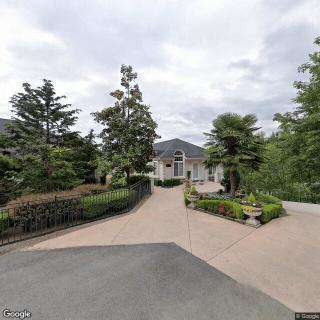
- The house is very nice and has a wonderful view.
- Alina and her family are very caring.
- The service and round-the-clock care are of the highest quality.
Review
Cascades AFH in Bellevue is best suited for families seeking a small, home-like environment where residents receive continuous, personalized attention from live-in caregivers. This is not a big-campus experience but a private-home feel, where cleanliness and comfort are constant expectations and staff become integral to daily life. The strongest case rests on consistent, around-the-clock care delivered in a warm, familial setting. The home’s atmosphere, plus a pleasant view, reinforces the sense that residents are cherished and seen as individuals. For seniors who want transparency, approachable staff, and easy access to caretaking within a straightforward, less institutional environment, this community stands out.
Still, Cascades AFH may not fit every family’s priorities. For those who crave a large social calendar, a broad roster of on-site specialists, or formal memory-care programming, alternatives likely offer more depth in those areas. A larger campus can provide more activities and a wider pool of professionals, which matters when medical needs broaden or when structured engagement becomes a priority. The intimate, family-run model emphasizes continuity and ease of communication, which can feel restrictive for residents who require extensive clinical oversight or a highly varied daily schedule.
On balance, the advantages are concrete and repeatedly demonstrated. The facility’s cleanliness is consistently described as a given, with staff actively catering to individual requests and preferences. Observers note residents, including the reviewer’s father, looking well and engaging well with caregivers, a sign of reliable daily support. The house itself is noted for being pleasant and well-kept, with a view that enhances daily life. The live-in caregivers, Alina and her family, provide round-the-clock care that comes across as high quality and steady, reducing the friction often associated with shift changes and staff turnover. This combination yields a dependable, low-friction caregiving rhythm.
Those strengths offset the typical trade-offs inherent in a small, family-style setting. When care is delivered by a dedicated family team rather than a large staff, communication tends to be clearer, and concerns can be addressed promptly with a personal touch. A constant caregiver presence eliminates gaps that sometimes occur in larger facilities during off-hours. The flip side is a potential limitation in formal amenities, depth of on-site medical resources, and access to specialized professionals. Yet the reviews suggest that care quality remains consistently high, and the intimate environment often compensates for any gaps with accessibility, responsiveness, and a sense of belonging.
Prospective residents should enter with realistic expectations and a plan for what matters most. The best-fit candidates prioritize warmth, straightforward caregiving, and a home-like routine over a busy, institution-like cadence. It’s prudent to verify how memory- or medical-need accommodations are handled and how everyday routines are coordinated with any external medical providers. Meeting Alina and the caregiving team, observing daily interactions, and noting how meals, activities, and emergencies are managed will reveal whether the home atmosphere harmonizes with medical needs. The emphasis on cleanliness, personal attention, and a comfortable, scenic setting is the defining advantage of this community.
In practical terms, Cascades AFH offers a clear, dependable option for families who value intimate care and consistent, personalized attention within a cheerful, tidy home. For those willing to trade a broader activity calendar and expansive clinical resources for a setting that feels like a private residence, with strong family ownership, the choice is compelling. Tours should focus on daily schedules, caregiver coverage, and coordination with external providers. When the goal is stability, warmth, and straightforward, responsive caregiving, Cascades AFH in Bellevue emerges as a confident recommendation, particularly for families seeking a genuinely home-like environment where residents are known well and cared for consistently.
 Board and Care Home
 Memory Care
 Activities on-site
 Air-conditioning
 Beautician on-site
 Indoor common areas
 Outdoor common areas
 Private
 Private bathrooms
 Respite or short term stays offered
 Wheelchair accessible showers
 Wi-Fi/high-speed internet available
 Seattle-Tacoma International (12 miles away)
 Diabetic care
 High acuity care
 Incontinence care
 Medication management
 Anytime dining
 Art classes
 BBQs or picnics
 Birthday parties
 Brain fitness
 Christian services
 Forever fit
 Light therapy programs
 Live musical performances
 Other religious services
 Pet-focused programs
 Stretching classes
 Trivia games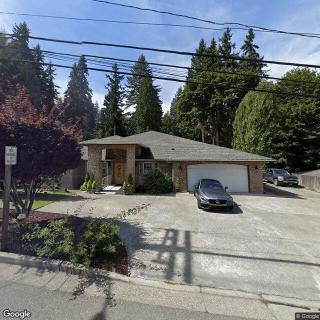
 Understanding Medicaid Coverage for Assisted Living: A Comprehensive Guide
 How and When Medicaid May Cover Assisted Living Costs
 A Detailed Exploration of Assisted Living Medicaid Waivers Across the United States