
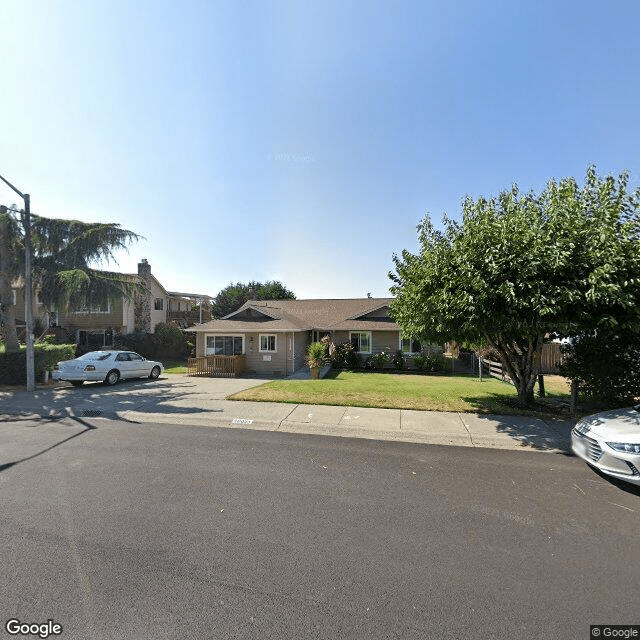
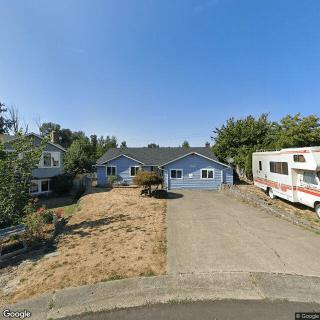
30021 55th Place South, Auburn, WA 98001
To contact a resident: (253) 946-0916
For more information about senior living options: (866) 208-4318
Holmes Sweet Home Care Inc Costs & Pricing
At Holmes Sweet Home Care Inc, the cost for a private room is set at $4,500 per month. When comparing this to the broader market in King County, where private rooms average around $5,034, and across the state of Washington at approximately $4,772, it becomes clear that our pricing is quite competitive. This positions Holmes Sweet Home Care as an attractive option for families seeking quality care without compromising on affordability. We aim to provide exceptional services while keeping costs manageable for our clients, ensuring that they receive both value and comfort in their care environment.
| Floor plans | Holmes Sweet Home Care Inc | King County | Washington |
|---|---|---|---|
| Private | $4,500 | $5,034 | $4,774 |
Memory care communities with a similar price nearby
-
from -$500 / mo

Riverton Home Care
$4,000 to $5,000 / month10.1 miles away -
from -$500 / mo
Gentle Care Home
$4,000 to $5,500 / month10.5 miles away -
from +$500 / mo

Peace and Pleasant Care Adult Family Home II
$5,000 to $6,000 / month4.2 miles away -
from -$195 / mo

Penrose Harbor at Heron's Key
$4,305 to $7,332 / month15.2 miles away -
About the same
A Serenity AFH
$4,500 to $6,000 / month4.4 miles away
Overall Review of Holmes Sweet Home Care Inc
Pros
 They really care about the seniors living in their home.
- It is a great place to bring a loved one.
- The family has cared for a dad for the last three years.
- Daisy and Steve are amazing.
- The caregivers are described as better angels taking care of a dad when the family cannot be there.
Review
Holmes Sweet Home Care Inc in Auburn, WA is best suited for families seeking a small, home-like assisted living where daily care is truly personal and led by a devoted, hands-on family team. The community’s heartbeat comes from Daisy and Steve, whose presence is described as central to residents’ well-being. This is the option for households prioritizing continuity of care, deep familiarity with each resident’s routines, and a setting that feels like a trusted home rather than a detached facility. For seniors who thrive on close relationships with caregivers and a transparent, familial approach to daily life, this is a standout fit.
Those weighing alternatives should consider whether the senior’s needs demand more formal medical support, a larger activity program, or specialized memory-care resources. If the plan requires intensive clinical oversight, busier programming, or higher staffing ratios typical of bigger communities, a larger or more facility-centered option may offer clearer advantages. The small-scale, family-run model trades some of that upper-tier clinical infrastructure for warmth and accessibility, which suits residents who value intimate attention over breadth of services.
The primary strengths here are unmistakable: genuine, unwavering care and a sense that the home is truly “for” the residents. Reviews consistently highlight the staff’s compassion, with phrases that convey heartfelt devotion and trust, caregivers described as amazing and as angels by families. This level of personal involvement translates into strong continuity of care, especially for residents who require stable routines and a consistent caregiving voice. The fact that a family has cared for a resident’s parent for years speaks to reliability, trust, and a capacity to adapt to evolving needs without pulling caregivers in and out. Those pros, in practice, counterbalance the absence of an expansive staff or broad programming.
A practical takeaway is that the family-driven model dramatically enhances daily quality of life through responsiveness and personalized attention. When the care plan is implemented by owners who are directly involved, there is less friction between family expectations and caregiver actions, fewer handoffs, and more opportunities to tailor meals, activities, and routines to a resident’s preferences. The trade-off is that some families may encounter limitations common to smaller homes: fewer specialized therapists on-site, a leaner activity calendar, and less formalized medical programming. A four-star reviewer hints at minor trade-offs that come with any intimate setting, but the overall experience remains overwhelmingly positive and consistent with a high level of trust in daily operations.
From a staffing and governance perspective, the appeal rests on direct oversight by Daisy and Steve. This is not a corporate or impersonal environment; decisions feel nimble, with caregivers who know the residents’ histories and who can adjust care without navigating layers of administration. Families often value this immediacy, the sense that leadership is accessible, accountable, and personally invested in each resident’s well-being. Such dynamics foster a strong safety net for daily living, enabling quick adjustments in response to medical changes, dietary preferences, or social needs.
In daily life, the environment supports stability and belonging. The home-like setting, coupled with long-tenured relationships and consistent caregiving staff, provides a comforting rhythm: familiar faces, predictable routines, and the freedom to maintain cherished habits. The real-world impact is measurable: residents who have spent years under this care can settle into a routine with confidence, reducing anxiety and disorientation often associated with transitions. For families, the reassurance of a stable, supportive home atmosphere, where emotional warmth and practical help go hand in hand, has tangible value when evaluating next steps.
The bottom-line decision hinges on prioritizing warmth and continuity versus breadth of medical services. Holmes Sweet Home Care Inc excels for seniors who value intimate, family-led care, personalized attention, and a home environment that treats residents as members of a trusted family. It is a natural fit for those who want dependable, one-on-one engagement and are comfortable with a smaller scale. For families seeking robust medical programming, extensive memory-care resources, or a large-range activity slate, alternatives with more formalized clinical supports and higher staffing ratios should be explored. The right choice will align the senior’s medical needs, preferred daily rhythm, and family tolerance for scale with the demonstrated strength of a devoted, hands-on caregiving team.
 Board and Care Home
 Memory Care
 Cats allowed
 Activities off-site
 Beautician on-site
 Devotional services off-site
 Indoor common areas
 Outdoor common areas
 Private
 Respite or short term stays offered
 Wheelchair accessible showers
 Seattle-Tacoma International (8 miles away)
 Diabetic care
 High acuity care
 Incontinence care
 Medication management
 Kosher



 An In-Depth Look at Reminiscence Therapy in Dementia Care
 Dementia-Related Hallucinations: Causes, Experiences, and Practical Approaches
 Illuminating Insights About Alzheimer's Disease: Ten Crucial Realities