

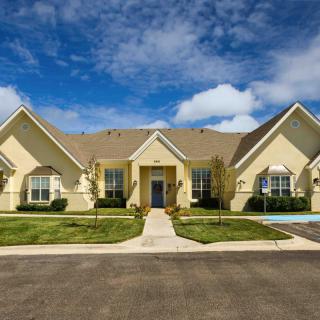
928 Westwood Drive, Amarillo, TX 79124
To contact a resident: (806) 418-4320
For more information about senior living options: (866) 208-4318
Goodlife Senior Living - Amarillo Costs & Pricing
Goodlife Senior Living in Amarillo offers a competitive monthly rate for private accommodations at $3,200, significantly lower than the average costs in Randall County, which stand at $6,240 per month, and also more affordable than the statewide average of $4,096. This pricing reflects Goodlife's commitment to providing quality care and comfortable living options tailored to seniors without imposing excessive financial burdens. By choosing Goodlife Senior Living, residents can benefit from a supportive community environment while enjoying substantial savings compared to other local and state facilities.
| Floor plans | Goodlife Senior Living - Amarillo | Randall County | Texas |
|---|---|---|---|
| Private | $3,200 | $6,240 | $4,096 |
Memory care communities with a similar price nearby
-
from +$495 / mo

The Legacy at Town Square
$3,695 to $4,695 / month10.6 miles away -
from -$105 / mo

Heartis Amarillo
$3,095 / month1.9 miles away -
from -$105 / mo

Bristol Park at Amarillo
$3,095 to $4,925 / month1.8 miles away -
from +$205 / mo

The Reserve At Amarillo
$3,405 to $4,500 / month5.0 miles away -
from -$375 / mo

The Craig Senior Living, A Full Service Retirement Campus
$2,825 to $3,860 / month0.9 miles away
Overall Review of Goodlife Senior Living - Amarillo
Pros
 The cook seemed very nice.
- The cook cared about the residents.
- Goodlife provides the best resident-focused care and the extra love, time, and compassion families should expect in senior living.
- The tour with Goodlife Senior Living was really good.
- The community was great.
- The people there were very sweet.
- The staff provided care and love to the mom.
- Mackenzie, the administrator, is an amazing person.
Cons
 The caregivers were on the phone and not professional.
- Some residents didn’t seem well cared for, and the food was served in small portions and cold.
- The administration seemed to care only about money.
- The reviewer described it as the worst place to put loved ones, noting the morning staff were horrible with residents and the manager knows but does nothing about it.
- The facility felt more like a nursing home than an assisted living community.
- The reviewer knew quickly that it wasn’t where their mom would have wanted to be and would have gone elsewhere.
Review
Goodlife Senior Living in Amarillo is best suited for families that prize a warm, caregiver-driven environment where staff invest real time, attention, and compassion in daily care. The strongest fit is for residents who respond to personal connections and consistent, hands-on interaction from a team that will go above and beyond, including extended hours when a loved one is near the end of life or requires steady, patient guidance. In such settings, the tone from leadership and front-line staff can make a meaningful difference in everyday comfort and continuity of care. It is not the right choice for families chasing a luxury, hotel-like atmosphere or for those who need a facility with a dedicated, memory-care-only program.
Alternatives are worth considering for several reasons. If memory care is the central need, look for a community that explicitly centers memory-impaired residents and has a proven track record in that specialized area. For families seeking a high-end, upscale environment, think premium dining, boutique accommodations, and a more polished ambience, other properties may better meet those expectations. For immediate placement, the current reality of openings matters; this facility has noted limited availability, which can push families toward options with sooner admission. In short, those prioritizing a highly clinical memory program, luxury surroundings, or rapid move-in should press farther along the landscape of senior living.
The positives at Goodlife are grounded in staff depth and genuine care. Reviewers repeatedly highlight a resident-focused ethos, with staff who demonstrate extra love, time, and compassion. Administrators, especially Mackenzie, are singled out for their commitment, sometimes staying with residents late, offering comfort to families, and stepping in beyond standard hours when needed. Several accounts describe an "awesome crew" that works to support residents through difficult behaviors with a blend of firmness and warmth. When the culture aligns with a family’s hopes for daily kindness and consistent contact, these strengths can translate into meaningful quality of life and reassurance for loved ones who require careful, attentive oversight.
Yet, concerns surface that temper the overall impression. A number of reviews paint a picture of uneven experiences: caregivers appearing distracted or unprofessional at times, residents not always receiving consistently attentive care, and food service, particularly portion sizes and temperature, falling short of expectations. There are mentions of administration being perceived as money-focused, which can erode trust during the admission process or ongoing engagement. Several observers describe the setting as more like a nursing home than an assisted living community, which matters for families seeking independence, activity variety, and a more vibrant ambiance. Additionally, the reality that openings may be scarce complicates decisions for families with urgent timelines.
Those tensions force a clear synthesis: the strongest argument in favor of Goodlife rests on the depth of personal care when staff are present and engaged, reinforced by leadership that demonstrates real commitment to residents and families. The most significant drawbacks are operational and perceptual, consistency in daily care, dining quality, and a business-like cadence from administration that can feel misaligned with the intimate, home-like care families expect in assisted living. When these gaps align with a need for immediate placement or a truly luxury-level experience, the cons increasingly outweigh the pros. For memory-care-focused needs, the absence of a clearly defined memory program is a critical misalignment.
The practical takeaway is decisive. If choosing Goodlife, supervisors should insist on an intimate, current read of daily staffing, preferably observing shifts across mornings, afternoons, and evenings, and speak with front-line caregivers, not just administrators. Request a recent menu and sample meal service to assess whether dining meets expectations, and probe how care plans adapt when transitions or behaviors change. For families exploring options, compare memory-care offerings side by side, review vacancy timelines, and assess whether the perceived warmth is consistent across several staff members and days. In the end, Goodlife can be a strong match for those who value authentic, person-centered care delivered by a devoted team, but it demands careful qualification against luxury expectations, memory-care specificity, and admission practicality.
 Board and Care Home
 Memory Care
 Activities on-site
 Beautician on-site
 Devotional services on-site
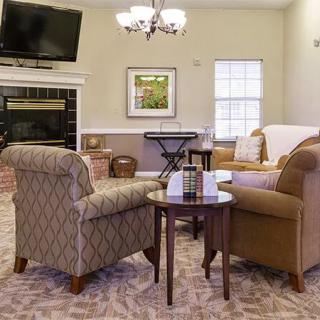
 Indoor common areas
 Outdoor common areas
 Private
 Private bathrooms
 Respite or short term stays offered
 Wheelchair accessible showers
 Amarillo International (11 miles away)
 Ambulatory care
 Diabetic care
 High acuity care
 Incontinence care
 Medication management
 Meals provided






 Guiding Your Journey: Understanding Power of Attorney for Elderly Parents
 22 Remarkable Caregiver Support Groups Available Online and In-Person
 Understanding Medicaid Coverage for Assisted Living: A Comprehensive Guide