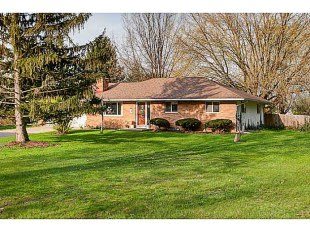


6227 Harlem Road, New Albany, OH 43054
To contact a resident: (614) 381-9665
For more information about senior living options: (866) 208-4318
Our Family Home at Harlem Rd Costs & Pricing
At Our Family Home at Harlem Rd, the monthly costs for accommodations present a competitive option in comparison to the broader Licking County and Ohio averages. The private room rate of $4,000 stands favorably against the county's average of $4,855 and Ohio's average of $4,771, providing residents with an appealing choice that emphasizes both comfort and affordability. In contrast, the 1-bedroom suite is priced at $7,350, which significantly exceeds both local and state averages of $3,361 and $3,712 respectively. This higher cost may reflect added amenities or services offered at Our Family Home that appeal to specific resident needs. Overall, while private rooms offer excellent value relative to market rates, prospective residents should consider their personal preferences when evaluating the 1-bedroom option.
| Floor plans | Our Family Home at Harlem Rd | Licking County | Ohio |
|---|---|---|---|
| Private | $4,000 | $4,855 | $4,771 |
| 1 Bedroom | $7,350 | $3,361 | $3,712 |
Memory care communities with a similar price nearby
-
from -$130 / mo

Ohio Living Sarah Moore
$3,870 to $5,400 / month18.7 miles away -
from -$127 / mo
StoryPoint Gahanna
$3,873 to $4,952 / month2.8 miles away -
from -$150 / mo

The Avalon of New Albany
$3,850 to $6,980 / month1.9 miles away -
from -$654 / mo

Bickford of Worthington
$3,346 to $4,258 / month9.6 miles away -
from -$200 / mo
The Inn At Bear Trail
$3,800 to $5,033 / month9.4 miles away
Overall Review of Our Family Home at Harlem Rd
Pros
 They treated him so well and really went above and beyond to take such good care.
- Lindsay literally saved their life.
- Sweetie and Santa were wonderful.
Cons
 None found in the provided reviews.
Review
Who this community is best suited for: Our Family Home at Harlem Rd in New Albany is best suited for families seeking an exceptionally intimate, relationship-driven living environment for a loved one who benefits from constant attentiveness and a warm, home-like atmosphere. The lone reviewer frames the setting as a place where caregivers treat residents with unusual heart and steadiness, where daily support, meals, and crisis responses feel personal rather than transactional. This is not a sterile, clinical setting; it is a small-home model where staff familiarity, dependable presence, and meaningful interactions translate into dependable comfort and visible peace of mind for families navigating care transitions.
Who may want to consider alternatives: If budget is a central constraint, other options may present more affordable paths, though the review does not disclose price. More importantly, families needing higher-acuity medical services, 24/7 skilled nursing, or formal memory-care programming may find the home insufficient for long-term needs. Larger facilities with structured clinical teams or memory-care wings often deliver the medical oversight and program diversity those situations require. If a resident would benefit from robust rehabilitation services on-site, or if a strict daily routine and comprehensive monitoring are priorities, exploring alternatives is prudent.
How the pros offset or fail to offset cons: The review centers on extraordinary, beyond-ordinary care. The staff’s willingness to go above and beyond, described as life-saving moments and lasting, meaningful connections with caregivers like Lindsay, Sweetie, and Santa, creates a compelling value proposition. The emotional security and practical reliability that come with that level of attention can offset concerns over cost or a smaller program footprint. The absence of any stated drawbacks in the review further reinforces the message: when every day feels supported and crises are handled with composure, the typical trade-offs, more formal programming, larger checklists, and visible nursing oversight, become less consequential for families prioritizing warmth, trust, and personal accountability.
Still, one review is not a plan: the sample is small, and potential families should verify consistency across multiple experiences. Tour the home, ask to meet direct caregivers, and request recent activity calendars and care plans. Inquire about resident inclusion in decision-making, transparency around incident handling, and the caregiver-to-resident ratio during peak hours. If the goal is a living arrangement that doubles as a close-knit family atmosphere, this home appears to fit strongly; if, instead, a more clinical, programmatically diverse environment is required, alternatives deserve serious consideration.
Practical guidance for decision-making: Prioritize a tour that emphasizes daily routines, mealtime experiences, and the temperament of the caregiving team. Gauge whether the staff’s responsiveness translates into predictable, proactive care, critical when the loved one has moments of vulnerability or requires rapid attention. Evaluate how staff names translate into accountability, if Lindsay, Sweetie, and Santa are visible and consistent in their roles, that predictability matters. Compare the perceived home atmosphere with actual costs and contract terms, ensuring that the emotional value reflected in this review aligns with long-term financial planning. A careful read of policies on transfers, emergency procedures, and family communication will reinforce whether the warmth described can be sustained over time.
Bottom line for families: This Harlem Road option is a strong match for those who place a premium on extraordinary empathy, personalized care, and genuine, life-changing responsiveness. It appears to offset typical logistical gaps with an outstanding level of human connection, which can be the decisive factor when choosing among assisted-living options. For anyone prioritizing medicalized programming or budget-driven decisions, alternatives should be examined, but for households seeking a safe harbor of trust and warmth, this home earns serious consideration and direct, informed engagement.
 Board and Care Home
 Memory Care
 Activities off-site
 Bath tubs
 Beautician on-site
 Indoor common areas
 Outdoor common areas
 Respite or short term stays offered
 Wheelchair accessible showers
 John Glenn Columbus International Airport (7 miles away)
 Ambulatory care
 High acuity care
 Incontinence care
 Medication management
 Meals provided

 Estimating the Expenses of At-Home Dementia Care: A Detailed Exploration
 Comprehensive Insights on the Late Stages of Dementia: What to Expect and How to Provide Care
 Medications Associated with Dementia Risk: A Comprehensive Overview