At Peak Resources - Pinelake, the monthly costs for accommodation present a competitive option when compared to both Moore County and the broader North Carolina market. For a private room, residents can expect to pay $2,500, significantly lower than the county average of $4,995 and the state average of $4,425. The semi-private rooms are priced at $4,200, which is higher than the county's rate of $3,259 but slightly more economical than the state's average of $3,584. Meanwhile, one-bedroom accommodations at Peak Resources cost $4,500 - higher than Moore County's rate of $3,910 but closely aligned with the state average of $4,055. Overall, while some options may be less competitively priced compared to Moore County averages for shared arrangements and one-bedrooms, Peak Resources - Pinelake offers an attractive value for those seeking private living spaces.
Floor plans
Peak Resources - Pinelake
Moore County
North Carolina
Private
$2,500
$4,995
$4,425
Semi-Private
$4,200
$3,259
$3,584
1 Bedroom
$4,500
$3,910
$4,055
Overall Review of Peak Resources - Pinelake
differentiator4 reviews mention this
Food feels like home
Residents describe meals that are consistently enjoyable and easier to tolerate.
Several residents and families mention that the food is good, edible, or comparable to home cooking. A few also connect dining to comfort and overall rehab experience. This matches the community’s restaurant-style approach and built-in support for special diets.
common19 reviews mention this
Caring staff is a recurring theme
Staff kindness and responsiveness are what many families notice most.
Across many reviews, residents and families describe nurses and aides as caring, respectful, and helpful. Several mention communication support, attention to requests, and staff treating patients and visitors with consideration. A smaller set of reviews also shows the opposite experience, but even then the theme of staff responsiveness comes up repeatedly.
caveat9 reviews mention this
Rooms and cleanliness vary
Cleanliness and room condition are inconsistent across residents’ experiences.
Some reviews praise the facility for being sanitary, not smelling like a typical nursing home, or being clean overall. Others report dirty rooms or bathrooms, dark and run-down areas needing maintenance, or odors that suggested delays with bathing. Even when staff is described positively, a few reviewers say the physical upkeep and cleanliness weren’t always up to expectations.
caveat9 reviews mention this
Understaffing and medication issues
A recurring concern is staffing shortfalls affecting care timing and outcomes.
Multiple negative reviews describe situations like delayed assistance, poor follow-through, or not receiving medication when needed. Some families also mention complications such as dehydration, infections, falls, and bedsores, and they attribute these problems to inadequate staffing or gaps in care. In contrast, the more positive reviews talk about nursing oversight and medication being managed as doctors requested.
common3 reviews mention this
Activities keep residents engaged
Families mention activities and therapies that help residents stay engaged.
Reviews describe resident activities as a meaningful part of the experience, including opportunities to participate while in rehab. Some families also highlight therapy programs and activity-focused rehab as a reason they chose or recommended the community. The community’s on-site activity programming is also listed among its offerings.
How we summarize
Counts show how many written reviews mention each theme; a review can touch several themes, and only frequently mentioned themes are displayed.
Features
Housing
90 resident community capacity
Types of Care
Memory Care
Skilled Nursing Facility
Amenities
Activities on-site
Air-conditioning
Beautician on-site
Beauty salon
Cable or satellite TV
Computer center
Devotional services on-site
Dining room
Fitness room
Fully furnished
Gaming room
Garden
Housekeeping services
Indoor common areas
Kitchenette
Move-in coordination
Outdoor common areas
Outdoor space
Private bathrooms
Respite or short term stays offered
Restaurant-style dining
Small library
Telephone
Wellness center
Wheelchair accessible showers
Wi-Fi/high-speed internet available
Transportation
Community operated transportation
Transportation arrangement
Transportation arrangement (non-medical)
Transportation to doctors appointments
Care Services
12-16 hour nursing
24-hour call system
24-hour supervision
Activities of daily living assistance
Ambulatory care
Assistance with bathing
Assistance with dressing
Assistance with transfers
Diabetes diet
Diabetic care
Incontinence care
Meal preparation and service
Medication management
Mental wellness program
Special dietary restrictions
Dining
Diabetes diet
Low / no sodium
Meals provided
No Sugar
Restaurant style dining
Special dietary restrictions
Special dining programs
Activities
Activities on-site
Birthday parties
Community-sponsored activities
Concierge services
Devotional activities on-site
Fitness programs
Holiday parties
Planned day trips
Resident-run activities
Scheduled daily activities
Visiting chaplain or priest
Nearby Places of Interest
Places of Worship
Saint Peter the Rock (6.8 miles)
Connections (8.6 miles)
Trinity Christian Fellowship (9.3 miles)
Spaulding Chapel AME Zion Church (9.6 miles)
Kingdom Minded Ministry (9.7 miles)
Emmanuel Episcopal Church (11.4 miles)
Parks
Reservoir Park (8.2 miles)
Southern Pines Park (11.2 miles)
Physicians
Pinehurst Cardiology Consultants (8.7 miles)
Frizzell Eric R MD Pinehurst Medical Clinic (8.8 miles)
Pinehurst Medical Clinic - Dermatology (8.8 miles)
At Peak Resources - Pinelake, the monthly costs for accommodation present a competitive option when compared to both Moore County and the broader North Carolina market. For a private room, residents can expect to pay $2,500, significantly lower than the county average of $4,995 and the state average of $4,425. The semi-private rooms are priced at $4,200, which is higher than the county's rate of $3,259 but slightly more economical than the state's average of $3,584. Meanwhile, one-bedroom accommodations at Peak Resources cost $4,500 - higher than Moore County's rate of $3,910 but closely aligned with the state average of $4,055. Overall, while some options may be less competitively priced compared to Moore County averages for shared arrangements and one-bedrooms, Peak Resources - Pinelake offers an attractive value for those seeking private living spaces.
The features offered by Peak Resources - Pinelake are specifically designed to address the unique needs of residents with dementia or Alzheimer's disease, ensuring their safety and enhancing their quality of life. With 24-hour supervision, residents benefit from constant monitoring that promotes a secure environment while reducing anxiety associated with memory loss. Assistance with activities of daily living, such as bathing and dressing, helps maintain dignity and personal hygiene, fostering a sense of normalcy. Support during transfers minimizes fall risks, while incontinence care addresses sensitive health needs with compassion. Meal preparation and service ensure that nutritional requirements are met, which is crucial for overall well-being. Medication management offers peace of mind by guaranteeing timely administration of prescriptions, preventing potential confusion or missed doses. Finally, a mental wellness program engages residents cognitively and emotionally, providing stimulating activities tailored to their abilities that encourage social interaction and cognitive function.
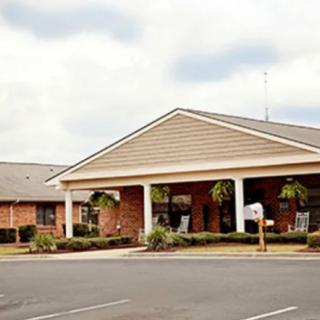
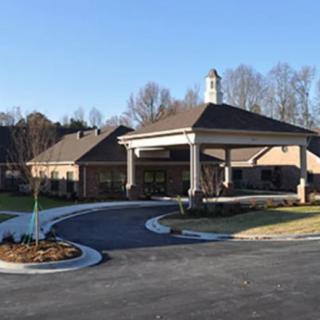
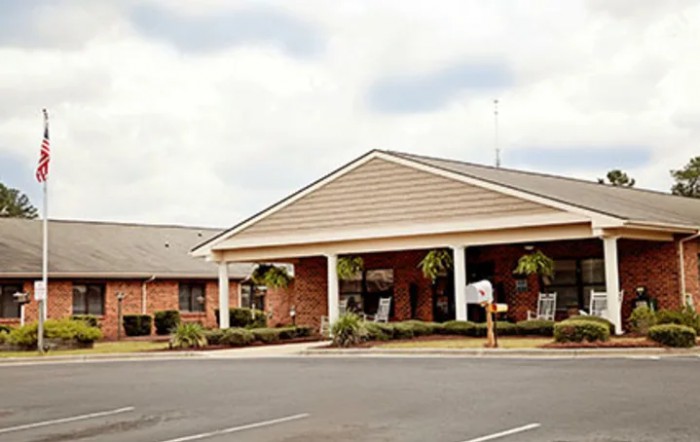
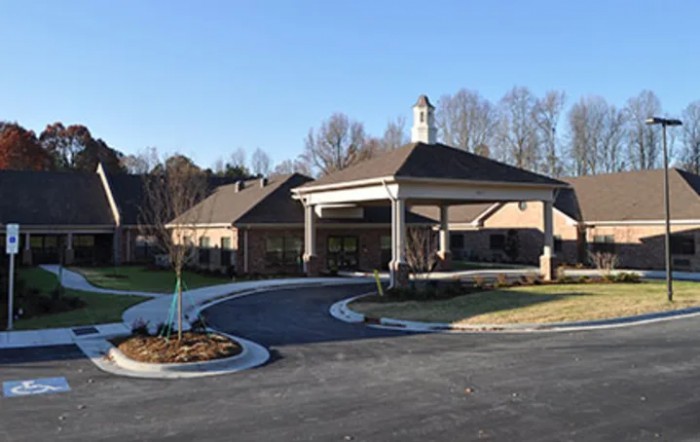
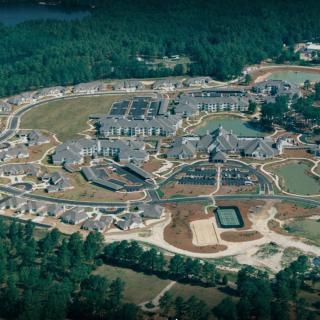
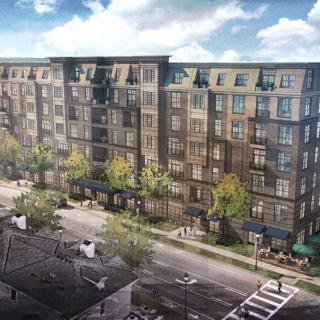
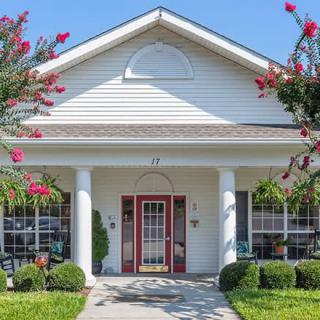
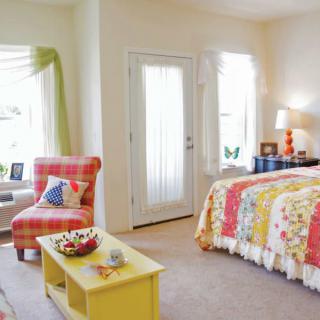
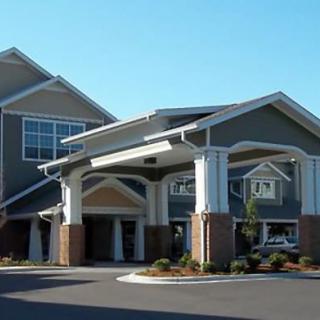
Peak Resources - Pinelake on seniors.fyi includes 4 photos including images showing building, entrance, architecture, parking, landscaping, trees, physical therapy, exercise, and more.
Nearby Communities
Tara Plantation Of Carthage
Carthage, NC
2.7 from 20 reviews
Caring staff with personalized attention and engaging activities.
Mary Manor
Southern Pines, NC
3.5 from 6 reviews
Small, homelike assisted living with comprehensive care, meals, housekeeping, Wi-Fi, and engaging daily activities.
Constance Cottage
Southern Pines, NC
3.5 from 6 reviews
Cozy, personalized care in a small, homelike board-and-care setting with on-site amenities and daily activities.
St Joseph Of The Pines Health Center
Pinehurst, NC
3.1 from 54 reviews
Robust rehab services and extensive on-site amenities.
Belle Meade Life Care Retire
Southern Pines, NC
Broad care continuum (AL, CCRC, Memory Care, SNF) with extensive on-site amenities.
The Coventry
Southern Pines, NC
1.7 from 3 reviews
Strong community atmosphere with attentive staff and engaging amenities
Brookdale Pinehurst
Pinehurst, NC
4.1 from 74 reviews
$4,775 to $7,350 / month
Friendly, attentive staff in a clean, welcoming community with engaging activities.
Southern Pines Gracious Retirement Living
Southern Pines, NC
4.6 from 54 reviews
Warm, attentive staff and a lively, renovated community.
Southern Pines
Southern Pines, NC
4.6 from 49 reviews
$2,515 to $4,195 / month
Welcoming, well-maintained community with attentive staff, quality dining, and engaging activities.
The article discusses the late stages of dementia, detailing the progression from mild to severe impairment and highlighting key characteristics such as profound cognitive decline and dependency in daily activities. It emphasizes care strategies focused on comfort and dignity, the importance of advance directives, and the emotional support needed for family caregivers facing this challenging journey.
The article examines the link between certain medications and increased dementia risk, particularly in older adults, emphasizing that long-term or high-dose use of anticholinergics, benzodiazepines, and other drug classes can exacerbate cognitive impairment. It calls for careful medication evaluation and shared decision-making to mitigate these risks while managing treatment efficacy.
The article emphasizes the significance of establishing a power of attorney for elderly parents to enable an agent to make decisions on their behalf regarding health and finances, especially during cognitive or physical decline. It outlines various types of power of attorney, the importance of consulting legal professionals, and the responsibilities and challenges faced by agents, while also discussing alternatives and common misconceptions.
Get PricingAsk A QuestionSchedule A TourContact Senior Advisor
By clicking submit, you agree to our Partner's Terms of Use. You
also consent to receive calls and texts, which may be autodialed, from our Partner. Your consent is not a condition to
using our Partner's service. Please visit our Partner's Privacy Policy for information about their privacy practices.


 90 resident community capacity
 Memory Care
 Skilled Nursing Facility
 Activities on-site
 Air-conditioning
 Beautician on-site
 Cable or satellite TV
 Computer center
 Devotional services on-site
 Dining room
 Fitness room
 Fully furnished
 Gaming room
 Garden
 Housekeeping services
 Indoor common areas
 Kitchenette
 Move-in coordination
 Outdoor common areas
 Private bathrooms
 Respite or short term stays offered
 Restaurant-style dining
 Small library
 Telephone
 Wellness center
 Wheelchair accessible showers
 Wi-Fi/high-speed internet available
 Community operated transportation
 12-16 hour nursing
 24-hour call system
 Ambulatory care
 Assistance with bathing
 Assistance with dressing
 Assistance with transfers
 Diabetes diet
 Diabetic care
 Incontinence care
 Medication management
 Mental wellness program
 Special dietary restrictions
 Birthday parties
 Concierge services
 Planned day trips
 Visiting chaplain or priest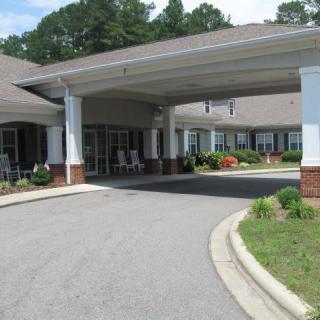
 Caring staff with personalized attention and engaging activities.
 Comprehensive Insights on the Late Stages of Dementia: What to Expect and How to Provide Care
 Medications Associated with Dementia Risk: A Comprehensive Overview
 Guiding Your Journey: Understanding Power of Attorney for Elderly Parents