
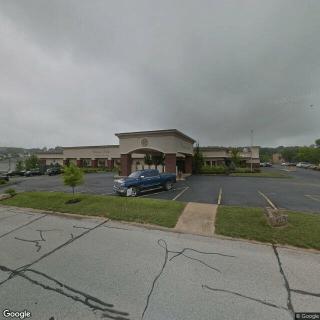
105 South 6th Street, Pacific, MO 63069
To contact a resident: (636) 271-4222
For more information about senior living options: (866) 208-4318
The Terrace Assisted Living Costs & Pricing
The Terrace Assisted Living offers competitive pricing for its residents, particularly in the context of both St. Louis County and the broader Missouri area. For a private room, The Terrace charges $2,550 per month, which is significantly lower than the average costs in St. Louis County at $4,622 and even below the state average of $4,483. When it comes to studio accommodations, The Terrace remains an attractive option at $4,470 per month, surpassing the county's rate of $4,203 but still offering value compared to Missouri's average studio cost of $3,418. Overall, The Terrace provides a blend of affordability and quality care that stands out in the local market.
| Floor plans | The Terrace Assisted Living | St. Louis County | Missouri |
|---|---|---|---|
| Private | $2,550 | $4,622 | $4,483 |
| Studio | $4,470 | $4,203 | $3,418 |
Memory care communities with a similar price nearby
-
from +$150 / mo
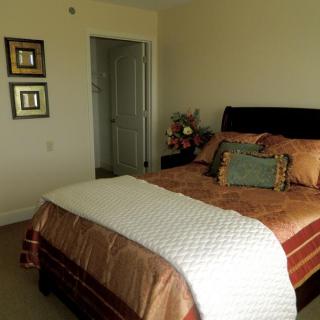
Twin Oaks At Heritage Pointe
$2,700 to $4,500 / month24.7 miles away -
from +$315 / mo

Autumn View Gardens, Assisted Living and Memory Care
$2,865 to $4,565 / month10.4 miles away -
About the same
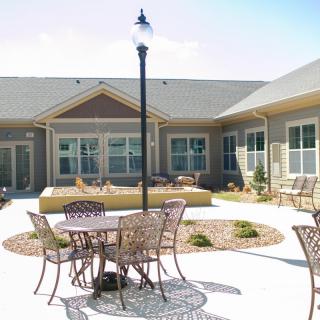
The Boulevard Senior Living of Wentzville
$2,550 to $4,230 / month22.7 miles away -
from +$100 / mo

The Boulevard of St. Charles Senior Living
$2,650 to $5,040 / month24.6 miles away -
from +$426 / mo
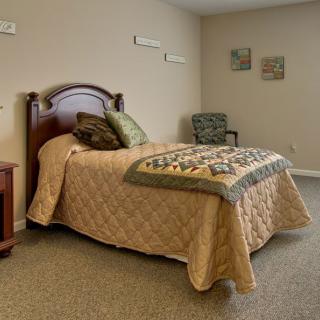
South Pointe
$2,976 to $4,340 / month13.0 miles away
Overall Review of The Terrace Assisted Living
Pros
 The staff are wonderful, with Mike described as an amazing nurse who stays on top of things after expectations are communicated.
- Kevin, the administrator, is compassionate and highly involved with residents and their families.
- Pacific Care Center is a great place to live and work, with an awesome, friendly staff and home-like food.
- Residents are treated like family, with plenty of activities and a clean, well-kept environment.
- Housekeeping keeps the facility clean and odor-free, and the social service staff are informative and helpful.
- The new management team is a positive change, and the facility is seen as the best long-term care facility in the area.
Cons
 There are not enough staff members to keep up with residents' needs, including dietary, personal hygiene, and daily activities.
- The room was filthy, with splashes of feces on the bathroom seat and toilet; the sink appeared not to have been cleaned for a while; there was a hole in the wall; safety violations were observed.
- The reviewer felt that the resident spent the last month of his life in such a horrible environment.
- There were residents sitting in the dining room unattended in the mornings.
- The ownership and management were absolutely terrible; the environment was toxic; staff talked to residents horribly and ignored them; the staff were underpaid and underappreciated; there was usually only one aide per hall and one nurse for the entire building on a 12-hour shift, leading to delayed care; there was no dignity for residents; management and staff spent time outside smoking and on their phones; the administrator did nothing.
- The new administrator and her staff took over and the facility deteriorated; it was very sad.
- The incident where an employee left a child sleeping in a car reflects serious concerns about the care of the elderly and is not acceptable.
- The reviewer would not put their family member in this facility; it’s terrible and very sad for residents who don’t have other options.
Review
The Terrace Assisted Living in Pacific, MO is best suited for families seeking a small-scale, home-like environment where frontline staff can be genuinely attentive and residents experience regular social contact. The strongest appeal lies with those who value warm, personal interactions from caregivers and a facility that feels clean and organized at times. When care teams are engaged, residents can enjoy meaningful conversations, timely help with daily activities, and a sense of being treated like family. This community can work well for residents who don’t need round-the-clock medical supervision and who can tolerate some variability in day-to-day operations in exchange for approachable staff and a personal touch.
That said, prospective families should explicitly consider alternatives if dependable staffing and consistent oversight are non-negotiable priorities. Several reviews flag staffing levels as a persistent concern, one aide per hall and only a single nurse on long shifts for the entire building are cited as the norm in some shifts. When medical or safety needs surge, relief can be slow, and concerns about timely attention or prompt assistance recur. If a loved one requires steady, predictable response times, or if families demand unwavering quality in housekeeping, meals, and daily supervision, other facilities with documented staffing ratios and clearer accountability may be safer bets.
Positive experiences at The Terrace offset some of the structural concerns when they show up. Instances where a nurse like Mike stayed on top of care and a compassionate administrator (Kevin) became actively involved illustrate what is possible in this environment. Reviewers repeatedly note a clean facility, good food at times, and residents who are well cared for in terms of daily routines and companionship. For families prioritizing human connection, those moments of exceptional staff engagement can be decisive, and they demonstrate the potential for a genuinely resident-focused culture at the best of times.
However, the cumulative effect of the negatives cannot be ignored. Several families report a cascade of operational problems that cloud the overall experience: perceived poor management, frequent staff turnover, and a sense that residents’ dignity is not consistently upheld. Stories of unsafe conditions, cleanliness lapses, and even routine items disappearing in laundry paint a troubling picture for those relying on consistent, high-quality care. Complaints about food quality and limited meal options, combined with restrictions around simple conveniences like microwaves, further erode confidence for families who expect reliable, homestyle provisioning alongside clinical oversight.
The tone in the reviews shifts from hopeful to cautionary as management and staffing become the focal point of dissatisfaction. Critics describe a toxic environment, with calls for new leadership across departments and a sense that issues persist without decisive, sustained fixes. While some residents and families report feeling valued and listened to, the contrast with the harsher testimonies makes the overall reputation difficult to ignore. The facility’s appeal hinges on whether a stable, engaged management team can be restored and whether staffing with adequate coverage can be consistently maintained.
For families weighing the decision, the practical path is to visit with a critical eye: request to meet front-line caregivers on multiple shifts, review recent maintenance and housekeeping records, and ask to observe meal service and activity programming over a few days. Seek transparent answers about staffing plans, turnover, and how complaints are tracked and resolved. If the priorities are personal warmth, regular social engagement, and a clean, welcoming environment, The Terrace can deliver, provided the surrounding leadership and staffing stability align with those expectations. If the priority is consistently flawless operations, rapid medical responsiveness, and unquestionable day-to-day reliability, exploring stronger alternatives is strongly advised.
 Board and Care Home
 Memory Care
 Private



 Dementia, Paranoia, and Caregiver Guidance: Understanding the Connection
 Engaging Memory Care Activities That Enhance Quality of Life
 When to Transition from Assisted Living to Memory Care: Key Indicators, Steps, and Finding the Right Community