
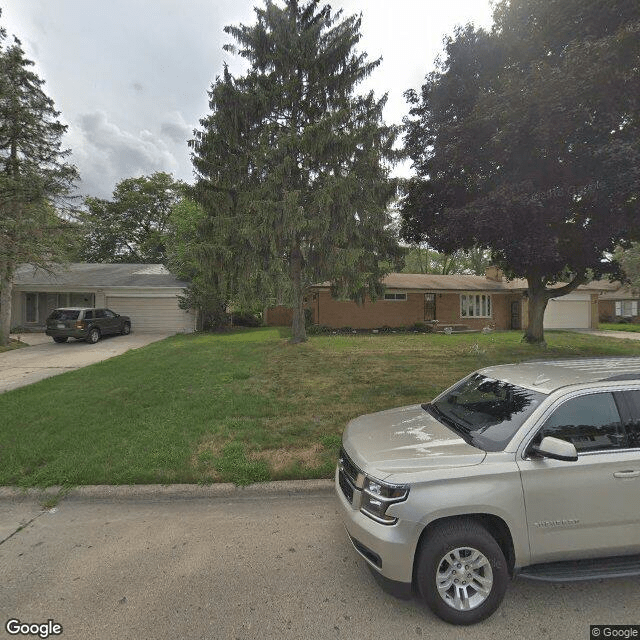
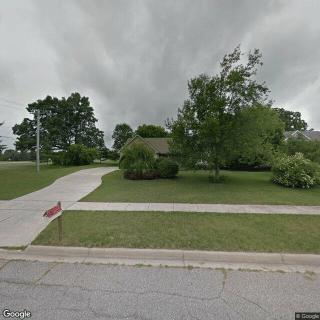
23439 Meadow Park St, Redford, MI 48239
To contact a resident: (313) 999-2590
For more information about senior living options: (866) 208-4318
Start A New Life Home II Costs & Pricing
Start A New Life Home II offers competitive monthly rates, with private rooms, studios, and one-bedroom options all priced at $2,500. This cost is notably lower than the average rates in Wayne County, where similar accommodations typically range from approximately $3,210 to $3,495. Additionally, these prices are also significantly less than the state average for Michigan, which can reach as high as $3,675 for private rooms and $3,824 for studios. Overall, Start A New Life Home II presents a more affordable alternative for those seeking quality housing in a supportive environment while remaining well below both county and state pricing benchmarks.
| Floor plans | Start A New Life Home II | Wayne County | Michigan |
|---|---|---|---|
| Private | $2,500 | $3,335 | $3,674 |
| Studio | $2,500 | $3,495 | $3,824 |
| 1 Bedroom | $2,500 | $3,210 | $3,384 |
Memory care communities with a similar price nearby
-
from -$225 / mo
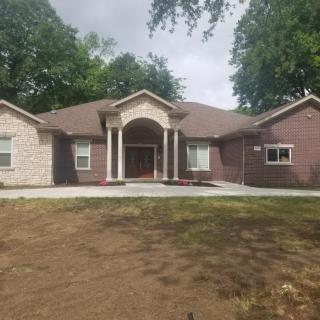
Pleasant Valley Family Care
$2,275 to $7,000 / month9.8 miles away -
About the same

Lakeview Elderly Home
$2,500 / month23.4 miles away -
from +$380 / mo
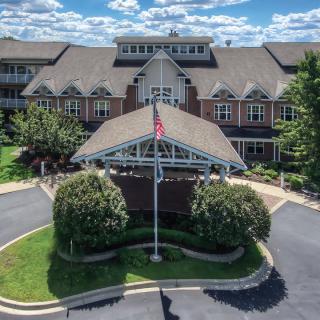
Town Village Sterling Heights and The Gem Memory Care
$2,880 to $5,095 / month20.6 miles away -
from +$163 / mo
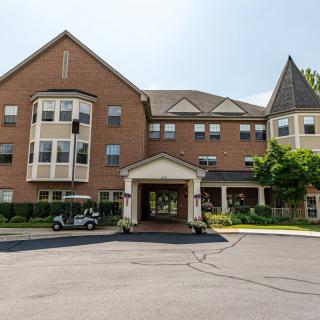
Clausen Manor
$2,663 to $5,227 / month22.0 miles away -
from +$300 / mo
Sasse Par View Home
$2,800 to $3,600 / month21.7 miles away
Overall Review of Start A New Life Home II
Pros
 The staff are very polite, honest, helpful, friendly, and provide up-to-date information in the senior care and mental health care fields.
- The company is a great place to work for or receive services from.
Review
Start A New Life Home II in Redford, MI is best suited for families seeking a small, relationship-driven assisted living option where the caregiving team distinguishes itself through courtesy, candor, and a clear commitment to current best practices in elder care and mental health. The strongest signal from the available feedback is that the staff are polite, honest, helpful, and friendly, delivering information that feels up to date and professional. For residents who value open communication, dependable responsiveness, and a care team that treats each interaction as an opportunity to educate and reassure, this community presents a compelling match. In short, it serves as a practical home base for seniors who prioritize trust, transparency, and ongoing staff education.
Those evaluating this community should explicitly consider alternatives if the priority shifts toward higher levels of medical oversight or more expansive specialty services. If a resident requires robust skilled nursing, frequent on-site physician access, or a broader set of rehab and memory-care resources than a smaller setting typically provides, larger or more medically oriented communities may offer a closer fit. Families who insist on extensive clinical programming, multi-disciplinary teams on site, or a facility with a broader footprint should compare options that foreground those capabilities. Start A New Life Home II can be a superior choice for thoughtful, hands-on, person-centered care, but it may not satisfy every level of medical complexity.
The core strengths highlighted in the available feedback, politeness, honesty, helpfulness, friendliness, and proactive, up-to-date information, tend to offset common concerns in choosing a smaller care setting. When staff consistently communicate about care plans, changes in health status, and available resources, families gain confidence that their loved ones are in capable hands. The emphasis on staying current with best practices in seniors care and mental health care signals a team that prioritizes ongoing learning and quality improvement, which translates into steadier daily routines, fewer care gaps, and fewer surprises. These pros collectively build a foundation of trust that can outweigh anxieties about being in a less sprawling operation.
Because the review pool is limited to a single positive account, there is a legitimate caveat: the data set lacks breadth to confirm consistency across months and multiple residents. That caveat does not undermine the value of the reported strengths, but it does mean prospective families should pursue direct engagement, tours, conversations with staff, and informal chats with current residents or families. A practical risk assessment here centers on whether the same level of courtesy, honesty, and informational candor appears across shifts, care teams, and weekend coverage. In this light, the positives are meaningful but should be validated in person before making a final commitment.
For families undertaking due diligence, concrete questions to guide the inquiry include: How is care planning documented and shared with families? What is the turnover rate among direct-care staff, and what training supports that stability? How does the community handle mental health concerns, social engagement, and preventive wellness initiatives? How prompt is the team in addressing evolving needs, medication management, and safety checks? Asking for a sample care plan, a typical day schedule, and a tour of common areas can illuminate whether the described strengths translate into daily practice and measurable peace of mind.
In conclusion, Start A New Life Home II represents a solid, practical option for seniors whose families prize staff warmth, honesty, and a current, well-informed approach to elder and mental health care. The one-stroke endorsement in the available feedback points to a community where residents are treated with respect and where families feel supported by a knowledgeable team. For those whose care needs are straightforward and whose values align with transparent communication and dependable service, this setting warrants serious consideration. Those whose priorities include more intensive clinical oversight or expansive specialty services may wish to compare with larger, more medicalized options to ensure alignment with long-term care goals.
 Board and Care Home
 Memory Care
 Activities on-site
 Devotional services off-site
 Indoor common areas
 Private
 Detroit Metropolitan-Wayne County (11 miles away)
 Ambulatory care
 Diabetic care
 Meals provided
 Dementia-Related Hallucinations: Causes, Experiences, and Practical Approaches
 Illuminating Insights About Alzheimer's Disease: Ten Crucial Realities
 A Thorough Discussion of Medications Potentially Linked to Dementia Risk