Fenton II is an assisted living community in Dearborn Heights, MI.
Information last verified:
8273 Fenton Street, Dearborn Heights, MI 48127
For more information about senior living options: (866) 208-4318
2.6 from 76 reviews
5 stars
22
4 stars
8
3 stars
2
2 stars
4
1 stars
40
Overall Review of Fenton II
common
Assisted living support is offered
The community provides assisted-living care support for daily needs.
Fenton II is listed as an assisted-living community and includes help with activities of daily living. Care services cover assistance with bathing, dressing, and transfers. It also includes meal preparation and service, medication management, and coordination with health care providers.
common
Meals accommodate special diets
Dining includes support for special dietary restrictions.
The dining details tie meal service to diabetes diet and special dietary restrictions. Residents can expect meal preparation and service as part of care, rather than dining being described as optional. This is the primary dietary focus reflected in the listing details.
common
Daily living conveniences are listed
Common home-like comforts and services are included.
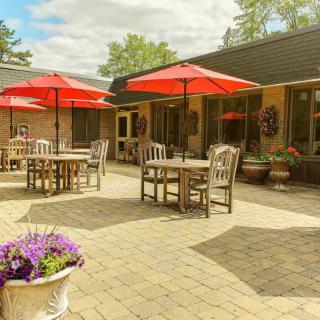
The amenity list includes housekeeping services, move-in coordination, and fully furnished residences. Residents also have access to outdoor space and a garden, along with Wi‑Fi/high-speed internet and telephone service. Cable or satellite TV is listed as well.
common
Transportation helps with medical visits
Transportation support is provided for medical needs.
Care services include transportation arrangement for medical trips and transportation to doctors’ appointments. Coordination with health care providers is also listed, which aligns with support around getting to and from care.
common
Nearby essentials and destinations
Several nearby options are within a few miles.
The listing includes nearby places such as physician offices, pharmacies, and restaurants. It also lists options across worship and parks. Distances shown in the listing range roughly from about 1.5 to around 8.6 miles for the provided examples.
How we summarize
We summarize when many written reviews mention each theme; a review can touch several themes, and only frequently mentioned themes are displayed.
Features
Housing
6 resident community capacity
Types of Care
Assisted Living
Amenities
Cable or satellite TV
Dining room
Fully furnished
Garden
Housekeeping services
Move-in coordination
Outdoor space
Telephone
Wi-Fi/high-speed internet available
Transportation
Detroit Metropolitan-Wayne County (10 miles away)
Care Services
24-hour supervision
Activities of daily living assistance
Assistance with bathing
Assistance with dressing
Assistance with transfers
Coordination with health care providers
Diabetes diet
Meal preparation and service
Medication management
Special dietary restrictions
Transportation arrangement (medical)
Transportation to doctors appointments
Dining
Diabetes diet
Special dietary restrictions
Activities
Community-sponsored activities
Scheduled daily activities
Nearby Places of Interest
Restaurants
Frank's Diner (1.5 miles)
SKY Lounge West (1.8 miles)
The Lava Lounge Too (1.9 miles)
The Halal Guys (2.1 miles)
Snookers' Pool & Pub (3 miles)
Culver's (3.3 miles)
Wendy's (3.4 miles)
Physicians
Botsford Primary Care Physician (1.7 miles)
Garden City Hospital Medical Office Building (2.2 miles)
Ophthalmic Specialists of Michigan - Dearborn Office (3.7 miles)
Dearborn Obstetrical & Gynecological Assoc PC (3.7 miles)
Livonia Dermatology (5.6 miles)
Michigan Eyecare Institute (5.7 miles)
Ophthalmic Specialists of Michigan - Livonia Office (6.4 miles)
Cafes
Tim Hortons (1.8 miles)
Starbucks (3.3 miles)
Qahwah House (3.6 miles)
Starbucks (3.6 miles)
Qahwah House (5.3 miles)
Biggby Coffee of Westland (6.5 miles)
Tim Hortons (7.3 miles)
Pharmacies
Walgreens (1.8 miles)
CVS Pharmacy (2.5 miles)
Walgreens (2.7 miles)
Meijer Pharmacy (3.2 miles)
Rite Aid (3.3 miles)
Walgreens (4.1 miles)
CVS Pharmacy (4.6 miles)
Places of Worship
Church of the Divine Child (2.2 miles)
Masjid Salam (5.9 miles)
Parks
Garden City Park (3.7 miles)
Ford Field Park (3.8 miles)
Schemansky Park (5 miles)
Hemlock Park (5.6 miles)
Flanders Park (7.9 miles)
Hospitals
Beaumont Dearborn Hospital (5.4 miles)
Botsford Hospital (6.8 miles)
Oakwood Annapolis Hospital (7 miles)
Trinity Health Wound Care - Livonia Hospital (7 miles)
Assisted living facilities offer crucial support for older adults needing help with daily activities but come with varying and significant costs, which can be financed through personal savings, government assistance programs, long-term care insurance, and home equity options. Professional guidance from experts can aid families in navigating these financial complexities to establish a sustainable budgeting approach for assisted living services.
Assisted living costs often exceed Social Security benefits, necessitating a combination of funding sources like state aid and Medicaid. Understanding the interaction between Social Security programs and available financial support is essential for affording such care.
The VA Aid and Attendance benefit provides financial support to veterans needing assistance with daily living due to medical conditions or disabilities, augmenting standard VA pensions for services like in-home care. Eligibility is based on service duration, wartime status, income, and medical needs, with a detailed application process required to access funds for caregiving and home modifications.
Get PricingAsk A QuestionSchedule A TourContact Senior Advisor
By clicking submit, you agree to our Partner's Terms of Use. You
also consent to receive calls and texts, which may be autodialed, from our Partner. Your consent is not a condition to
using our Partner's service. Please visit our Partner's Privacy Policy for information about their privacy practices.

 6 resident community capacity
 Assisted Living
 Cable or satellite TV
 Dining room
 Fully furnished
 Garden
 Housekeeping services
 Move-in coordination
 Outdoor space
 Telephone
 Wi-Fi/high-speed internet available
 Detroit Metropolitan-Wayne County (10 miles away)
 24-hour supervision
 Activities of daily living assistance
 Assistance with bathing
 Assistance with dressing
 Assistance with transfers
 Diabetes diet
 Meal preparation and service
 Medication management
 Special dietary restrictions
 Transportation arrangement (medical)
 Transportation to doctors appointments
 Intimate, small community with comprehensive care.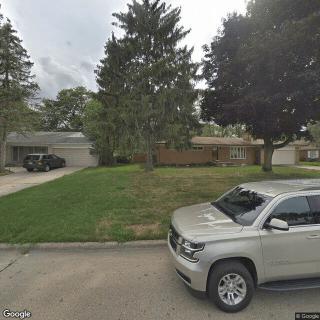
 Securing Financial Support for Assisted Living: A Comprehensive Overview
 Social Security Benefits and Assisted Living: Navigating Options Across the U.S.
 An Extensive Exploration of the VA Aid and Attendance Benefit