
1950 Ridgedale Rd # Ofc, South Bend, IN 46614
To contact a resident: (574) 291-6722
For more information about senior living options: (866) 208-4318
Ironwood Health & Rehabilitation Center Costs & Pricing
At Ironwood Health & Rehabilitation Center, the monthly costs for accommodation reflect a premium level of care and amenities. For a semi-private room, residents can expect to pay $6,750, which is significantly higher than the average rates in St. Joseph County at $4,265 and Indiana's state average of $3,739. Similarly, private rooms at Ironwood are priced at $8,215, more than justifying the cost when compared to local and state averages of $5,275 and $4,418 respectively. For those interested in studio accommodations, Ironwood again positions itself above the competition with a monthly fee of $8,215 versus much lower rates of $3,538 in St. Joseph County and $3,258 across Indiana. These figures illustrate that while Ironwood may command higher costs than its regional counterparts, it likely reflects an emphasis on enhanced quality of care and services provided to its residents.
| Floor plans | Ironwood Health & Rehabilitation Center | St. Joseph County | Indiana |
|---|---|---|---|
| Semi-Private | $6,750 | $4,265 | $3,739 |
| Private | $8,215 | $5,275 | $4,418 |
| Studio | $8,215 | $3,538 | $3,258 |
Skilled Nursing Facilities with a similar price nearby
-
from -$490 / mo

North Woods Village At Edison Lakes
$6,260 / month4.6 miles away -
from -$1170 / mo

Signature Healthcare Of South Bend
$5,580 / month5.9 miles away -
About the same
Golden Living Center - Fountainview
$6,650 to $7,070 / month4.1 miles away
Overall Review of Ironwood Health & Rehabilitation Center
Pros
 The park is wonderful and clean.
- Trailpoint Village is clean.
- The staff at Trailpoint Village are friendly.
Cons
 Nobody seemed to have a clue about what was going on, and the cost was twice as high, which was incredibly frustrating.
- They were not told when skilled nursing was no longer needed, despite paying the bill.
- They were shocked by the conditions observed there.
- The doctor prescribed an expensive list of medications, and many residents were comatose.
- There were many residents in wheelchairs, hunched over and half asleep.
- Medicaid charges totaled almost $10,000 for therapy and medications, which the reviewer questioned.
Review
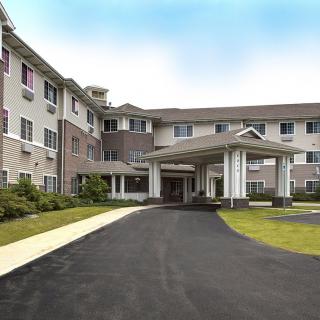
Ironwood Health & Rehabilitation Center in South Bend is best suited for families seeking a clean, well-kept environment with responsive frontline staff for a brief rehabilitation or recovery period. The most consistent praise centers on a tidy campus and friendly aides, which can ease transitions for a loved one who simply needs help regaining mobility and function. Caution is warranted, however, because branding inconsistencies surface in resident feedback, with some references calling the location Trailpoint Village. That naming confusion underscores the need to confirm the exact campus and the services available before admission, because differences in ownership or service emphasis can alter what care is actually provided. For residents whose needs extend beyond light assistance or who require tightly coordinated skilled nursing and highly individualized therapy, this may not be the ideal match.
Alternatives deserve serious consideration for families prioritizing price transparency and precise alignment between care level and need. The most troubling signals in the feedback concern a misalignment between the resident’s actual needs and the level of care billed, paired with costs that escalate quickly. One family described a scenario in which the resident no longer required skilled nursing yet was billed as if still in that category, accompanied by an expensive medication regimen and a rehab bill that pushed Medicaid outlays higher than expected. That pattern points to potential over-treatment or at least a breakdown in communication about what level of care is truly necessary. In such cases, a facility with clearer delineation of services and straightforward pricing is worth pursuing.
On the positive side, the environment and staff interaction are meaningful assets. Cleanliness and courteous service matter deeply when a loved one is navigating recovery, and those elements appear consistently here. Rehabilitation services, both occupational and physical therapy, are available, and some families report access to structured therapy as part of the stay. Yet the mere presence of rehab options does not guarantee value. If sessions are not tailored to a resident’s actual goals, or if the billing framework makes it hard to understand what is being charged for each session, the perceived value rapidly erodes. The best-case scenario leverages the dependable environment to support recovery while therapy remains goal-driven and financially transparent.
The most troubling red flags center on care coordination and daily life quality. Reports describe staff who seemed unclear about ongoing plans and residents who appeared largely immobile or sedated, which raises questions about mobility, activity engagement, and overall safety. For families, this signals the necessity of a documented, actionable care plan with a named care manager, regular updates, and access to the therapy lead. Prospective residents should request an on-site briefing that outlines daily schedules, therapy goals, and measurable milestones. Strong lines of communication and a visible care-management presence are non-negotiables when trust is being placed in a facility during a vulnerable recovery window.
Financial vigilance is essential. The anecdotes suggest substantial Medicaid-related charges and a billing structure that can be hard to parse. One account cites a $1,500 Medicaid copay and roughly $10,000 billed for rehab services, with many sessions priced separately. Even when care is solid, these numbers can diminish the value proposition if outcomes do not justify the cost. Families should require itemized bills, pre-authorization where appropriate, and a written line-by-line breakdown of what is included in the rate, what constitutes ancillary charges, and how long therapy will last. Clarify whether therapy contributes to discharge criteria and what happens if progress stalls. A disciplined financial review before commitment helps prevent sticker shock and misaligned expectations.
In the end, Ironwood offers a viable option for a clean, welcoming atmosphere during a transition, provided the care level and pricing are clearly aligned with the resident’s needs. It serves well for families prioritizing environment and courteous staffing, with the caveat that long-term residence or highly individualized care demands tight verification of level-of-care appropriateness and bill clarity. Before committing, secure an on-site assessment, demand a concrete care plan, and compare with nearby facilities to ensure a well-founded choice. When these elements line up, Ironwood can support a smoother recovery; when they do not, pursuing alternatives without hesitation is prudent.
 Memory Care
 Skilled Nursing Facility
 Activities off-site
 Bath tubs
 Beautician on-site
 Devotional services on-site
 Indoor common areas
 Outdoor common areas
 Private
 Respite or short term stays offered
 Wheelchair accessible showers
 South Bend Regional (7 miles away)
 High acuity care
 Incontinence care
 Kosher
 Adventist services
 Buddhist services
 Islamic services


 5 Early Indicators of Dementia and What You Can Do
 8 Important Indicators That Memory Care May Be Necessary
 Delving into the Inner World of Dementia: Insights into Thoughts and Awareness