
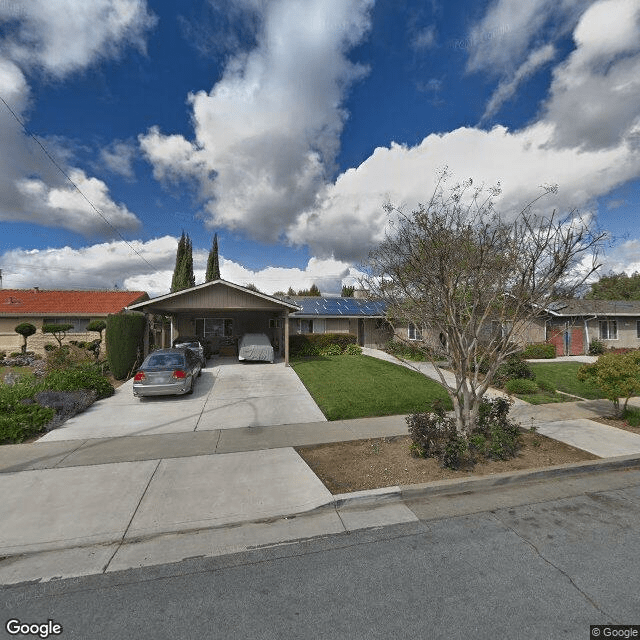
6418 Camden Avenue, San Jose, CA 95120
To contact a resident: (408) 674-7477
For more information about senior living options: (866) 208-4318
Bon Homie II Camden Costs & Pricing
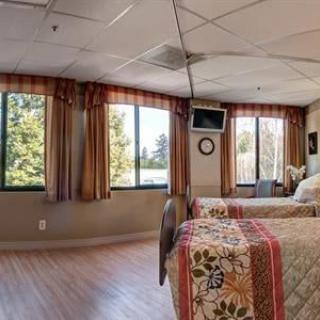
Bon Homie II Camden offers competitive pricing for its residential options, particularly when compared to the broader market in Santa Clara County and California as a whole. For a semi-private room, residents can expect to pay $5,000 per month, which is notably higher than the county average of $3,943 and the state average of $3,333. Those seeking greater privacy will find the private room rate at Bon Homie II Camden set at $6,000 monthly, surpassing both the county's average of $4,096 and California's state figure of $3,939. This pricing reflects the premium services and amenities that Bon Homie II Camden provides to enhance the quality of life for its residents.
| Floor plans | Bon Homie II Camden | Santa Clara County | California |
|---|---|---|---|
| Semi-Private | $5,000 | $3,943 | $3,333 |
| Private | $6,000 | $4,096 | $3,939 |
Memory care communities with a similar price nearby
-
from -$150 / mo
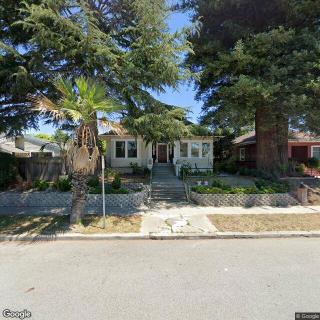
Alexandria Victoria
$4,850 / month18.1 miles away -
from +$200 / mo

The Mansion
$5,200 to $6,300 / month16.3 miles away -
from -$355 / mo

Loma Clara Senior Living
$4,645 to $6,895 / month14.4 miles away -
from +$395 / mo

Merrill Gardens At Campbell
$5,395 to $9,295 / month6.2 miles away -
from -$530 / mo

Aegis of Fremont
$4,470 to $6,420 / month23.2 miles away
Overall Review of Bon Homie II Camden
Pros
 They are a great home.
- The staff smile and joke around with residents and guests, keeping the atmosphere lively.
- They are always engaged with the residents.
- Bon Homie is a pretty awesome community.
- They have a beautiful backyard with a garden where one can sit and relax.
- The community is very clean and everyone is very friendly when visited.
- It is warm and welcoming.
- They would recommend Bon Homie to anyone.
Cons
 They don’t have any activities.
- That’s not really their focus.
- They could use more activities with a wider variety.
- They have great potential but need work.
- They are not very clean.
Review
Bon Homie II Camden is best suited for families seeking a small, home-like setting where warmth, personal attention, and a gentle pace take precedence over formal programming. The community reads as a place that feels more like a residence than a campus, which can be a strong match for seniors who want to age in a familiar, intimate atmosphere. It works well for residents coming out of rehab or needing a short-term stay that emphasizes comfort, ease of transition, and neighborly rapport rather than a packed activity calendar. In short, it suits those who value a warm, approachable environment over high-energy programming.
Those weighing alternatives should note who may want more robust programming or a more polished institutional feel. If daily social activities, a wide variety of structured events, and a meticulously clean, highly polished setting are top priorities, other communities are likely to deliver better alignment. The reviews point to a home-first model rather than a center focused on ongoing enrichment, which means families seeking constant engagement and diverse outings may want to compare options with stronger activity calendars and larger, on-site teams.
The strongest assets are plainly the staff’s approach and the atmosphere. Residents are described as well-engaged by caretakers, with staff who smile, joke, and interact in a way that keeps the environment lively. The setting feels warm and welcoming, with a backyard garden that offers a quiet place to sit and reflect. Cleanliness is repeatedly noted when the community is observed, and the presence of 2–3 staff members on site at a given time can translate into genuine, personal attention. These elements collectively create a homey, comfortable daily experience that many families prize.
On the downside, programming gaps stand out as a meaningful limitation. The absence of regular activities or a broad activity lineup means opportunities for socialization and stimulation may be constrained, particularly for residents who crave routine, variety, and organized outings. A concern raised by some reviewers is not only the scarcity of activities but also the emphasis of care on basic daily functions rather than ongoing enrichment. Additionally, at least one review flags cleanliness as an issue, signaling that housekeeping or upkeep may not consistently meet higher expectations.
These pros and cons intersect meaningfully for specific care goals. For short stays centered on rehabilitation or transitional care, the personal attention, home-like environment, and ease of access to staff can significantly ease the recovery process and reduce stress for both residents and families. The garden, the intimate footprint, and the visible hands-on care help with safety and mood in those scenarios. However, for long-term living where ongoing social engagement, diverse events, and a consistently spotless environment are non-negotiables, the limited programming and potential cleanliness hiccups could become drawbacks that offset the appeal of a small, friendly setting.
The practical decision comes down to aligning expectations with needs. Prospective families should tour with a checklist that focuses on cleanliness standards, medication management, meal service, and the cadence of activities, then compare with similarly priced alternatives that offer fuller calendars and larger staff teams. If the goal is a calm, intimate home-like environment for a short-term rehab or a low-stimulation, highly personal living arrangement, Bon Homie II Camden can be a good match. If the plan calls for sustained social programming, greater variety in activities, or a consistently pristine environment, alternatives deserve serious consideration.
 Board and Care Home
 Memory Care
 Activities on-site
 Beautician on-site
 Indoor common areas
 Outdoor common areas
 Private
 San Jose International (10 miles away)
 High acuity care
 Incontinence care
 Medication management
 Meals provided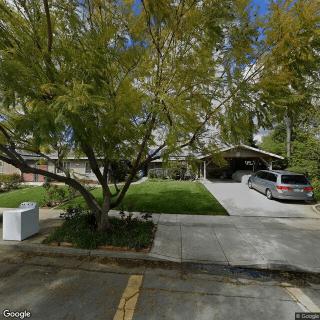

 Exploring the Contrasts Between Assisted Living and Skilled Nursing
 Vibrant Senior Living: A Comprehensive Guide for Active Older Adults
 Assisted Living and Memory Care: Understanding Their Core Differences