
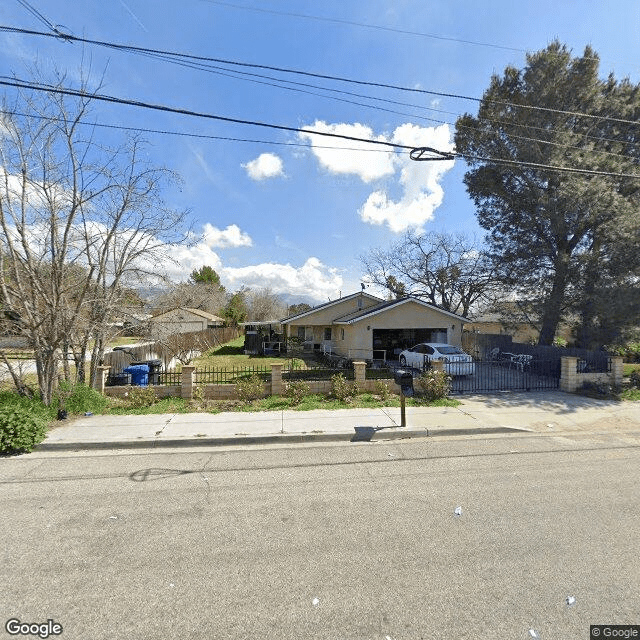
4091 North F Street, San Bernardino, CA 92407
To contact a resident: (909) 881-3142
For more information about senior living options: (866) 208-4318
North Haven Care Facility Costs & Pricing
North Haven Care Facility offers competitive pricing for its care services compared to both San Bernardino County and the broader California market. For a semi-private room, North Haven charges $2,000 per month, significantly lower than the county average of $2,958 and well below the state average of $3,333. Private room accommodations at North Haven are priced at $2,500, offering a considerable saving when juxtaposed with the county's average of $3,561 and California's average of $3,939. Similarly, their one-bedroom units are also attractively priced at $2,500, compared to the county's $3,548 and statewide figures that reach up to $4,340. This pricing structure positions North Haven as a favorable option for families seeking quality care without straining their budgets.
| Floor plans | North Haven Care Facility | San Bernardino County | California |
|---|---|---|---|
| Semi-Private | $2,000 | $2,958 | $3,333 |
| 1 Bedroom | $2,500 | $3,548 | $4,340 |
| Private | $2,500 | $3,561 | $3,939 |
Memory care communities with a similar price nearby
-
About the same
Milam Manor
$2,000 to $3,600 / month10.3 miles away -
from -$200 / mo
IMS Home Inc
$1,800 to $3,000 / month15.1 miles away -
from -$200 / mo
Delizo's Guest Home
$1,800 to $2,500 / month19.5 miles away -
from +$170 / mo
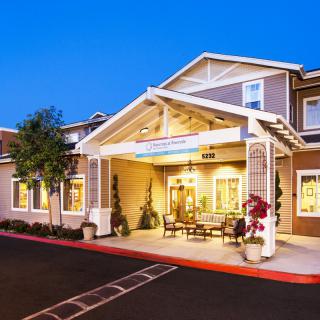
Raincross at Riverside a Watermark Retirement Community
$2,170 to $5,500 / month16.2 miles away -
About the same

Famous Home
$2,000 to $2,800 / month24.2 miles away
Overall Review of North Haven Care Facility
Cons
 The reviewer found the tour to be only okay.
- The tour did not meet his expectations.
- He was not impressed with the overall experience.
Review
North Haven Care Facility in San Bernardino is best suited for seniors who want a straightforward, no-frills living option and are comfortable with modest amenities. The community likely appeals to families prioritizing predictable routines, clean basic spaces, and a cost-conscious approach over luxury. It may work for residents who value stability and a practical environment where daily life follows steady patterns rather than high-end experiences. Those evaluating memory care or highly specialized needs should be aware that the current evidence is limited; the setting may not be optimized for elaborate programming. In short, this is a practical choice for someone who wants essential care without the bells and whistles.
From the sole published review, the tour left an underwhelming impression: things went just okay, and it did not meet the reviewer’s expectations. The tone suggests a calm, functional environment rather than a polished, engaging presentation. There is no strong endorsement or vivid description of standout strengths. Potential residents should read this as a signal to temper expectations and to verify what matters most during a visit: the warmth of staff, the smoothness of logistics, the reliability of daily routines, and the feel of the community’s spaces. A neutral first impression should not be mistaken for a guarantee of daily satisfaction.
Because the review offers little by way of explicit positives, there is little to rely on as offsets for a lackluster first impression. In practical terms, the main con, a tour that did not inspire confidence, cannot be offset by observed strengths that aren’t documented. If the facility does possess dependable safety, courteous communication, well-run meals, or consistent activity scheduling, these would be crucial to offsetting the negative takeaway. Families should actively seek assurances about these elements in follow-up conversations, and demand concrete examples: how staff respond to needs, what happens when a resident requires attention, and how the community handles maintenance and cleanliness.
A structured future visit should center on proving daily life operates smoothly. Prospective residents should tour common areas during different times of day, request to observe a meal service, and meet multiple staff members across shifts. Inquire about staffing ratios, response times for call bells, and the availability of social, recreational, and therapeutic activities. Assess room sizes, natural light, and noise levels; check the condition and safety of walkways, appliances, and bathrooms. Ask about meal options, dietary accommodations, and the process for customizing care plans. Finally, request written summaries of care philosophy and incident handling to gauge reliability.
For families needing a climate of consistent excellence, alternatives should be on the short list. If a residence aims to deliver stronger engagement, richer dining experiences, or more polished presentation during tours, this facility may not meet those expectations. Alternatives in the area with more consistently praised transitions, friendlier tours, or more robust activity calendars deserve comparison. Consider calling ahead to schedule multi-person tours, asking for recent resident testimonials, and weighing the difference between a modest, budget-friendly option and a mid-market community with proven outcomes.
Overall, North Haven Care Facility appears to be a practical option for budget-conscious families who can prioritize essential routine care over a memorable tour experience. The critical takeaway is the absence of demonstrated strengths on first impressions, which means relying on future visits to confirm reliability, responsiveness, and daily life quality. If those elements prove adequate, it can serve as a steady home; if not, the door to alternatives remains open and advisable. In informed decision-making, the wisest course is to pair the tour with direct questions about safety, staffing, and activities, and to compare experiences across multiple communities before committing.
 Board and Care Home
 Memory Care
 Bath tubs
 Private
 Respite or short term stays offered
 Wheelchair accessible showers
 Ontario International (19 miles away)
 Ambulatory care
 Diabetic care
 High acuity care
 Incontinence care
 Kosher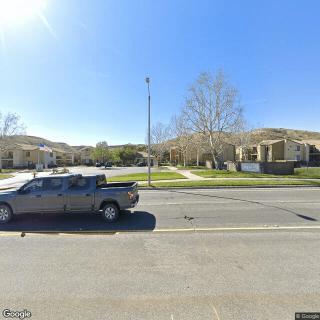
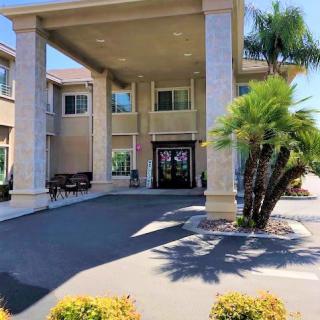
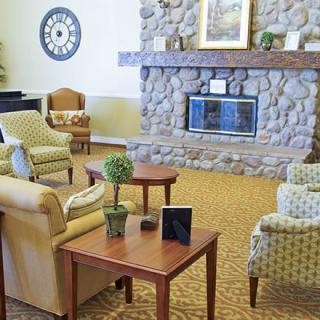
 Quiet, well-kept community with welcoming common spaces and active social opportunities.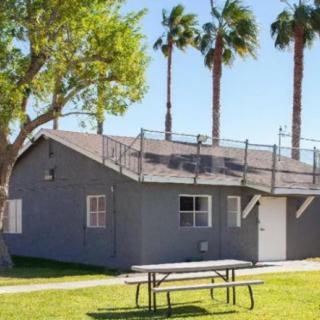


 Exploring the Power of Reminiscence Therapy for Individuals With Dementia
 An In-Depth Look at Reminiscence Therapy in Dementia Care
 Dementia-Related Hallucinations: Causes, Experiences, and Practical Approaches