
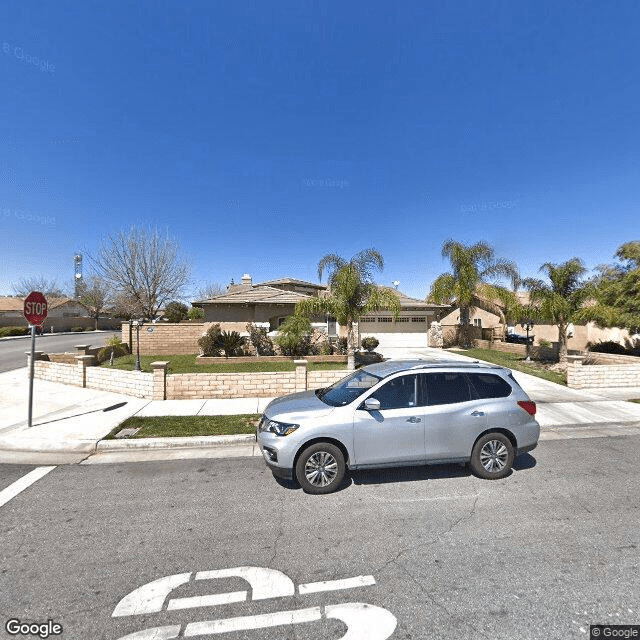
913 Aria Rd., Hemet, CA 92543
To contact a resident: (951) 357-2025
For more information about senior living options: (866) 208-4318
Aria Board and Care Costs & Pricing
Aria Board and Care offers competitive pricing for its accommodation options, particularly when compared to the broader market in Riverside County and across California. Their semi-private room is priced at $2,000 per month, significantly lower than the county average of $2,844 and the state average of $3,333. Similarly, the private room rate at Aria Board and Care stands at $2,500, which is also more affordable than Riverside County's average of $3,474 and California's statewide average of $3,939. These costs not only highlight Aria Board and Care's commitment to providing quality care at accessible rates but also position it as a financially appealing choice for families seeking supportive living environments within a competitive market landscape.
| Floor plans | Aria Board and Care | Riverside County | California |
|---|---|---|---|
| Semi-Private | $2,000 | $2,844 | $3,333 |
| Private | $2,500 | $3,474 | $3,939 |
Memory care communities with a similar price nearby
-
About the same

Milam Manor
$2,000 to $3,600 / month24.9 miles away -
from +$200 / mo
Diamond Residential Care Facility for the Elderly of Murrieta
$2,200 to $3,500 / month17.8 miles away -
About the same
Vandelon 3
$2,000 to $3,000 / month1.9 miles away -
About the same
Spring Brook Home Care
$2,000 to $2,800 / month14.7 miles away -
About the same

Sun City Gardens
$1,988 to $3,291 / month13.1 miles away
Overall Review of Aria Board and Care
Pros
 The facility was small, cozy, and clean.
- It served home-cooked meals.
- The owner and caretakers, along with the staff, provided excellent care for his father.
- He liked it a lot and told his friends and sisters.
- It was conveniently located near his doctors and hospitals.
- They were flexible with the financial situation and arranged affordable payment terms.
Review
Aria Board and Care in Hemet, California is best suited for families seeking a tiny, home‑like setting where a loved one can receive highly personalized attention, particularly when medical proximity matters. The community’s small, cozy atmosphere, marked by cleanliness and cook‑made meals, creates a sense of daily living that many seniors find comforting. For residents with dementia or fluctuating cognition, the intimate environment, where staff can know habits, preferences, and routines, can translate into steadier daily support, especially when doctors and hospitals are conveniently nearby.
Those who may want to consider alternatives are families prioritizing sprawling campuses, a wide array of amenities, or highly structured memory‑care programs. If a resident requires extensive social programming, frequent activity variety, or access to a broader slate of specialized therapies on site, a larger assisted living campus might better align with those needs. Aria’s strengths are best realized when care is personal and proximity to medical resources is a primary goal; when that balance shifts toward scale and breadth of services, other communities can offer a different fit.
The strongest pro, an intimate, individualized care approach, directly addresses the core concerns of many families caring for someone with memory impairment or enduring medical needs. The staff’s attentiveness is a defining feature; the owner and caregivers are described as exceptionally hands‑on, which often translates into near‑continuous supervision, rapid responsiveness, and strong continuity of care. Cleanliness and home‑style meals reinforce a sense of comfort and predictable routines, reducing stress for residents and easing transition for families.
Financial flexibility is another critical asset. The ability to amortize costs or adapt payment structures demonstrates a practical, family‑centered approach to care planning, particularly when medical expenses and caregiving demands fluctuate. The positive emphasis on Walter, Mabel, and the staff’s willingness to work within a family’s budget signals a partnership mindset rather than a rigid, one‑size‑fits‑all model. For families navigating budget constraints, this flexibility often shifts a potentially prohibitive option into a sustainable choice.
Where the review provides no explicit downsides, the practical assessment still recognizes the natural tradeoffs of a small board‑and‑care setting. The limited scale can translate into fewer on‑site amenities, fewer specialized programs, and a smaller staff pool than larger facilities. Even so, the reported outcomes suggest these tradeoffs are mostly offset by the care quality, stability, and medical proximity that matter most for residents with complex needs. In this context, the core question becomes whether personalized attention and local medical access outweigh the benefits of broader programming and larger social ecosystems.
Bottom‑line guidance emerges with clarity: Aria Board and Care is a strong choice for families who prize personalized care, a calm, home‑like daily rhythm, and flexible financial arrangements, especially when the resident’s needs center on dementia‑related support and near‑term medical access. If those priorities align, the setting can deliver meaningful peace of mind and tangible daily improvements. If, instead, the priority is robust, on‑site memory‑care programming, a wide spectrum of social opportunities, or a larger community footprint, it may be prudent to explore alternatives that emphasize scale and structured programming. In weighing options, families should probe staffing patterns, daily routines, and reimbursement options, then compare how each environment aligns with the resident’s care goals and the family’s financial plan.
 6 resident community capacity
 Assisted Living
 Board and Care Home
 Memory Care
 Respite Care
 Cable or satellite TV
 Dining room
 Fully furnished
 Garden
 Housekeeping services
 Move-in coordination
 Outdoor space
 Private
 Telephone
 Wi-Fi/high-speed internet available
 24-hour supervision
 Activities of daily living assistance
 Assistance with bathing
 Assistance with dressing
 Assistance with transfers
 Diabetes diet
 Meal preparation and service
 Medication management
 Special dietary restrictions
 Transportation arrangement (medical)
 Transportation to doctors appointments






 Dementia Behaviors: In-Depth Understanding and Effective Coping Strategies
 5 Early Indicators of Dementia and What You Can Do
 8 Important Indicators That Memory Care May Be Necessary