
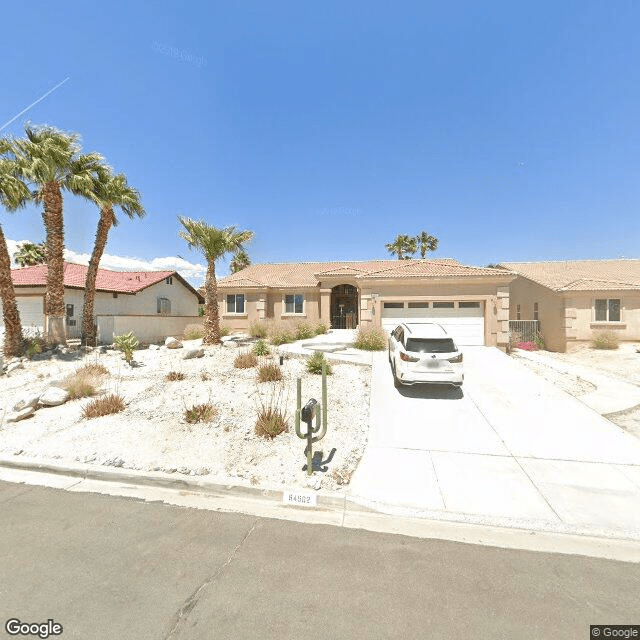
64502 Brae Burn Ave., Desert Hot Springs, CA 92240
To contact a resident: (760) 799-1582
For more information about senior living options: (866) 208-4318
Desert Breeze Senior Living Costs & Pricing
Desert Breeze Senior Living offers competitive monthly pricing compared to both Riverside County and the broader state of California. For residents opting for a semi-private room, the cost is $2,500, significantly lower than the county average of $2,844 and the state average of $3,333. Those choosing a private room will find Desert Breeze's rate of $3,500 to be more favorable than Riverside County's $3,474 and California's $3,939. Similarly, studio accommodations at Desert Breeze are priced at $3,500, again undercutting both the county's average of $3,559 and the state's average of $4,145. These rates reflect Desert Breeze's commitment to providing quality care and comfortable living while remaining accessible in an increasingly challenging market.
| Floor plans | Desert Breeze Senior Living | Riverside County | California |
|---|---|---|---|
| Semi-Private | $2,500 | $2,844 | $3,333 |
| Studio | $3,500 | $3,559 | $4,145 |
| Private | $3,500 | $3,474 | $3,939 |
Memory care communities with a similar price nearby
-
About the same
Island's Best Home Care
$2,500 to $3,000 / month11.3 miles away -
from +$495 / mo

Stonewall Gardens
$2,995 to $5,450 / month8.9 miles away -
About the same
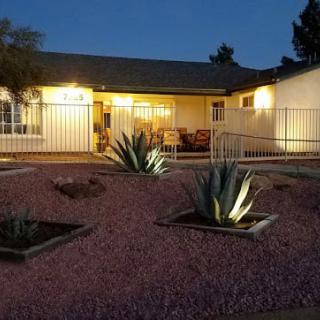
Angelic Mansions Assisted Living
$2,550 to $4,795 / month12.1 miles away -
from +$300 / mo
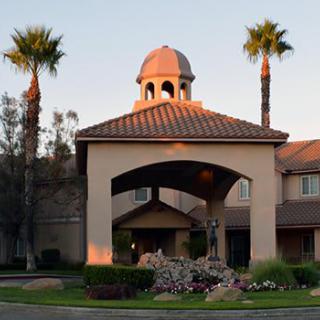
The Lakes at Banning
$2,800 to $5,750 / month23.3 miles away -
About the same
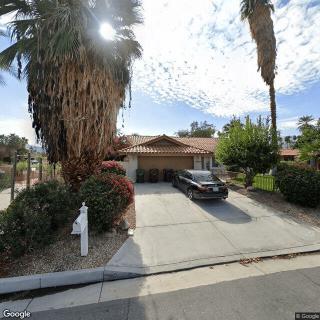
Accent Loving Personal Care II
$2,500 / month19.5 miles away
Overall Review of Desert Breeze Senior Living
Pros
 Desert Cove Assisted Living is highly regarded for going above and beyond basic care.
- The attendants are especially kind, and the management, Heather and Nancy, are caring and responsible.
- Desert Cove provides memory care for residents with dementia.
- The staff at Desert Cove gives the best possible care and shows professionalism and compassion.
- Desert Cove is described as a true Godsend.
- The entire staff demonstrates professional care and compassion toward residents and their families.
Cons
 They would not recommend this place.
- The facility is rude.
- His father has been verbally abused by several residents asking for cigarettes or money.
- Management has not been supportive or taken their concerns seriously.
- There are many residents with psychiatric issues at this location.
- They have attempted to move his father, but this is one of the few assisted livings that allows smoking.
Review
Desert Breeze Senior Living in Desert Hot Springs is best suited for families seeking robust memory-care support and genuinely compassionate caregiving for residents who live with dementia or related cognitive challenges. The strongest value lies in a care team that members consistently describe as patient, professional, and attentive, with a demonstrated ability to tailor comfort and daily routines to memory-impaired residents. For families prioritizing a supportive, hands-on approach to dementia care, this community offers a compelling fit. However, it is not the ideal match for those who require a strictly smoke-free environment or who demand an unusually controlled atmosphere free of resident-to-resident behavioral challenges.
That said, there are notable caveats. Prospective residents who value top-tier memory-care competencies should weigh carefully the possibility that some reviewers encountered difficult interactions related to resident behavior and safety dynamics. The very factor that makes this setting appealing for dementia care, the presence of residents with significant cognitive needs, can translate into encounters with behavioral issues or disruptive moments. Families that cannot accommodate, or do not want to tolerate, these realities may want to explore alternatives with stricter behavioral management, more security features, or dedicated memory-care units that emphasize a locked or highly controlled environment.
The strongest offset to these potential drawbacks comes from consistently praised caregivers: the staff’s kindness, empathy, and steady professionalism have repeatedly reassured families that their loved ones are in capable hands. Attendants are described as exceptionally patient and reliable, with care teams that go beyond basic duties to address comfort, dignity, and daily routines. Memory-care and end-of-life support, where hospice involvement and ongoing comfort are prioritized, are highlighted as standout strengths. When a resident’s condition requires specialized attention, the care teams reportedly mobilize with a sense of purpose and compassion that can provide real relief to anxious families.
Operational realities surface as the other side of the equation. Management responsiveness appears variable in the consumer spotlight. While many reviews celebrate the depth of care and the warmth of staff, at least one account questions how concerns are handled and calls attention to resident safety in a setting where smoking is allowed nearby. That combination, warm caregiving paired with concerns about oversight and environmental controls, means results can differ from room to room or shift to shift. For families weighing Desert Breeze against other options, the key decision point centers on how much emphasis is placed on immediate, proactive management responsiveness versus the day-to-day quality of caregiver interactions.
In practical terms, families should approach a visit with a structured checklist. Inquire about memory-care credentials and the staff-to-resident ratio specifically for cognitively impaired residents, as well as training in dementia-specific communication and behavior management. Probe the smoking policy and proximity to living spaces, and seek clarity on how behavioral escalations are handled, including response times and incident resolution. Observe the environment for cues about safety, walkways, noise levels, and the ability to separate memory-care residents from more high-activity areas if needed. Ask to speak with a current family about both the care experience and management responsiveness, and request recent hospice or palliative-care outcomes if relevant to the loved one’s trajectory.
Ultimately, the decision hinges on whether memory-care excellence and a deeply caring staff compensate for the potential downsides of resident behavior variability and a permissive smoking policy. Desert Breeze is a strong contender for families who place priority on dementia-focused care and the day-to-day empathy of caregiving teams. For those who require airtight behavior management, a strictly smoke-free environment, or highly proactive administrative oversight, exploring alternatives with more defined controls may be prudent. The right fit will align the resident’s cognitive needs with a care culture that can sustain comfort, dignity, and safety over the long arc of aging.
 Board and Care Home
 Memory Care
 Private
 Respite or short term stays offered
 Palm Springs International (10 miles away)
 Diabetic care

 An In-Depth Look at Reminiscence Therapy in Dementia Care
 Dementia-Related Hallucinations: Causes, Experiences, and Practical Approaches
 Illuminating Insights About Alzheimer's Disease: Ten Crucial Realities