
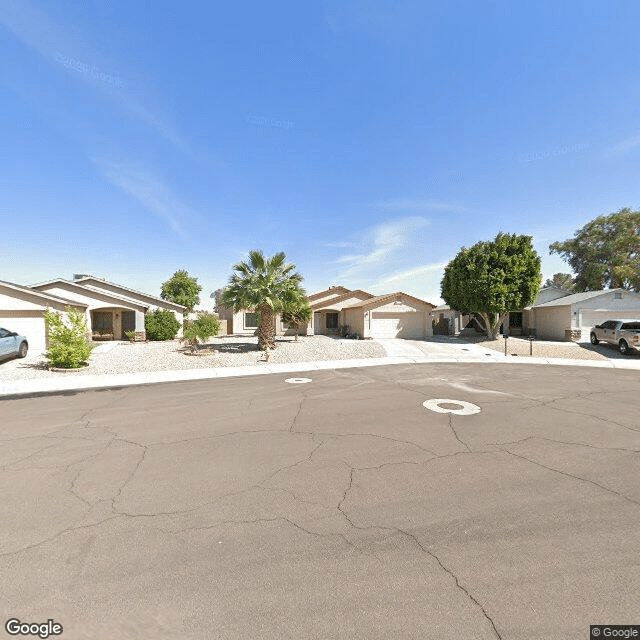
17625 North 48th Drive, Glendale, AZ 85308
To contact a resident: (602) 863-4885
For more information about senior living options: (866) 208-4318
Our Home Adult Care Costs & Pricing
At Our Home Adult Care, the monthly costs for various room types are competitively positioned when compared to both Maricopa County and the broader state of Arizona. For a semi-private room, residents can expect to pay $2,500, which is notably lower than the county average of $2,801 and the state average of $2,820. Similarly, private rooms at Our Home are priced at $3,000 - again more affordable than the county's $3,318 and the state's $3,345. Interestingly, for those seeking a one-bedroom accommodation, Our Home offers a rate of $4,000 per month; while this is higher than the county's average of $3,473 and slightly above the state average of $3,532, it reflects a comprehensive care approach that prioritizes quality and comfort. Overall, Our Home Adult Care provides an appealing value proposition for families considering residential care options in the region.
| Floor plans | Our Home Adult Care | Maricopa County | Arizona |
|---|---|---|---|
| Semi-Private | $2,500 | $2,801 | $2,820 |
| Private | $3,000 | $3,318 | $3,345 |
| 1 Bedroom | $4,000 | $3,473 | $3,532 |
Memory care communities with a similar price nearby
-
About the same
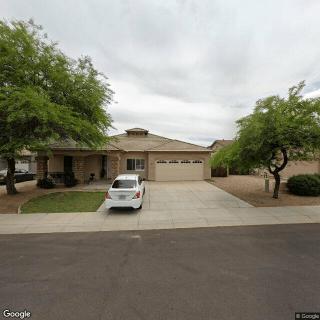
Anc Assisted Living Homes I
$2,500 to $3,500 / month16.9 miles away -
from +$200 / mo
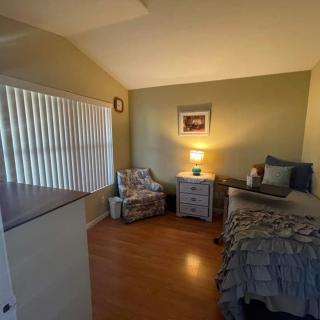
Caring Hearts Senior Care
$2,700 to $3,500 / month13.1 miles away -
About the same
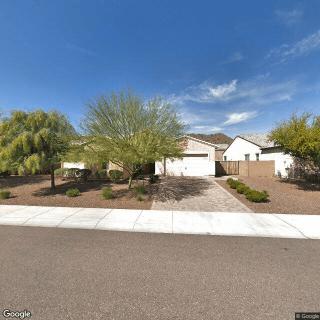
Northlands Assisted Living Home
$2,500 / month8.5 miles away -
from -$245 / mo

Windsor Luxury Assisted Living, LLC
$2,255 to $5,950 / month14.1 miles away -
from -$275 / mo
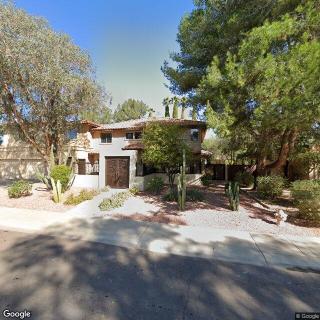
Harts Home - Exceptional Elder Care
$2,225 to $5,500 / month16.0 miles away
Overall Review of Our Home Adult Care
Pros
 The care home provides wonderful care and has wonderful food.
- The staff deliver great care, food, and cleanliness.
- It is an amazing place for those who are dear to be cared for.
Review
Our Home Adult Care in Glendale, AZ is best suited for families seeking a small, home-like setting where residents receive highly personal, compassionate attention, meals that feel wholesome and satisfying, and a bright emphasis on cleanliness. The two reviews paint a picture of a close-knit environment where staff genuinely care for residents and where meals are a daily highlight. For seniors who respond well to routine and prefer warm, individualized interactions over impersonally large campuses, this setting offers a comfort level that is hard to match in bigger facilities. This is not a place for those chasing resort-style amenities; it is a practical, heart-led alternative that delivers on daily lived experience.
The core appeal centers on care that feels attentive and steady. Families seeking reassurance will note the emphasis on daily care routines, a clean living space, and food that sustains both appetite and mood. When life matters most, smiles with meals, calm supervision, and a caregiver who recognizes a subtle change in a resident’s tone, these factors become the backbone of the resident’s day. In environments where consistency and trust are paramount, the blend of compassionate staff and a well-kept home can translate into fewer evenings spent worrying about a loved one’s well-being. In short, the combination of care quality, cleanliness, and kitchen warmth creates a dependable, family-affirming experience.
Who should consider alternatives? If a senior’s needs extend into intensive medical oversight, complex wound care, or specialized memory care, a larger facility with on-site clinical teams and defined memory-care programming may be more appropriate. Families seeking a broad menu of therapeutic activities, structured group outings, or robust rehabilitation services post-hospitalization may also find a bigger community better suited to those desires. For residents who benefit from a wide social calendar or who require 24/7 skilled nursing, the intimate home setting may feel limited by its scale. In such cases, a move to a more expansive community can ensure access to a full spectrum of services.
The strongest positives, genuine, attentive care; high-quality meals; and a clean, orderly environment, work together to offset the potential downsides of a small operation. The intimate setting enables rapid communication, highly customized care plans, and a level of hands-on supervision that can feel more reassuring than in a larger, task-driven facility. Cleanliness reinforces safety and comfort, while satisfying meals support nutrition and morale, which are foundational for quality of life. The downside risk, namely fewer on-site resources for medical complexity or recreation, tends to be mitigated by the daily hands-on engagement of staff who know each resident well and by the family-friendly, transparent approach to care planning.
Practical considerations for families are straightforward to verify during a visit. Confirm staffing patterns and whether there is round-the-clock coverage or a caregiver on-site for most hours. Inquire about how meals are planned, how dietary restrictions are accommodated, and how flexibility is handled for favorite dishes or cultural preferences. Ask about how care plans are documented, communicated to families, and updated in response to any changes in health or behavior. And it is wise to discuss visitation policies, emergency procedures, and the process for coordinating external medical appointments so that the home and family can act in concert when needed.
Bottom line: for Glendale families prioritizing a warm, clean, and food-forward home atmosphere with consistently caring staff, Our Home Adult Care stands out as a practical, wholehearted option. It offers a compelling blend of personal attention and day-to-day stability that can reduce caregiver anxiety and elevate a resident’s sense of belonging. However, if the elder requires heavy medical oversight, memory-care specialization, or a broad array of on-site programs, consider alternatives that deliver those capabilities at a larger scale. The right choice hinges on balancing the value of a home-like, intimate setting against the specific medical and social needs of the individual. A thoughtful visit will reveal whether this community matches that balance.
 Board and Care Home
 Memory Care
 Activities off-site
 Indoor common areas
 Outdoor common areas
 Private
 Private bathrooms
 Respite or short term stays offered
 Wheelchair accessible showers
 Phoenix Sky Harbor International (17 miles away)
 Diabetic care
 Incontinence care
 Kosher

 Why Do Dementia Patients Sleep So Much? Understanding Oversleeping, Stages, and Care Approaches
 8 Key Indicators That Suggest It May Be Time to Transition from Assisted Living to Skilled Nursing Care
 Nourishing the Mind: Essential Dietary Approaches for Dementia