
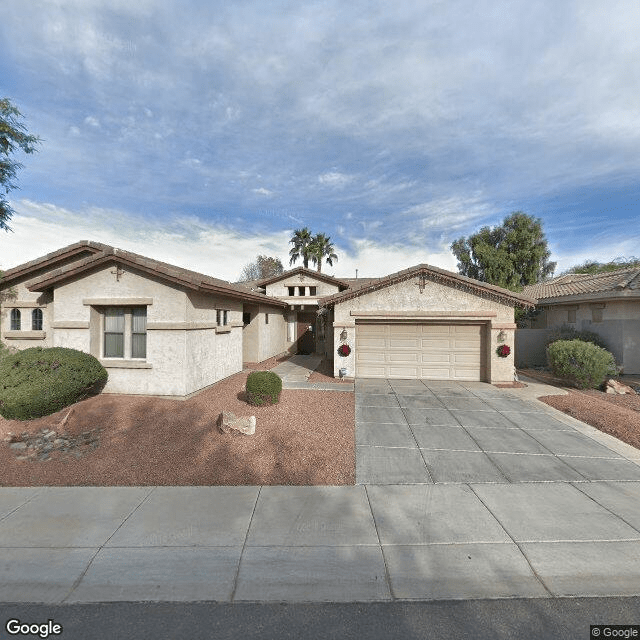
474 W. Remington Drive, Chandler, AZ 85286
To contact a resident: (480) 307-9114
For more information about senior living options: (866) 208-4318
Desert Springs Assisted Living Home Costs & Pricing
Desert Springs Assisted Living Home offers competitive pricing for its services compared to regional averages in Maricopa County and the broader state of Arizona. For a semi-private room, residents can expect a monthly cost of $2,300, which is notably lower than the county average of $2,801 and the state average of $2,820. Private rooms are available at $3,000 per month, again offering savings against both the county's typical charge of $3,318 and the state's $3,345. Additionally, their one-bedroom options are priced at $3,500, which is slightly above Maricopa County's average of $3,473 but still favorable when compared to Arizona's overall figure of $3,532. This strategic pricing underscores Desert Springs' commitment to providing affordable care while maintaining high-quality living conditions for its residents.
| Floor plans | Desert Springs Assisted Living Home | Maricopa County | Arizona |
|---|---|---|---|
| Semi-Private | $2,300 | $2,801 | $2,820 |
| Private | $3,000 | $3,318 | $3,345 |
| 1 Bedroom | $3,500 | $3,473 | $3,532 |
Memory care communities with a similar price nearby
-
from +$200 / mo

La Bella Vita ALH
$2,500 to $7,000 / month12.9 miles away -
from +$100 / mo
Golden Touch One Adult Care Home
$2,400 to $5,800 / month4.9 miles away -
from -$300 / mo
Santo Nino Villas 2
$2,000 to $2,300 / month3.0 miles away -
from -$300 / mo
Angel's Adult Group Home
$2,000 to $3,000 / month7.9 miles away -
About the same

Windsor Luxury Assisted Living, LLC
$2,255 to $5,950 / month17.9 miles away
Overall Review of Desert Springs Assisted Living Home
Pros
 The care here is exceptional.
- They were very careful and thorough with the patients.
- The service is top-of-the-line and provides peace of mind that their mom is well taken care of.
- The head care provider is very sweet, understanding, and patient.
- The staff are always warm with greetings and smiles.
- Hospitality, cleanliness, and professionalism are perfect.
- They are very satisfied.
- They felt comfortable there.
- The bedroom was across the hall from his room, which felt reassuring.
- It just felt good.
- They are hopeful that it will work out.
Review
Desert Springs Assisted Living Home in Chandler is best suited for families that want hands-on, high-caliber caregiving delivered in a polished, low-drama setting. It works well for seniors who prefer a calm, personalized atmosphere where staff know residents by name, respond with warmth, and maintain a tidy, professional environment. This community appears to deliver daily care with a level of attentiveness that reduces the worry of neglect and medication mismanagement, making it a strong fit for loved ones who prioritize reliability over flashy amenities.
The standout strengths are clear in the feedback: care that feels exceptional, with thorough attention to residentsā€™ needs. Families cited top-tier service and genuine peace of mind that their loved one is being well cared for. The head caregiver was described as sweet, understanding, and patient, consistently greeted residents warmly. Cleanliness, hospitality, and professionalism were highlighted as nearly flawless, painting a picture of a well-run operation where residents are treated with dignity and respect.
The main caveat in the available impressions is a limited, two-review data point. There is no detailed discussion of medical staffing levels, rehabilitation options, memory-care specialization, or long-term pricing. One reviewer expresses cautious optimism about placement, which signals fit and comfort but also hints at the need for a longer track record or more concrete assurances before locking in a decision. In short, the information set is narrow, leaving questions about how the community handles escalating care needs, complex therapies, or budget constraints.
Those gaps, however, are offset by the demonstrated strengths. When care quality and staff warmth are the defining features, families derive reassurance that daily routines, safety checks, and personal interactions will be consistently managed. A clean, professional environment complements this by reducing everyday stress for residents and family members alike. In practice, Desert Springs appears to deliver a dependable baseline of comfort and supervision, which can be decisive for seniors who fear neglect or rushed care in daily life.
For families weighing options, this community rewards a focus on person-centered care and reliable staffing over expansive programming or campus size. Prospective residents should verify practical details that matter in the long run: how caregiver assignments work, daily activity scheduling, meal quality, medication management, and how the team handles transitions if needs increase or health declines. A tour should be used to observe resident-staff interactions, request a clear overview of costs, and ask about respite or trial-stay possibilities to test fit without full commitment.
Bottom line: Desert Springs is a solid, confidence-inspiring choice for families prioritizing compassionate, thorough care in a clean, professional setting. It deserves strong consideration for those seeking steady daily support and genuine staff engagement. However, for families needing robust memory-care programming, intensive medical oversight, or budget-driven decisions, it pays to compare against options with explicit memory-care tracks, higher medical integration, or clearer long-term pricing. A structured, in-person visit remains the best next step to confirm fit, with conversations focused on staffing consistency, care plans, and what happens if needs evolve.
 Board and Care Home
 Memory Care
 Air-conditioning
 Cable or satellite TV
 Indoor common areas
 Private
 Wi-Fi/high-speed internet available
 Phoenix Sky Harbor International (14 miles away)
 Diabetic care
 High acuity care
 Incontinence care
 Medication management
 Low / no sodium
 Birthday parties
 Live musical performances


 Understanding Medicaid Coverage for Assisted Living: A Comprehensive Guide
 How and When Medicaid May Cover Assisted Living Costs
 A Detailed Exploration of Assisted Living Medicaid Waivers Across the United States