
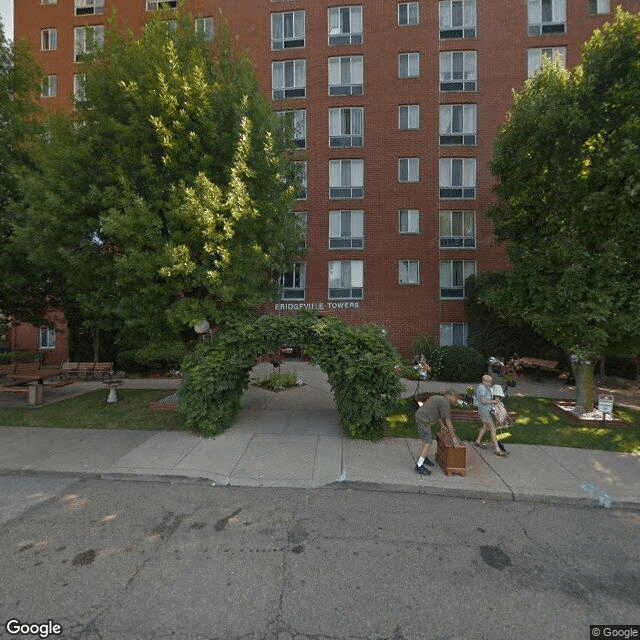
479 Bank Street Ext, Bridgeville, PA 15017
To contact a resident: (412) 221-1770
For more information about senior living options: (866) 208-4318
Overall Review of Bridgeville Towers Assoc
Pros
 Some residents in Bridgeville Towers are nice.
- A resident has shown positive social engagement with others in the building, dancing with women who have canes or wheelchairs.
Cons
 Bridgeville Towers is described as unprofessional, unreliable, and infested with bed bugs with little effort to fix it.
 - The manager is described as rude and more concerned with accusations of theft than residents’ welfare.
- Pest control is sporadic, sub-par, and does not consistently return as promised.
- Residents are reportedly not permitted to leave their apartments, and health and safety concerns are ignored.
- The central oxygen system stopped working, and the building refused to replace it due to the bed bug issue.
- The office is inconsistently staffed, with little to no presence on some days.
- The infestation is claimed to be out of control, with owners prioritizing money over residents’ health and safety.
- The reviews advise against renting from these landlords, asserting it’s a poor living situation.
Review
Bridgeville Towers is best suited for residents who can tolerate chronic management gaps, limited oversight, and a persistently pest-ridden environment. In practice, this community serves a niche where very low expectations around safety and cleanliness are the baseline; anyone who needs reliable sanitation, timely maintenance, and professional, respectful leadership should look elsewhere. Families evaluating options for an aging loved one should consider alternatives that offer demonstrable, consistent operations and a proven track record of pest control, on-site staffing, and responsive management. This is not a facility built for those who require predictable health safeguards or structured routines, nor for residents who expect a professional, courteous office team to respond promptly to concerns.
Operational realities, based on multiple accounts, skew toward breakdowns. Bed bugs have been a persistent issue over years, with pest control efforts described as sporadic and insufficient; residents report infested furniture being left in common areas and a pattern of delayed remediation. Office presence is unreliable, with concerns that staff are not consistently available to address urgent needs. The management portrayal varies, but at least one reviewer highlights a young manager who is perceived as rude and dismissive, focusing more on accusations of theft than on resident welfare. The combination of unresolved infestations, limited access to staff, and a culture of perceived indifference creates an environment where daily living can feel unstable and stressful.
Yet there are threads of humanity in the mix. Some residents are described as genuinely kind and supportive, and there are moments when staff or fellow tenants step in to help neighbors in need. One reviewer even recounts personal acts of care, dancing with residents who rely on canes or wheelchairs and offering practical assistance, hinting at a social fabric that, under different leadership, could be meaningful. The presence of these individuals suggests potential for a thriving resident community if the operational fundamentals could be stabilized. It is a reminder that the space itself is not inherently doomed, but the current conditions make those better aspects hard to access on a day-to-day basis.
However, the potential positives do not offset the dominant liabilities. Health and safety concerns from ongoing infestations present real risks to residents, especially to those with chronic health needs or equipment like oxygen systems that require uninterrupted service. The repeated delays in pest remediation, coupled with reported punitive or restrictive communications from management, erode trust and limit residents' ability to live with dignity. The inconsistent office hours compound the problem, creating large gaps where concerns go unanswered. In short, the core value proposition, the promise of a safe, comfortable living environment with reliable management, fails to materialize in a material way, and that gap is decisive for most families evaluating long-term care options.
For families still weighing Bridgeville Towers, a disciplined, risk-aware approach is essential. Demand a concrete remediation plan: a documented schedule for comprehensive building-wide pest control, clear timelines for next steps, and proof of ongoing service, with accountability measures for contractors and management. Seek details on how emergencies are handled when staff are not on-site, and insist on written policies that prevent residents from being locked into apartments during infestations. Verify state licensing, inspection histories, and previous violation records; compare these with more established, well-reviewed facilities offering 24/7 on-site staff, transparent maintenance logs, and clearly communicated safety protocols. If a move seems wise, schedule firsthand tours, talk to current residents privately, and request a trial period or a clearly defined exit option if conditions do not improve.
Overall, Bridgeville Towers does not represent a practical choice for the majority of seniors and their families. The combination of long-running pest issues, unreliable management, and health-safety concerns creates a risk profile that outweighs any limited social benefits. Alternatives in the region with stronger pest control, steady leadership, and transparent operations should be prioritized. Look for communities with robust housekeeping programs, routine inspections, proactive maintenance, and a track record of promptly addressing resident concerns. When making a selection, prioritize a facility where clean, safe living is non-negotiable, and where the staff demonstrates consistent, respectful engagement with residents and families. This is the essential difference between a place that merely exists and a place that truly supports ongoing independence and well-being.
 Independent Living
 Pittsburgh International (11 miles away)


 Understanding the Sandwich Generation: Stress and Responsibilities for Multigenerational Caregivers
 8 Essential Assistive Devices for Older Adults
 Navigating the Financial Road to Nursing Home Care: In-Depth Guidance and Resources