
210 St. Mary's Drive, Cherry Hill, NJ 08003
To contact a resident: (856) 424-9521
For more information about senior living options: (866) 208-4318
St. Mary's Villa Costs & Pricing
St. Mary's Villa offers competitive pricing for its accommodations compared to both Camden County and the broader New Jersey area. For a studio room, residents can expect to pay $3,500 per month, which is significantly more affordable than the Camden County average of $4,412 and the New Jersey state average of $5,286. Similarly, the one-bedroom option at St. Mary's Villa is priced at $5,500, again providing a favorable alternative to Camden County's rate of $4,528 and New Jersey's higher average of $5,994. This pricing structure positions St. Mary's Villa as an attractive choice for those seeking quality living arrangements without compromising on budget considerations in a regional context.
| Floor plans | St. Mary's Villa | Camden County | New Jersey |
|---|---|---|---|
| Studio | $3,500 | $4,412 | $5,286 |
| 1 Bedroom | $5,500 | $4,528 | $5,994 |
Independent Living communities with a similar price nearby
-
from +$280 / mo
Brightview Greentree
$3,780 to $9,675 / month2.8 miles away -
from -$530 / mo
Brandywine Living At Haverford Estates
$2,970 to $7,020 / month20.4 miles away -
from -$400 / mo
Cardinal Village
$3,100 to $4,925 / month11.6 miles away -
from -$200 / mo
The Landing Of Washington Square
$3,300 to $4,290 / month11.9 miles away -
from -$500 / mo
The Mansion at Rosemont
$3,000 to $5,259 / month22.5 miles away
Overall Review of St. Mary's Villa
Pros
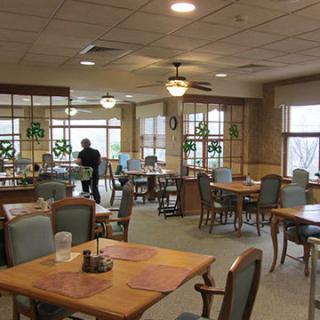
 The facility is in a beautiful, peaceful location with walking paths.
- Independent living with its own bath is included with the basic rate.
- The sister showed dramatic improvement, receiving proper nutrition, regular meals, medication, and socialization.
- One nurse has been the resident's only consistent advocate since arrival.
- The cleaning staff works constantly and keeps the facility immaculate.
- The physical, occupational, and speech therapy departments are exceptional.
- Her mother received helpful and friendly care from the nurses, and her rehab stay was pleasant and productive.
Cons
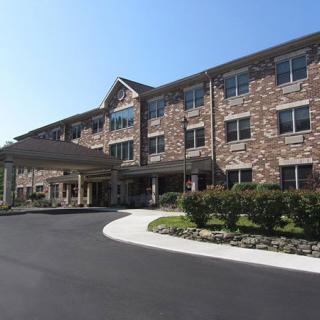
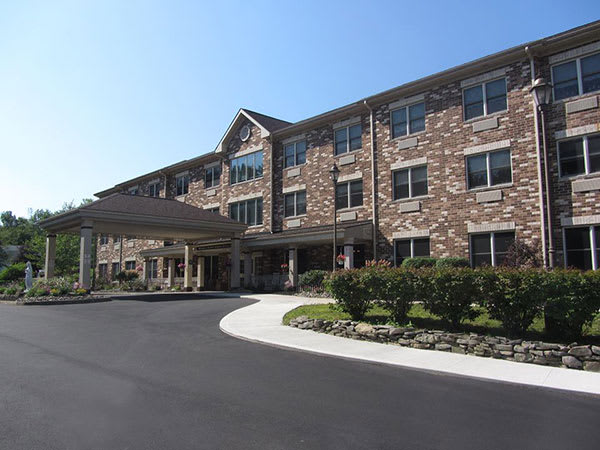
 The building may not be new and modern.
- From the day he moved to St. Mary's Villa, it has been difficult and downward.
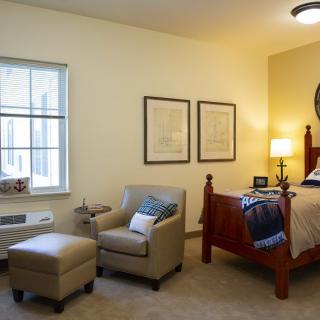
- On move-in day the carpet was dirty, head and footboards broken, cable not connected, landline broken, cell service horribly poor, and the toilet disabled.
- There was a lack of leadership.
- His legs began swelling, perhaps from sodium in the food, and his BP began to rise; he stopped driving.
- A vascular procedure was never cleared by his cardiologist, and he had to pay for a walk-in tub that should be standard.
- The kitchen team varies, suggesting inconsistent quality.
- It is clear that elderly care is a business; finding hearts that really care is difficult.
- The care was very costly.
Review
St. Mary’s Villa in Cherry Hill is best suited for seniors who want a quiet, walkable setting with attentive nursing support and solid rehabilitation services, all without chasing a brand-new facility. The most suitable residents are those entering independent living who still rely on structured meals, a private bathroom included in the base rate, and regular social and rehabilitative activities to sustain wellness. The serene grounds and easy walking paths reduce daily stress and support mobility and mood when paired with proper nutrition and social engagement. Families repeatedly note meaningful improvements for loved ones when staff address nutrition, medication management, and socialization, which helps offset the realities of an older building.
However, alternatives should be considered for seniors who prize modern infrastructure, consistent leadership, and seamless day-to-day reliability. The building’s age shows in move-in hiccups, carpets that weren’t pristine, repairs that arrived late, and service gaps that color first impressions and raise questions about oversight. Connectivity can be inconsistent, and essential features like a walk-in tub aren’t guaranteed as standard. For residents needing tighter medical coordination or higher levels of medical oversight, the variability in non-therapy departments can be a red flag. The strongest fit here favors those who can tolerate institutional aging in exchange for devoted bedside care and targeted rehabilitation, rather than a flawless, turnkey experience.
The strongest advantages lie in a care ecosystem that supports rehabilitation and daily wellness. The rehab, occupational therapy, and speech therapy units are repeatedly highlighted as exceptional, and nursing staff are described as consistently helpful and engaged. Cleaning staff keep common areas immaculate, contributing to a reliable sense of daily order. For someone moving in after a stroke or other medical setback, the combination of regular meals, social opportunities, and therapist-driven progress can translate into real gains. In one case, a nurse became a steadfast advocate, illustrating the critical role front-line staff play in shaping outcomes even when broader systemic issues persist.
Yet the care story is not uniformly flawless. A veteran resident’s family raises concerns about leadership responsiveness, medical-clearance coordination, and the consistency of basic amenities at move-in. When the kitchen’s procedures drift or communications around treatment plans falter, the risk is that health improvements stall or become uncertain. The facility’s environment reflects its age, not a polished, modern aesthetic, and some families weigh the cost against the reliability of service delivery. Still, the positive feedback about nurses, rehab teams, and cleaning staff demonstrates that staff dedication can be a meaningful counterbalance to the aging physical plant.
Cost, coverage, and care models matter in the decision. Some reviews note that rehab stays can be covered by insurance, while others point to considerable costs, shaping the risk-reward calculus for families. The inclusion of an own-bath in the base rate is an asset, reducing friction for independent residents, but other enhancements, such as walk-in tubs and more transparent medical clearances, may carry extra charges or variability. Prospective residents should verify what is bundled into the base rate, what requires additional fees, and how care plans align with insurance benefits. If the goal is to balance independence with reliable nursing oversight and effective rehabilitation, St. Mary’s Villa can deliver those outcomes, yet it demands careful due diligence.
Bottom line: for families prioritizing a peaceful setting, strong therapy staff, and clear pathways to regain or maintain function, St. Mary’s Villa is a sensible option in Cherry Hill. It suits those who can tolerate an older building and who value devoted nurses and structured rehabilitation more than pristine aesthetics. Those requiring rigorously consistent leadership, top-to-bottom modernization, and obstacle-free day-to-day operations should explore alternatives with more uniform governance and newer facilities. The recommended approach is a focused visit: meet the nurse advocate, tour rehab and therapy spaces, review a sample menu, inspect a current resident’s living area, and confirm the walk-in tub policy. With due diligence, families can determine whether this community aligns with care goals and budget.
 Independent Living
 Activities on-site
 Devotional services off-site
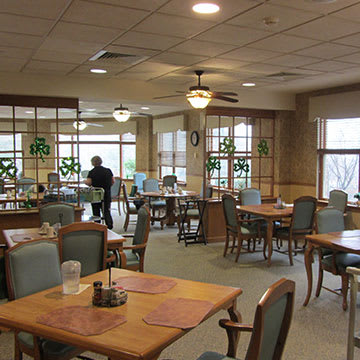
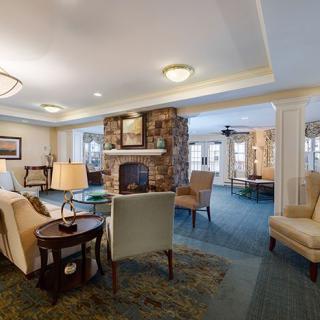
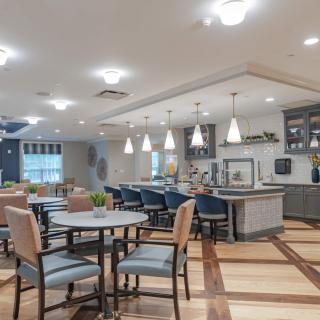
 Indoor common areas
 Philadelphia International (15 miles away)
 Ambulatory care
 Meals provided




 Seniors and Modern Transportation: Exploring Uber, Lyft, and Other Ride-Hailing Options
 Comprehensive Guide to Qualifying for Home Health Care Services
 Powerful Realities of Elder Abuse and the Most Effective Ways to Report It