Andrew Care Home

Save
Andrew Care Home

Andrew Care Home

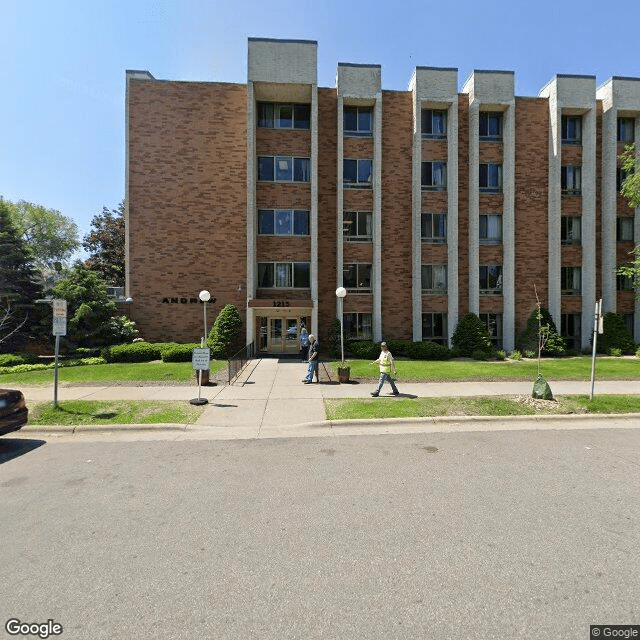
1215 S 9th St, Minneapolis, MN 55404

For more information about senior living options: (844) 490-3973

3.8 from 17 reviews
5 stars
10
4 stars
2
3 stars
0
2 stars
2
1 stars
3

Independent Living

Overall Review of Andrew Care Home

Pros

  • pro The care provided here is excellent.
  • pro Staff really care about the residents and it consistently shows.
  • pro It is a great place to live.
  • pro There is great health and mental health housing.
  • pro There is a wide array of programs and amenities.
  • pro There is a fitness room and a personal trainer.
  • pro There are music rooms and personal lessons.
  • pro Bus passes are available.
  • pro Personal scheduling is offered.
  • pro There is tobacco cessation.
  • pro There are social and mental health programs.
  • pro The facility is IRTS licensed.
  • pro The artwork on the walls is nice.
  • pro Dieticians are available and there is cafeteria-style dining for all three meals.
  • pro There is AA and chemical dependency programming.

Cons

  • pro Rabin was not a good supervisor.
  • pro The reviewer wasn't really happy living there.
  • pro There was mold and cold sandwiches.
  • pro The staff had taken half of every paycheck earned by residents.
  • pro The rooms were jail cell size.
  • pro Bedrooms were separated by hanging sheets, compromising privacy.
  • pro The building was in need of new carpet.
  • pro The reviewer would give it one star.

Review

Roughly a mosaic of impressions emerges from the notes about this facility, presenting both warm praise for how care is delivered and a sharp critique of the conditions, governance, and day-to-day realities that can accompany long-term residence. On one hand, several lines highlight that the care provided is excellent and that staff genuinely care about the residents. The sentiment runs through different voices: one person emphasizes that the care here is consistently evident, with staff who truly seem to care about the people living there. Even a resident who stayed for a substantial stretch - eight and a half years - acknowledges that the place wasn't perfect and that happiness was never fully achieved, but they also concede they were "better off" for being there in at least some respects. The overall tone suggests that, when it works, this is a setting where compassionate staff and a broad, supportive environment can make a meaningful difference for residents.

There is a contrasting but similarly strong sense of endorsement from another perspective, notably through the experience of the resident's Aunt Louella. They describe the facility as a "great place," with only one notable limitation: bedroom privacy. In this view, the core strength lies in the overall quality of life and the caregiving environment, and the belief that privacy could be improved without undermining the broader strengths of the community. The impression is that the base framework - care, routines, and community life - functions well enough to be considered a good place to live, even if some structural adjustments remain desirable.

Beyond the general sense of good care, the descriptions paint a comprehensive picture of the services and opportunities on offer. There is broad confidence in the health and mental health support, described as a "great health and mental health housing" setup that comes with a wide array of programs and amenities. People mention a fitness room with a personal trainer, which signals an emphasis on physical well-being alongside medical and psychological support. The programming is described as diverse, including Alcoholics Anonymous and other chemical-dependency programs, music rooms and opportunities for personal lessons, and practical supports like bus passes and personal scheduling. Additional elements include tobacco cessation programs and a robust menu of social and mental health programming. The facility is noted as IRTS licensed, and there are dieticians and a cafeteria offering a line-style dining experience across three meals each day. Taken together, these notes sketch a vibrant, service-rich environment that aims to address a wide range of resident needs, from healthcare to personal development and daily logistics.

Yet, the narrative quickly pivots toward more troubling notes, signaling serious concerns that would sit uncomfortably in any description of a care facility. A terse line - "Mold and cold sandwiches" - jarringly juxtaposes the positive descriptions with a stark accusation of substandard conditions or quality. This brief line stands in as a reminder that, for some residents, basic safety and nourishment can feel compromised even amid otherwise strong programming and staff engagement. The overall message here is that the facility's potential examples of care and community are shadowed by tangible, everyday problems that affect the lived experience of residents.

The harsher, more personal critiques center on governance, finances, privacy, and autonomy. One resident writes that the place "is in need of real public service," but also acknowledges that the people who work there "care for the most part." The complaint about finances is pointed and painful: "They have taken half of every paycheck I have earned." The living accommodations are described as cramped and regulated in ways that feel punitive: the facility has "2 and 3 bed room" layouts that are "separated by hanging sheets," with rooms described as "jail cell size." Cleanliness is framed as a matter of personal effort - "It is as clean as you make it" - implying a lack of consistent housekeeping standards that place responsibility on residents rather than on staff. The communication environment is likewise questioned, with the sentiment that mail is not personal and is opened with permission, an intrusion that reinforces a sense of monitored, managed resident life.

There are also concrete critiques about finances and daily life: the resident notes a limit of "$97 a month after any SSI," and mentions various administrative controls tied to the financial aspects of living there, including reservations about itemized bills and being part of a resident council. The sense of empowerment is undercut by a perception that the administration operates in a way that makes residents feel they are merely going through motions. The description of the building itself reinforces the sense of aging infrastructure: a call for new carpet and a sense that "the art work on the walls are nice," but are "owned by the owner," hints at a privatized governance structure where tangible assets are controlled by the owner rather than the residents or a transparent governing body.

Toward the end of the set of notes, there is a stark, personal conclusion about governance and the lived experience: the writer identifies as 34 and living among mentally disabled people who "are being used," a claim that signals a profound ethical concern about exploitation and the dignity of residents. The closing sentiment is framed in hopeful, if cautious, language: "Good luck," underscoring that potential residents should be mindful of both the strengths and the significant concerns that accompany life here. The final word across these notes is not one of simple praise or simple condemnation, but a nuanced, uneasy mix of gratitude for the care and community that can exist within the facility, and frustration or alarm about privacy, autonomy, and systemic issues that seem to blunt or threaten that care.

Taken together, these reflections present a complex portrait. On the positive side, the facility appears to deliver compassionate care and a broad, well-rounded program lineup designed to support health, mental health, education, and social life. The existence of a personal trainer, music rooms, diverse treatment programs, and a three-meal dining setup suggests a strong commitment to a holistic approach and to enabling residents to grow, learn, and stay engaged. On the negative side, the accounts of privacy limitations, cramped living spaces, inconsistent cleanliness, mail and financial controls, and a governing structure perceived as dominated by a single owner point to deep-rooted concerns about dignity, autonomy, and transparency. The blend of these elements - caring staff and meaningful programs alongside serious questions about living conditions and administrative processes - creates a nuanced legacy for the facility, one that is capable of offering real value to residents while simultaneously inviting scrutiny and calls for reform in ways that would matter deeply to those living there.

Features

Types of Care

  • Independent Living Independent LivingIndependent living communities are important for seniors because they offer a safe and supportive environment where older adults can live independently while still having access to amenities and services that enhance their quality of life. These communities provide social opportunities, recreational activities, and assistance with daily tasks, promoting overall well-being and allowing seniors to maintain their independence for as long as possible.

Transportation

  • Minneapolis-St Paul International (6 miles away) Minneapolis-St Paul International (6 miles away)

Description

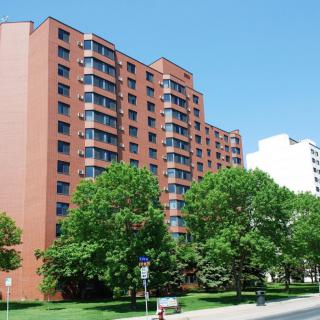
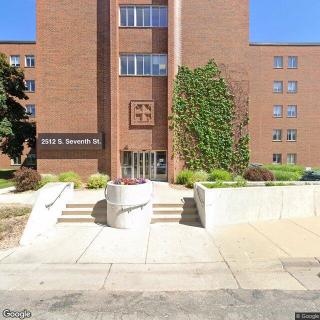
Andrew Care Home in Minneapolis, MN is a vibrant and well-situated assisted living community that provides residents with a wide range of convenient amenities and services. Located in a bustling neighborhood, the community offers easy access to numerous cafes, providing residents with opportunities to enjoy delicious meals and socialize with friends and family. Additionally, the 10 nearby parks offer beautiful green spaces for outdoor activities and leisurely strolls.

Ensuring the well-being of its residents is a priority at Andrew Care Home, which is evident from the presence of 15 pharmacies nearby. This ensures that medication needs are easily met and that prompt assistance can be sought when required. Moreover, the close proximity of 3 physicians allows residents to receive immediate medical attention whenever necessary.

To further enhance the lifestyle of its residents, Andrew Care Home boasts an impressive array of dining options within reach. With 39 restaurants nearby, there is no shortage of culinary delights for residents to explore and savor.

Transportation needs are also well taken care of as there is one transportation service available nearby. This provides easy access to important destinations such as medical appointments or shopping centers, ensuring that residents maintain their independence and remain connected within the larger community.

Recognizing the diverse spiritual needs of its residents, Andrew Care Home has taken into account the importance of faith by offering access to one place of worship nearby. This allows residents to practice their religious beliefs conveniently without having to travel far.

Lastly, residents can have peace of mind knowing that there are four hospitals in close proximity to Andrew Care Home. This ensures immediate access to quality healthcare services in case of emergencies or routine medical visits.

Overall, Andrew Care Home in Minneapolis, MN creates an enriching environment for its residents by providing them with numerous amenities and services within their reach. With its perfect balance between convenience and a thriving neighborhood atmosphere, this assisted living community offers a fulfilling lifestyle for all its valued residents.

Nearby Places of Interest

Located in the heart of Minneapolis, this neighborhood offers a variety of amenities and services that cater to seniors. With several hospitals nearby, including Hennepin County Medical Center and the University of Minnesota Medical Center, residents have easy access to quality healthcare. There are also numerous restaurants, cafes, and pharmacies within close proximity, providing convenience for daily needs. For leisure activities, there are several parks such as Mill Ruins Park and Loring Park where seniors can enjoy nature walks and outdoor recreation. Additionally, places of worship like Westminster Presbyterian Church offer spiritual support for those seeking community connections. Overall, this area provides a well-rounded environment for senior living with access to essential services and recreational opportunities.

Hospitals

  • Csc Gi Lab (0.4 miles)
  • Hennepin County Medical Center (0.4 miles)
  • University of Minnesota Medical Center - East Bank Campus (1.3 miles)
  • Regency Hospital (4.1 miles)
  • VA Medical Center (5.2 miles)

Restaurants

  • Maxwell's American Cafe (0.5 miles)
  • Sawatdee Thai Restaurant - Minneapolis (0.7 miles)
  • Hell's Kitchen (0.9 miles)
  • Owamni (1 miles)
  • 19 Bar (1.1 miles)
  • Gluek's Restaurant & Bar (1.2 miles)
  • Aster Cafe (1.2 miles)

Parks

  • Gateway Dog Park - Off-Leash Play Area (0.6 miles)
  • Mill Ruins Park (0.9 miles)
  • Loring Park (1.3 miles)
  • Franklin Terrace Off-Leash Dog Park (1.5 miles)
  • North Loop Dog Park (1.8 miles)
  • Boom Island Park (1.8 miles)
  • Longfellow Park (2.6 miles)

Places of Worship

  • Westminster Presbyterian Church (0.9 miles)
  • WW Studio (5.5 miles)
  • Elim Church Center (5.6 miles)
  • St George Greek Orthodox Church (5.7 miles)

Pharmacies

  • Walgreens (1 miles)
  • CVS Pharmacy (1.1 miles)
  • Walgreens (1.4 miles)
  • Target Pharmacy (1.5 miles)
  • CVS Pharmacy (2.2 miles)
  • Walgreens (2.2 miles)
  • Walgreens (3 miles)

Cafes

  • Dunn Brothers Coffee (1.3 miles)
  • Spyhouse Coffee (1.9 miles)
  • Roundtable Cof (2.9 miles)
  • Jinx Tea (4.7 miles)
  • Groundswell (4.9 miles)
  • Starbucks (5.2 miles)

Physicians

  • Whittier Clinic (1.5 miles)
  • HealthPartners Health Center for Women Clinic St Paul (2.5 miles)
  • Dermatology Consultants P.A. (4.6 miles)
  • Parkway Family Physicians (5.5 miles)

Transportation

  • Minnesota State Fair Transit Hub (4.1 miles)

Theaters

  • AMC Rosedale 14 (5.3 miles)

Frequently Asked Questions

Where is Andrew Care Home?

Nearby Communities

Related Resources

  • private pay home careA Closer Look at Private Pay Home Care

    Private pay home care offers a flexible caregiving option for older adults and families who don't qualify for government programs, allowing them to directly fund in-home care services that range from daily assistance to specialized support. This model's customization potential enables aging in place while addressing financial considerations through strategic planning options, though clients must navigate marketplace challenges and ensure quality compliance.

  • what to do for arthritisComprehensive Approaches for Arthritis: A Detailed Guide to Symptoms, Causes, and Care

    Arthritis encompasses over 100 joint disorders affecting people of all ages, leading to symptoms like pain and stiffness that impair mobility and quality of life. Effective management involves early diagnosis, lifestyle changes, medical treatments, emotional support, and ongoing monitoring with healthcare professionals.

  • elderly fall preventionComprehensive Insights and Practical Strategies to Help Older Adults Avoid Falls

    The article highlights the high risk of falls among older adults due to factors like muscle weakness, vision issues, and environmental hazards, with one in four experiencing a fall annually. It advocates for a comprehensive prevention approach that includes exercise, home safety modifications, medication management, social support, and caregiver involvement.