
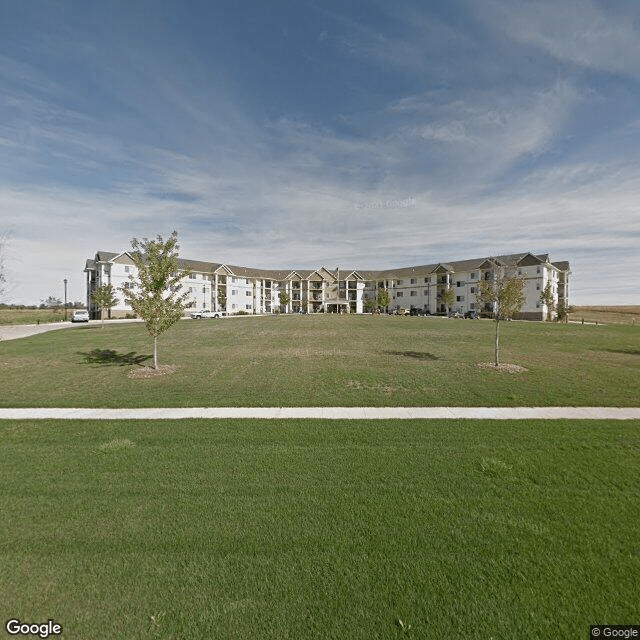
915 W Merle Hibbs Blvd, Marshalltown, IA 50158
To contact a resident: (641) 752-4411
For more information about senior living options: (866) 208-4318
Village Cooperative of Marshalltown Costs & Pricing
At the Village Cooperative of Marshalltown, residents enjoy a cost-effective living arrangement with one-bedroom units priced at $720 per month. This rate is significantly lower than the average housing costs in Tama County, which stand at approximately $2,418 for similar accommodations, and is also substantially less than the broader state average of $2,862. The cooperative not only provides affordability but also fosters a sense of community that enhances the overall quality of life for its members. This makes it an attractive option for those seeking both value and a vibrant living environment in Iowa.
| Floor plans | Village Cooperative of Marshalltown | Tama County | Iowa |
|---|---|---|---|
| 1 Bedroom | $720 | $2,418 | $2,863 |
Overall Review of Village Cooperative of Marshalltown
Pros
 Grandma loves it.
- The facility is well kept.
- It offers lots of amenities.
- The staff and residents are friendly.
- It is all one could ask for in senior living.
Review
Village Cooperative of Marshalltown is best suited for seniors who want a warm, well-kept, amenity-rich environment in Marshalltown, with a strong sense of community and friendly, responsive staff. The combination of a clean, cared-for campus and an active social scene makes it an especially good fit for couples or families seeking reassurance that a loved one will be in a safe, sociable setting. The sentiment from families, “That’s where Grandma lives. She loves it and so do I.”, speaks loudly: this community delivers everyday comfort, predictable routines, and visible care in a way that eases worry for relatives.
Those considering alternatives should note that this community is anchored in assisted-living norms with a focus on everyday life, social engagement, and practical support. Families whose loved ones require high-acuity medical oversight, specialty memory care, or a broader continuum of care may want to compare options with deeper on-site clinical services or larger campuses. For households prioritizing ultra-modern, cutting-edge facilities, or those seeking a broader metropolitan environment with extensive on-site specialists, it is sensible to look at other options. In short, this village excels in its niche, but not all care profiles may align.
The standout pros, well-maintained surroundings, abundant amenities, and a genuinely friendly staff and resident population, drive the overall value. The campus appears to operate as a self-contained, welcoming neighborhood where daily life is comfortable and predictable. Residents participate in a range of activities, enjoy well-kept common areas, and benefit from staff who come across as approachable and dependable. For families, these factors translate into real peace of mind: a loved one is in a place where people notice, greet, and support one another, with facilities that keep pace with everyday needs.
There are no explicit drawbacks highlighted in the available impressions, but a practical reviewer will still probe beyond the surface. Key questions for due diligence include the exact level of medical staffing, the range of on-site services, availability of memory-care options, transportation and outing logistics, dining variety, and apartment layouts or renewal terms. The absence of stated negatives makes it crucial to confirm pricing structures, move-in incentives, and how care plans scale over time. This is a community that shines in its current operation, but understanding its limits helps families avoid mismatches as needs evolve.
When the positives are weighed against those potential gaps, the offset is clear: for many seniors, the advantages of a well-kept, amenity-rich environment with a warm social ecosystem outweigh uncertainties about deeper clinical offerings. The real-world proof is in daily happiness and family confidence, the sense that a loved one is thriving, not just surviving, in a place that feels like home. Strong social programs, easy access to amenities, and staff who are genuinely engaged create resilience against the kind of boredom or isolation that can creep into quieter settings.
In final assessment, Village Cooperative of Marshalltown stands out as a top option for families prioritizing heart, hospitality, and dependable daily life in a community setting. It is especially well-suited for seniors who value companionship, straightforward assisted living with robust social programming, and a well-maintained environment. Prospective residents should plan a visit, interact with staff and current residents, sample meals, and discuss the trajectory of care costs and services. For those whose needs may exceed assisted living, it makes sense to compare with alternatives that offer a broader clinical continuum, but for many, this village will prove to be the right fit, comforting, well-run, and practically focused on living well.
 Independent Living
 Activities off-site
 Indoor common areas
 Outdoor common areas
 Wheelchair accessible showers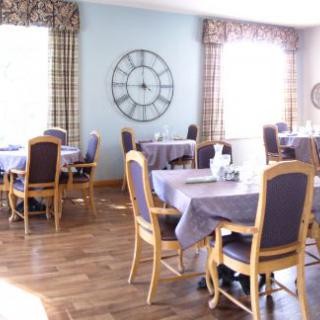






 Financing Long-Term Nursing Home Care Through Social Security: A Thorough Exploration
 Essential Knowledge on Pneumonia in Older Adults
 Exploring Palliative Care in the Home: A Comprehensive Overview