
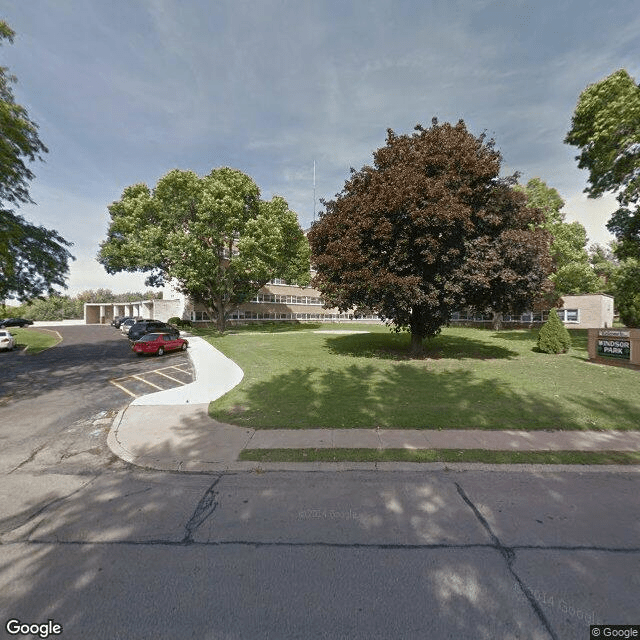
801 Davis Ave, Dubuque, IA 52001
To contact a resident: (319) 582-0646
For more information about senior living options: (866) 208-4318
Overall Review of Windsor Park
Pros
 The staff are friendly and willing to help.
- Kris is amazing and very helpful.
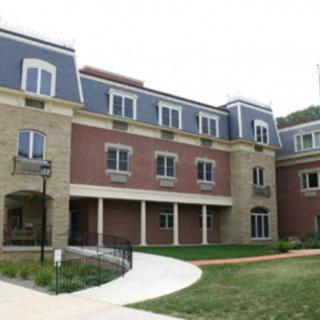
- The facility is very clean and would be a great place for mom.
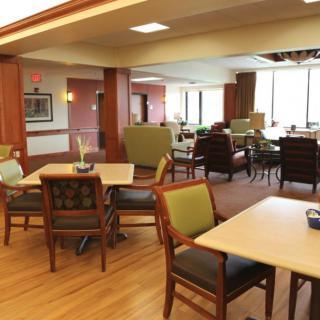
- The rooms and dining rooms at Windsor Park Retirement Apartments are good.
- The retirement apartments are clean and quiet, with residents who are very helpful to visitors and new residents.
- The retirement home is better than some other options.
Cons
 There was no 24-hour help available; residents would have to arrange their own assistance.
- The retirement home was not super amazing, though it was better than some.
Review
Windsor Park Retirement Apartments in Dubuque is best suited for totally independent seniors who want a clean, friendly, low-stress setting where neighbors are willing to help and staff are approachable. The community emphasizes privacy and a quiet, home-like atmosphere while providing straightforward access to on-site support for non-urgent needs. It functions as retirement apartments rather than a full-service assisted living campus, so there is no promise of around-the-clock care or on-site medical oversight. For families prioritizing a simple, stable base for ongoing independence, Windsor Park offers a solid, low-friction option that can feel like a natural next step for someone who values dignity, routine, and a sense of belonging.
Those whose loved ones require daily personal care, medication management, mobility assistance, or constant supervision will want to consider alternatives. The reviews consistently note the absence of 24-hour help on-site, making Windsor Park less suitable for residents who will, at some point, need hands-on caregiving or rapid access to staff during the night. It is clearly positioned for independent living, not for continuing care. In such cases, other communities that provide tiered care, on-site caregivers, and more comprehensive programming will likely better meet evolving needs and reduce family stress over future transitions.
The strongest positives at Windsor Park centre on people and surroundings. Residents and staff are described as friendly, with staff members who are genuinely helpful to visitors and new residents. The tone suggests a welcoming, small-community feel where neighbors look out for one another and the environment stays clean and orderly. The rooms and dining spaces are portrayed as solid and comfortable, reinforcing a sense of stability. In practical terms, these attributes translate into a low-pressure move-in experience, easier social integration, and predictable daily rhythms, all of which can significantly offset the constraints of a non-24/7 model for the right resident.
Yet the true limitation is the missing layer of care. The lack of 24-hour help is repeatedly highlighted as the defining trade-off. For a senior who experiences health fluctuations, mobility challenges, or the need for regular assistance with activities of daily living, Windsor Park cannot be counted on to cover those needs in-house. The sentiment that it’s “a retirement home” rather than an enhanced-care community conditions expectations accordingly: the benefit lies in a calm, independent living vibe, while the cost is the potential need to arrange external caregiving or to transition later as needs change. The overall impression in reviews sits between “solid” and “better than some” within the independent-living segment, with the caveat that it is not a substitute for assisted living.
For families making a decision, Windsor Park works best when the goal is a clean, quiet home base with friendly people and reliable basic services. It suits seniors who value simplicity, privacy, and a seasoned, welcoming resident culture, where staff are approachable and meals and common areas meet everyday needs. Pros offset cons the moment independence remains intact and a supportive community atmosphere reduces isolation. The main caveat, lack of round-the-clock care, should drive the evaluation: in scenarios requiring continuous supervision or on-demand assistance, tours should extend to true assisted living or larger campuses offering 24/7 staffing.
In the end, Windsor Park presents a practical, down-to-earth option for a specific slice of aging in place. It shines for independent seniors who want a clean, well-kept setting, friendly neighbors, and a staff presence that feels genuinely accessible. For families bookending a care plan that anticipates stable independence with light support, Windsor Park is a credible choice and worthy of a close look. Conversely, those facing uncertain future needs or a requirement for ongoing personal care should target alternatives that provide integrated care pathways, built-in supervision, and guaranteed 24/7 availability.
 Independent Living
 Activities on-site
 Devotional services off-site
 Indoor common areas
 Dubuque Municipal (9 miles away)
 Ambulatory care
 Diabetic care
 Meals provided


 Seniors and Modern Transportation: Exploring Uber, Lyft, and Other Ride-Hailing Options
 Comprehensive Guide to Qualifying for Home Health Care Services
 Powerful Realities of Elder Abuse and the Most Effective Ways to Report It