
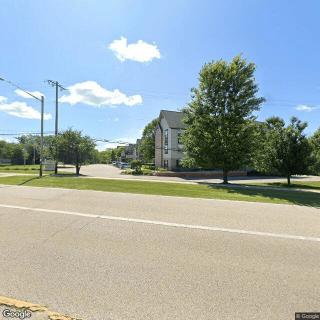
405 Prairie Song Drive, Waukesha, WI 53188
For more information about senior living options: (866) 208-4318
Overall Review of St Coletta Of Wi Norris
Pros
 Amazing staff and programs to meet individual needs.
- This is a one-of-a-kind institution, staffed by exceptional professionals who serve very special people.
- The organization is praised for its dedication and love.
- The organization is noted for caring for Rosemary Kennedy.
Cons
 Horrible drivers endanger the lives of their passengers and others on the road.
- A St Coletta employee driving while using a cell phone endangered the lives of others, after cutting off a vehicle and slamming on brakes.
Review
This community is best suited for families seeking long-term residential care for adults with substantial developmental or complex care needs, where a mission-driven, deeply experienced staff provides highly individualized programs. It is a place built on a history of dedicated service, with testimonials that emphasize stability, personal attention, and a sense of family for residents who stay for decades. For families who prioritize continuity of care, a strong caregiving culture, and programs tailored to very specific needs, Norris/St. Coletta’s offers a compelling, purpose-built home.
Those who may want to consider alternatives are families who place a premium on transport safety, modern conveniences, and broader medical oversight. Several reviews flag transportation as a serious concern, citing driver behavior and potential hazards on the road. If dependable, risk-averse transport and tighter governance around vehicle use are non-negotiable, or if a resident requires more acute medical supervision that extends beyond the facility’s core offerings, it makes sense to compare other options with stronger safety records and more contemporary infrastructure.
The strongest positives, exceptional staff, highly personalized programs, and a sense that care is shaped around the individual, often generate the strongest offset to the downsides. The community is praised for staff dedication, continuity of care, and programs designed to meet unique needs. Long-term residents and their families repeatedly describe the organization as a one-of-a-kind institution staffed by professionals who truly commit to residents’ welfare. Those qualitative advantages translate into meaningful daily outcomes for residents who thrive under a stable, relationship-driven care model.
Yet the main drawbacks demand serious scrutiny. Transportation safety stands out as the most notable risk, with at least one review detailing an on-road incident involving a driver using a cellphone and aggressive driving behavior. Such concerns are not mere quibbles; they bear directly on resident and family peace of mind. The overall rating impression, more five-star highlights than any other score but a solid block of one-star warnings, also signals a division between individual experiences. In practical terms, families must weigh the visible, emotionally resonant care and long-standing devotion against real-world risks in daily operations.
To evaluate fit, prospective families should request specific data and observe processes in action. Ask for a current transportation safety policy, driver training standards, vehicle maintenance logs, and incident response protocols. Inquire about staff-to-resident ratios across shifts, how individualized plans are developed and updated, and how progress is tracked for meaningful daily activities. Speak with program directors and, if possible, current families, to gauge how well the center translates its mission into tangible daily routines and long-term outcomes. Given the history of trusted care for family members with special needs, a candid tour that includes activity demonstrations, resident interactions, and an inside look at living spaces can reveal whether the culture aligns with expectations.
Alternatives worth exploring include other non-profit or faith-based facilities that emphasize safety, modern amenities, and transportation oversight, as well as specialized group homes or assisted living communities that collaborate with outside medical teams to deliver more comprehensive oversight. Families should compare not only what is offered in programs, but also how transport is managed, how staff retention is supported, and what contingency plans exist for emergencies. A thorough cost-benefit analysis should incorporate reliability of transportation, the emotional climate for residents, and the degree to which the setting feels like a stable, empowering home versus a strictly clinical environment.
In the end, Norris/St. Coletta’s Norris presents a compelling choice for a specific population: residents who benefit from a deeply committed, long-term caregiving culture and highly individualized programming, where staff devotion translates into meaningful day-to-day functioning. For families prioritizing safety in transportation, contemporary facilities, and broader on-site medical oversight, it is prudent to pursue alternatives with clearer safety records and more expansive service menus. A disciplined, multi-angled evaluation, visits, conversations with current caregivers, and a careful review of transport and incident protocols, will reveal whether this community is the right home or if another option better aligns with the resident’s needs and the family’s risk tolerance.
 8 resident community capacity
 Assisted Living
 Cable or satellite TV
 Dining room
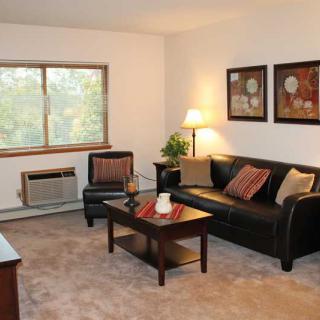
 Fully furnished
 Garden
 Housekeeping services
 Move-in coordination
 Outdoor space
 Telephone
 Wi-Fi/high-speed internet available
 General Mitchell International (21 miles away)
 24-hour supervision
 Activities of daily living assistance
 Assistance with bathing
 Assistance with dressing
 Assistance with transfers
 Diabetes diet
 Meal preparation and service
 Medication management
 Special dietary restrictions
 Transportation arrangement (medical)
 Transportation to doctors appointments

 Securing Financial Support for Assisted Living: A Comprehensive Overview
 Social Security Benefits and Assisted Living: Navigating Options Across the U.S.
 An Extensive Exploration of the VA Aid and Attendance Benefit