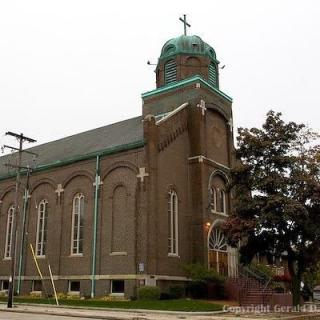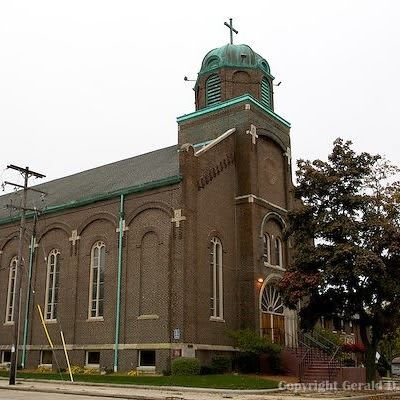
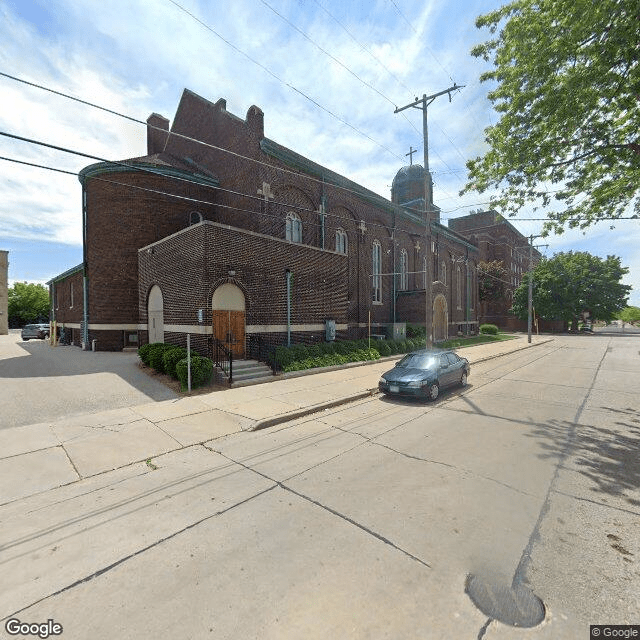
1503 Grand Ave, Racine, WI 53403
To contact a resident: (262) 880-5301
For more information about senior living options: (866) 208-4318
Overall Review of St. Richards
Pros
 People join in celebrating Faith Williams Poplawski's life, sharing in the joy she brought to others.
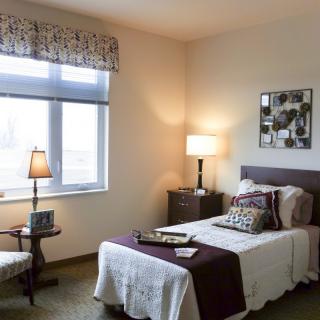
- The facility offers private rooms and three-shift RN coverage.
- The Harmony Club provides fun activities for elder members and fosters socializing where friends are made.
- The staff and volunteers are caring, and activities keep residents busy.
- It is a great place for Sunday Mass.
- Worship is very warm and friendly.
- It is a beautiful, simple, reverent, and holy space.
- It is their parish.
Cons
 They could improve on the activities by adding more variety.
- The church is very traditional.
Review
St. Richards in Racine is best suited for seniors who want a faith-forward, intimate living environment where privacy, dependable medical oversight, and a sense of parish life define daily routines. The community offers private rooms, which support autonomy and personal space, and it provides three-shift RN coverage to sustain continuous medical attention. Add to that caring staff and volunteers who visibly invest in residents, and the atmosphere feels quietly reassuring for families seeking stability. A strong worship life anchors days and weeks, with Sunday mass and a reverent, traditional tone that resonates with residents who want continuity with their faith community. The place already feels connected to a parish network, and residents who value familiar prayers, rituals, and seasonal liturgies will find it easy to settle into a recognizable rhythm. In short, St. Richards serves as a sanctuary for faith-adjacent living where daily care and spiritual life dovetail, rather than competing for attention.
Those weighing alternatives should note that the strongest caveat is a call for more varied, dynamic activities. Reviewers repeatedly acknowledge meaningful programs, but also point out room for enrichment, more variety, broader pacing, and opportunities beyond the familiar social circles. The Harmony Club, which meets there weekly, demonstrates a healthy social thread, yet it also signals that the activity lineup is not as expansive as some families might want. For residents who insist on a high-energy calendar, cutting-edge therapies, or secular, non-religious programming, other communities with broader activity membranes may be better fits. Likewise, families seeking a less denomination-centric environment, or a campus with a larger, more cosmopolitan resident mix, may find alternatives more aligned with those preferences. St. Richards remains strong, but it is particularly identified with faith-driven social life, not a broad spectrum of recreation.
The practical upside of the church-centered model is robust. Private rooms paired with consistent nursing coverage translate into tangible safety and privacy benefits, while the three-shift RN structure minimizes gaps in care and supports rapid response to changing medical needs. Caring staff and volunteers are repeatedly highlighted as genuine strengths, creating an atmosphere where residents are known by name and daily interactions feel personal. The social fabric, whether through informal gatherings, the Harmony Club, or in the pews for Sunday Mass, helps residents build and maintain friendships, reducing loneliness and fostering purposeful routines. For families, this combination of medical reliability, privacy, and meaningful social and spiritual engagement often outweighs the challenge of a less varied activities slate. The overall satisfaction signal remains strong, underscored by a high rating that reflects consistent performance across most measures.
Religious life is the defining texture of St. Richards, and it should be considered a central asset for those drawn to a traditional Catholic cadence. Descriptions of the place as “peaceful,” “reverent,” and connected to a parish culture reinforce a sense of belonging that can be hard to find in more secular settings. The church presence complements care by giving residents predictable, comforting rituals, daily routines, Mass, prayers, and communal rites, that can anchor memory and identity in later years. That same strength can feel constraining for families or residents who prefer a non-denominational or more eclectic spiritual life, or who seek a broader array of spiritual programming beyond what a single faith community offers. In such cases, the parish-centric atmosphere may either be an anchor or a limitation, depending on personal faith and desire for religious freedom within the community.
Ultimately, the decision to choose St. Richards comes down to alignment of values and expectations. This community shines for seniors who prize a quiet, sacred atmosphere, privacy, reliable medical oversight, and a cadence built around faith and familiar worship. If those elements match what a family is seeking, the pros substantially offset the principal con for some, the relatively modest variety of activities. If, however, the priority is a wide palette of recreational programming, secular social opportunities, or a sprawling campus with numerous clubs and venues, alternatives should be on the shortlist. Families evaluating St. Richards should request a current activities calendar, ask about the schedule and leadership of the Harmony Club, and confirm Mass times and available sacraments. A firsthand visit will reveal how staff interact with residents, how the private rooms are configured, and whether the pace and spiritual life feel like a natural fit.
 Day Program
 General Mitchell International (17 miles away)


 Comprehensive Guide to Medicare Coverage for Hospice Care
 Caring for Those Who Care: Recognizing, Understanding, and Overcoming Caregiver Burnout
 Caregiver Exhaustion: Recognizing the Signs and Restoring Your Well-Being