
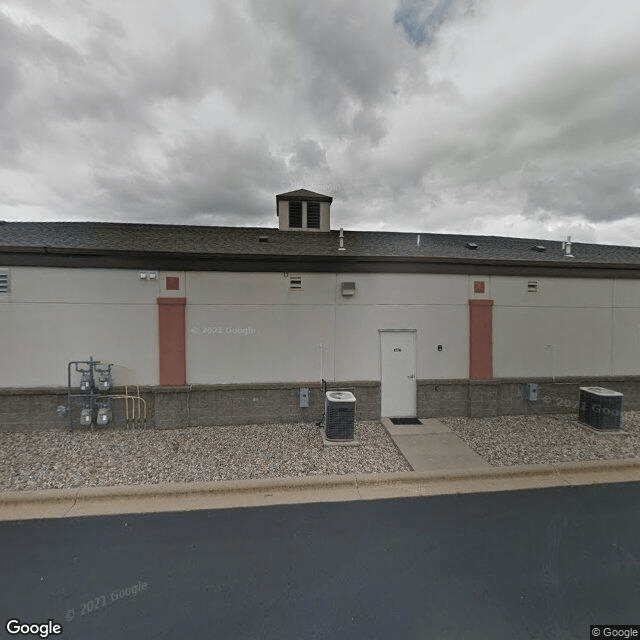
1533 Lyon Drive, Neenah, WI 54956
For more information about senior living options: (866) 208-4318
Vna Assisted Living Costs & Pricing
Vna Assisted Living offers competitive pricing that stands out against both Winnebago County and the broader state of Wisconsin. For a one-bedroom unit, Vna's monthly cost is just $1,180, which is significantly lower than the county average of $3,649 and the state average of $3,412. This presents it as an attractive option for those looking for affordable assisted living solutions. However, when considering studio apartments, Vna's price at $3,795 is slightly lower than the county's average of $3,905 and remains competitive compared to the state's average of $3,999. Overall, Vna Assisted Living provides valuable cost savings while ensuring residents receive quality care in a comfortable environment.
| Floor plans | Vna Assisted Living | Winnebago County | Wisconsin |
|---|---|---|---|
| 1 Bedroom | $1,180 | $3,649 | $3,412 |
| Studio | $3,795 | $3,905 | $3,999 |
Overall Review of Vna Assisted Living
Pros
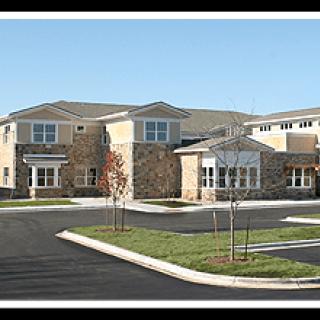
 The staff were very friendly and helpful to residents in assisted living, and the building is very nice.
- The staff treated the grandma with compassion and made her feel like family.
- The staff are extremely well trained and prepared for every situation.
- The administration and staff built an amazing relationship with the family.
- The teamwork among all team members was very obvious.
- The comfort of residing at Valley VNA was a great feeling.
- They would recommend this care center to everyone.
- Valley VNA has a specialty in memory/dementia care with well-trained employees.
- There are many activities for clients and residents, including Lyrics and Laughter, with the community invited to attend.
Cons
 She has had a number of negative experiences during her time in the assisted living care center.
- Her leg has been cut five times on her wheelchair.
- She has sustained many bruises on her arms and hands.
- Male residents have entered her apartment to take candy and use her bathroom.
- She was the victim of two thefts, including money and jewelry.
- Other belongings have disappeared, and her mail has been opened.
- She has no control over where she sits for meals or bedtime.
- After 3.5 years of sleeping in the same bed, she was told her bed was too high and part of it was removed to facilitate transfers for caregivers.
- She feels she is a burden to the caregivers.
- She pays $8,649 monthly to live there, with no control, no respect, and no safety.
- The reviewer felt that the apartments were a little small for their taste.
Review
Valley VNA Assisted Living in Neenah is best suited for families seeking a warm, community-centered environment with a clear strength in memory care, where long-tenured staff cultivate a familiar, family-like atmosphere and residents participate in an active calendar of events. The facility leverages a deep, century-plus tradition of senior care, and it shows in the daily demeanor of caregivers who routinely emphasize connection, respect, and gentle companionship. For families prioritizing emotional support, meaningful activities, and a sense of belonging, Valley VNA often delivers the kind of touch-and-feel experience that makes a difficult transition feel more manageable. The emphasis on memory/dementia care is a decisive plus, with staff described as well-trained and prepared to adapt as residents’ needs evolve.
That said, the community is not for everyone, and certain needs should steer families toward alternatives. Prospective residents who require stringent safety controls, highly regulated autonomy over daily routines, or more spacious living quarters may find Valley VNA lacking. Several reviews highlight pervasive safety concerns, ranging from intrusions and theft to physical injuries and privacy lapses. The most troubling notes describe scenarios where a resident’s security was compromised, belongings disappeared, and personal routines, such as meal seating or bed arrangements, were altered in ways that undermined dignity and control. For families with a heightened focus on robust safeguarding, or for those who expect near-perfect consistency in security and accountability, it is prudent to explore other options first.
The strongest positives, the experienced, compassionate staff, and the sense of being cared for as part of a larger family, are what make the cons worth weighing carefully. Reviewers repeatedly praise the staff’s dedication, the administration’s responsiveness, and the easy camaraderie that permeates the building. Memory-care staff is described as highly capable, with ongoing training and a teamwork dynamic that translates into a cohesive, supportive environment for residents and families alike. Activities, including specialized programs and opportunities that invite participation from residents and even their in-home care clients, create a lived-in feel that many families value beyond routine assistance. In scenarios where emotional well-being and social engagement are the primary objectives, Valley VNA often excels where other facilities falter.
In practice, the care culture described by most residents and families centers on relationship-building, not merely on tasks completed. The facility presents itself as a trusted long-standing community resource, with a visible emphasis on humane interaction and a philosophy that aging with dignity is attainable. The depth of that commitment shows in the way staff members are perceived across roles, from kitchen workers to nurses to administration, contributing to a sense that residents are known, valued, and continuously supported. For families seeking a place where a resident’s quality of life is prioritized through meaningful programming and a stable caregiving team, these are meaningful differentiators that offset many routine assisted-living trade-offs.
Nevertheless, red flags demand clear scrutiny. The most severe concerns involve safety lapses that directly affect a resident’s physical security and privacy: wounds from improper transfers, inappropriate entry by other residents, thefts, mail tampering, and feelings of being a burden due to shifts in care routines. Cost is another critical factor; at approximately eight-and-a-half thousand dollars per month in at least one account, the price reinforces the expectation of premium protection and autonomy. A reviewer’s note about the apartments feeling on the small side also bears consideration for couples or individuals expecting more space. These realities suggest that families should scrutinize current safety protocols, staff-to-resident ratios, incident reporting practices, and opportunities for residents to exercise self-direction within secure boundaries before committing.
The bottom-line approach for families is to align expectations with the facility’s distinctive strengths while actively testing for safety and autonomy safeguards. If memory care expertise, a proven, compassionate caregiving culture, and a strong sense of community are non-negotiable, Valley VNA stands out as a compelling option worth pursuing. However, for anyone whose top priorities include airtight safety controls, maximal resident independence, or larger living spaces, exploring alternatives with clearer security practices and more customizable floor plans is advised. A disciplined due-diligence plan should include an in-person tour focused on security features, a request for recent safety incident logs, conversations with current residents or family members, and a frank discussion about how bed heights, transfer aids, meal seating choices, and mail handling are managed on a day-to-day basis. In the right match, Valley VNA delivers connection, care, and comfort; in the wrong match, those same elements may be undermined by tangible safety and autonomy gaps.
 64 resident community capacity
 Assisted Living
 Independent Living
 Memory Care
 Activities on-site
 Air-conditioning
 Beauty salon
 Cable or satellite TV
 Computer center
 Devotional services off-site
 Dining room
 Fitness room
 Fully furnished
 Gaming room
 Garden
 Housekeeping services
 Indoor common areas
 Kitchenette
 Move-in coordination
 Outdoor space
 Private bathrooms
 Restaurant-style dining
 Small library
 Telephone
 Wellness center
 Wi-Fi/high-speed internet available
 Outagamie County Regional (8 miles away)
 Community operated transportation
 24-hour call system
 Ambulatory care
 Assistance with bathing
 Assistance with dressing
 Assistance with transfers
 Diabetes diet
 Diabetic care
 Medication management
 Special dietary restrictions
 Concierge services
 Planned day trips



 When Dementia Sparks Anger and Aggression: Understanding the Connection and Ways to Cope
 Dementia Behaviors: In-Depth Understanding and Effective Coping Strategies
 5 Early Indicators of Dementia and What You Can Do