
5739 North 98Th Street, Milwaukee, WI 53225
For more information about senior living options: (866) 208-4318
Overall Review of L&M Adult Family Home
Pros
 Caring For You AFH is highly recommended by case managers as one of the best group homes they have encountered.
- The owner of Caring For You AFH consistently demonstrates exceptional care, support, and patience in interactions with residents.
- Caring For You AFH’s staff are thorough, organized, and devoted to residents’ well-being.
- Residents at Caring For You AFH are consistently well cared for, happy, and genuinely cared for.
- The group home staff are trustworthy, devoted, and communicate well, going above and beyond for clients.
- The facility has wonderful staff who are great with loved ones.
- Caring For You AFH is described as a wonderful facility where staff treat residents like family.
- The environment at Caring For You AFH is clean, safe, and conducive to residents’ comfort and needs being met.
Review
This community is best suited for families seeking a warm, intimate, home-like setting in Milwaukee where daily caregiving is delivered with consistent hands-on attention. L&M Adult Family Home operates on a small-scale, owner-driven model that emphasizes close relationships, predictable routines, and a family-style atmosphere. It is ideal for residents who require help with activities of daily living, enjoy social engagement, and value safety and steady, personalized support. When care feels like a extension of family life, and staff know resident preferences and milestones, this setting stands out as a compelling match.
Those weighing alternatives should consider whether the resident’s needs extend beyond what a single-family-style home can sustainably provide. For seniors requiring more clinical oversight, memory-care specialization, or access to broader health services, such as on-site licensed nursing, physical therapy, or structured therapeutic programs, a larger facility or community with dedicated clinical resources may serve better. Families seeking robust transportation options, a wider calendar of activities, or more formal care coordination with outside clinicians might also find more suitable options elsewhere.
The strongest pros center on the owner and staff. Reviews consistently praise the owner for exceptional care, patience, and a genuine, family-first approach. The care team is described as thorough, organized, and highly communicative, with a capacity to engage residents meaningfully and respond to evolving needs. Residents tend to be described as well cared for, happy, and comfortable, which translates into low caregiver turnover and a sense of security for families. This emphasis on personal connection and transparent communication is the backbone that offsets the limitations of a smaller operation.
On the flip side, the most plausible drawbacks flow from the same small-scale model. The setting does not advertise extensive on-site nursing or memory-care specialization, and there can be tighter constraints on access to medical services during off-hours or when the owner is managing multiple tasks. Availability of structured medical therapies or highly specialized programs may be more limited than in larger facilities. While the staff’s devotion remains clear, families should anticipate a more home-centered rhythm rather than a clinical, hospital-like cadence.
Still, the strengths actively offset these potential limitations. The daily, intimate attention means residents receive vigilant, individualized monitoring and quick, tailored adjustments to care plans. The proactive, organized management, coupled with excellent family communication, produces reliable care continuity and rapid problem resolution, which often matters more to families than the breadth of services. In a setting where residents feel treated like family and staff are clearly invested in happiness and safety, quality of life can exceed expectations for many seniors who prioritize warmth, consistency, and a sense of belonging over formalized programming.
For families making a decision, this community is a thoughtful choice for those who want a compassionate, well-run, small-homes-style environment. It excels for residents with moderate care needs who thrive on routine, meaningful engagement, and steady caregiver relationships. It is less suited for individuals requiring intensive medical management, complex memory care, or a broad menu of clinical services under one roof. Prospective families should plan a visit with questions about staffing patterns, daily schedules, avenues for social activity, and how care plans are updated in collaboration with families. Inquire about openings, confirm the level of on-site medical support, and discuss what happens if health needs escalate. This approach yields a clear sense of fit and helps determine whether the personal, family-oriented strengths align with the resident’s care trajectory.
 4 resident community capacity
 Assisted Living
 Cable or satellite TV
 Dining room
 Fully furnished
 Garden
 Housekeeping services
 Move-in coordination
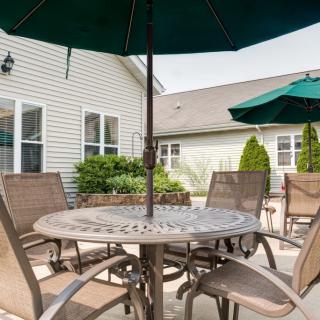
 Outdoor space
 Telephone
 Wi-Fi/high-speed internet available
 General Mitchell International (14 miles away)
 24-hour supervision
 Activities of daily living assistance
 Assistance with bathing
 Assistance with dressing
 Assistance with transfers
 Diabetes diet
 Meal preparation and service
 Medication management
 Special dietary restrictions
 Transportation arrangement (medical)
 Transportation to doctors appointments
 Vibrant Senior Living: A Comprehensive Guide for Active Older Adults
 When to Transition from Assisted Living to Memory Care: Key Indicators, Steps, and Finding the Right Community
 Assisted Living and Memory Care: Understanding Their Core Differences