
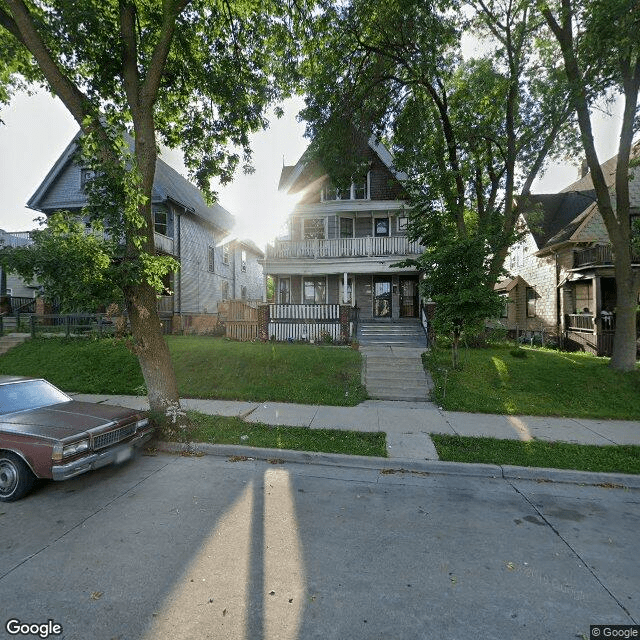
2133 N 39th Street, Milwaukee, WI 53208
To contact a resident: (414) 418-9155
For more information about senior living options: (866) 208-4318
Overall Review of Living Made Easy Homes LLC Site 1
Cons
 The group home neglected his son.
- He went from walking with a walker to being unable to get out of bed after a few months.
- He became so weak that he couldn't even sit up in bed.
- An ambulance was called and he was transported to Freodert Hospital.
- He was discharged to a nursing home.
- He was diagnosed with malnutrition and a vitamin B deficiency.
- His normal weight was 160 pounds, but he weighed only 116 pounds at discharge.
- The reviewer cautions others not to trust the facility to take care of their loved ones.
Review
This Milwaukee community is best suited for residents who can tolerate a small, home-style setting with active family oversight and who do not require intensive, on-site medical supervision. In practice, it tends to attract individuals who can live with variability in daily care and who have a trusted family member ready to advocate and check in frequently. The mixed feedback from current and former residents suggests that a warm, personable environment can exist on some days, but there is a real-elbow room for significant lapses in care that families must be prepared to monitor closely. For families seeking a predictable, consistently medically supervised experience, this option should be weighed with caution.
Those weighing alternatives should consider residents with higher medical or nutritional needs, mobility challenges, or safety concerns. If a loved one requires regular nursing oversight, precise medication management, and reliable nutrition monitoring, this setting may fall short. Families who cannot visit regularly or who cannot hold staff accountable through ongoing communication will want to explore other licensed facilities with transparent staffing metrics and formal care protocols. In short, this community may not meet expectations for reliability when medical acuity or nutrition are non-negotiable requirements.
The most salient pro is the potential for a smaller, more intimate living arrangement where staff interaction can feel personal on good days. Yet the two strongest cons highlighted in the resident feedback, serious neglect allegations and resulting health decline, sharply undercut those benefits. A notable claim of malnutrition and vitamin deficiencies culminating in hospital transfer draws a direct line to concerns about staffing consistency, adequacy of supervision, and the adequacy of care plans. When weighed against the positives, these serious safety risks tend to overshadow any favorable points, signaling that reliability and resident welfare are not guaranteed here.
To make an informed decision, rigorous due diligence is essential. Prospective families should request current staffing schedules, qualifications, and turnover rates; obtain explicit care plans for nutrition, mobility, and daily living activities; review recent incident or complaint logs, and verify access to medical professionals who can adjust orders promptly. Visiting unannounced and observing resident-staff interactions, meal service, medication administration, and responsiveness to calls can reveal gaps that documentation alone may miss. Independent reviews from state agencies or ombudsman filings can provide objective context about safety and compliance.
If proceeding, insist on concrete safeguards and a trial framework. Demand a defined period during which care goals are reviewed weekly, with measurable benchmarks for nutrition, mobility, hydration, and safety. Require transparent communication channels, including direct access to a supervising clinician and a clear escalation protocol for concerns. Ensure meal plans and dietary monitoring are part of the care plan, with regular weight checks and vitamin supplementation oversight if indicated. Set up a proactive plan for rapid transition to a higher-acuity facility if needs escalate, and secure a documented exit strategy that protects the residentā€™s welfare.
Ultimately, the decision hinges on balancing potential warmth and personalization against the risk of neglect and medical mismanagement. For families prioritizing rigorous medical oversight, predictable meals, and dependable staffing, alternatives with proven, consistent care will likely serve better. If this option is on the table, approach it as a high-stakes assignment: demand verifiable evidence of reliable care, insist on tight oversight, and prepare to move quickly if early signals of insufficiency appear. The welfare of a loved one demands nothing less.
 Assisted Living
 Activities on-site
 Devotional services off-site
 Indoor common areas
 General Mitchell International (8 miles away)
 Ambulatory care
 Diabetic care
 Meals provided
 Comprehensive memory care with 24/7 supervision, dementia programming, ADL support, meals, housekeeping, and transportation.



 Comprehensive Insights into Activities of Daily Living (ADLs) and Their Assessment
 Medicare Coverage for Assisted Living: An In-Depth Exploration
 Your Comprehensive Guide to Luxury Assisted Living: Elevated Facilities, Amenities, and Costs