Benedictine Living Community La Crosse Costs & Pricing
At Benedictine Living Community in La Crosse, residents can enjoy competitive pricing for their accommodations compared to both La Crosse County and the broader state of Wisconsin. For instance, a studio apartment is offered at $2,500 per month, significantly lower than the county average of $5,237 and well below the state average of $3,999. Moving to larger living spaces, the one-bedroom option is priced at $2,855, again favorable when juxtaposed with La Crosse County's average cost of $4,767 and the state's average of $3,412. The two-bedroom units are available at $3,530 per month; while this is higher than the county average of $6,080 and the state average of $3,111, it still presents a valuable choice within the local market. Overall, Benedictine Living Community La Crosse offers a range of accommodations that are thoughtfully priced to provide quality living options for its residents.
Floor plans
Benedictine Living Community La Crosse
La Crosse County
Wisconsin
Studio
$2,500
$5,237
$3,999
1 Bedroom
$2,855
$4,767
$3,412
2 Bedrooms
$3,530
$6,080
$3,111
Assisted Living communities with a similar price nearby
Overall Review of Benedictine Living Community La Crosse
common21 reviews mention this
Staff care and responsiveness
Residents and families repeatedly describe staff as kind, attentive, and quick to respond.
Across many of the reviews, families describe staff who treat residents warmly and follow through on concerns. Several people specifically call out quick answers to questions, supportive help during transitions, and a sense that staff work with families rather than at a distance. Even in reviews focused on medical recovery, residents describe nurses, aides, and therapy teams as respectful and caring.
common9 reviews mention this
Food that residents enjoy
Food comes up often, with residents and visitors describing meals they actually enjoy.
Dining is a recurring positive theme, with reviews mentioning good food and residents who look forward to meals. Multiple reviews describe restaurant-style community dinners or family dinner events, and at least one notes staff adjusting food preparation to match a resident’s ability to eat. A smaller number of reviews are negative about the food quality or the dining experience, including one describing food poisoning.
common8 reviews mention this
Activities and shared community
Reviews frequently mention activities that help residents socialize and stay engaged.
Residents and families describe activities as a meaningful part of daily life, from regular events to music and community gatherings. Several reviews mention residents meeting others quickly and enjoying programs after moving in, while others highlight the activity department and recreation-style programming. One review also describes spiritual and religious events as part of what residents take part in.
common7 reviews mention this
Clean, updated buildings
Many reviews praise the facility’s cleanliness and updates to common areas and rooms.
A noticeable number of reviewers comment on the building being clean, well maintained, and updated. Some mention brighter, refreshed common spaces and newly remodeled assisted living areas, while others describe their loved ones’ apartments as nice and comfortable. Even when the reviews focus mainly on care, cleanliness is often part of the first impression.
How we summarize
Counts show how many written reviews mention each theme; a review can touch several themes, and only frequently mentioned themes are displayed.
Features
Types of Care
Assisted Living
Pets
Cats allowed
Dogs allowed
Amenities
Activities on-site
Air-conditioning
Beautician on-site
Cable or satellite TV
Devotional services off-site
Devotional services on-site
Ground floor units
Indoor common areas
Kitchenette
Outdoor common areas
Private bathrooms
Wheelchair accessible showers
Wi-Fi/high-speed internet available
Transportation
La Crosse Municipal (7 miles away)
Care Services
Ambulatory care
Diabetic care
High acuity care
Incontinence care
Medication management
Dining
Meals provided
Room service
Activities
Activities on-site
BBQs or picnics
Bible study group
Birthday parties
Catholic services
Devotional activities offsite
Devotional activities on-site
Holiday parties
Other religious services
Reminiscence programs
Stretching classes
Yoga / chair yoga
Nearby Places of Interest
Located in La Crosse, Wisconsin, this neighborhood offers a range of amenities that cater to senior living. With a variety of dining options nearby such as the Hungry Peddler and The Barrel Inn Bar & Grill, residents can enjoy convenient meal options. Additionally, there are several pharmacies in close proximity for easy access to medication needs, including Uvanta Pharmacy and Walgreens. For healthcare services, Gundersen Lutheran Hospital and various physician offices are within a short distance. Seniors can also enjoy leisure activities at the nearby Marcus La Crosse Cinema or one of the many parks in the area like Weigent Park or Riverside Park. Overall, this neighborhood provides a mix of conveniences and recreational opportunities for seniors looking to make La Crosse their home.
Restaurants
Hungry Peddler (0.3 miles)
McDonald's (0.6 miles)
The Barrel Inn Bar & Grill (0.8 miles)
Wendy's (1.2 miles)
JavaVino (1.2 miles)
Schmidty's (1.3 miles)
Arterial Tavern (1.4 miles)
Pharmacies
Uvanta Pharmacy (0.4 miles)
Walgreens (0.7 miles)
Prescription Center (0.8 miles)
Degen Berglund Medical Equipment (1.1 miles)
Gundersen Pharmacy La Crosse (Degen Berglund) (1.2 miles)
Gundersen Pharmacy La Crosse East Building (1.2 miles)
Walgreens (1.5 miles)
Theaters
Marcus La Crosse Cinema (0.4 miles)
Places of Worship
Mary Mother of the Church (0.7 miles)
English Lutheran Church Elca (2 miles)
Blessed Sacrament Catholic Church (2.2 miles)
Physicians
Vandyke David Mdsc (0.9 miles)
Gundersen Lutheran - Gordon L Johnson MD (1.1 miles)
Gundersen Health System: Plastic Surgery Center (1.1 miles)
Gundersen Health System- Department of Nephrology (1.1 miles)
Gundersen Pharmacy La Crosse Clinic (1.1 miles)
Gundersen Lutheran Physical Medicine & Rehabilitation La Crosse (1.1 miles)
Joseph Vandenberg MD (1.2 miles)
Hospitals
Gundersen Lutheran Hospital (1 miles)
Gundersen Health System- Dental Specialties (1.1 miles)
Gundersen Health System- Hospice (1.1 miles)
Gundersen Health System Eye Care (1.1 miles)
Lutheran Hospital-La Crosse (1.1 miles)
Gundersen Health System - Labor & Delivery (1.1 miles)
At Benedictine Living Community in La Crosse, residents can enjoy competitive pricing for their accommodations compared to both La Crosse County and the broader state of Wisconsin. For instance, a studio apartment is offered at $2,500 per month, significantly lower than the county average of $5,237 and well below the state average of $3,999. Moving to larger living spaces, the one-bedroom option is priced at $2,855, again favorable when juxtaposed with La Crosse County's average cost of $4,767 and the state's average of $3,412. The two-bedroom units are available at $3,530 per month; while this is higher than the county average of $6,080 and the state average of $3,111, it still presents a valuable choice within the local market. Overall, Benedictine Living Community La Crosse offers a range of accommodations that are thoughtfully priced to provide quality living options for its residents.
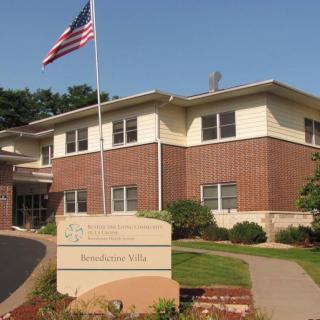
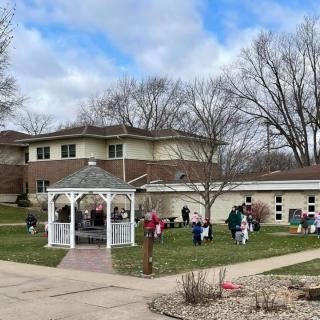
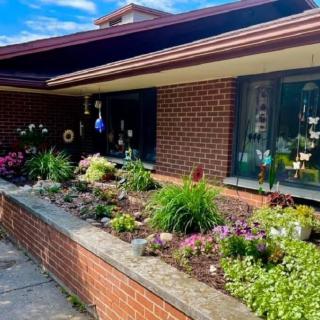
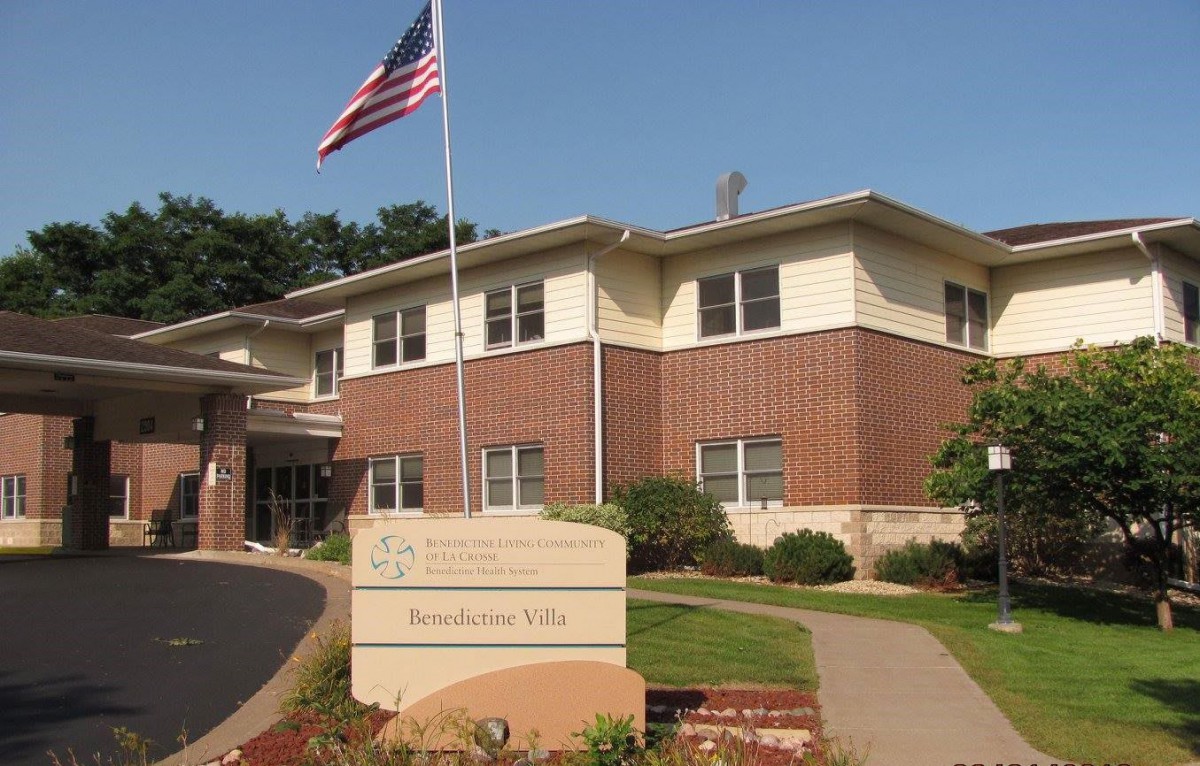
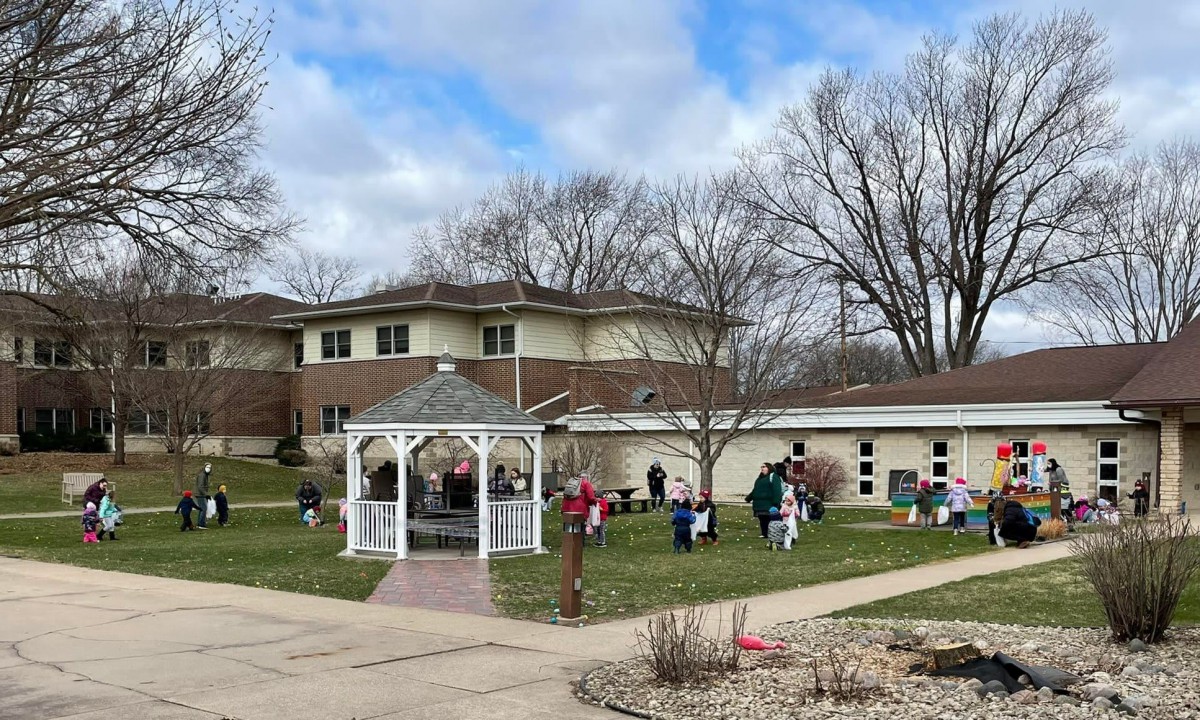
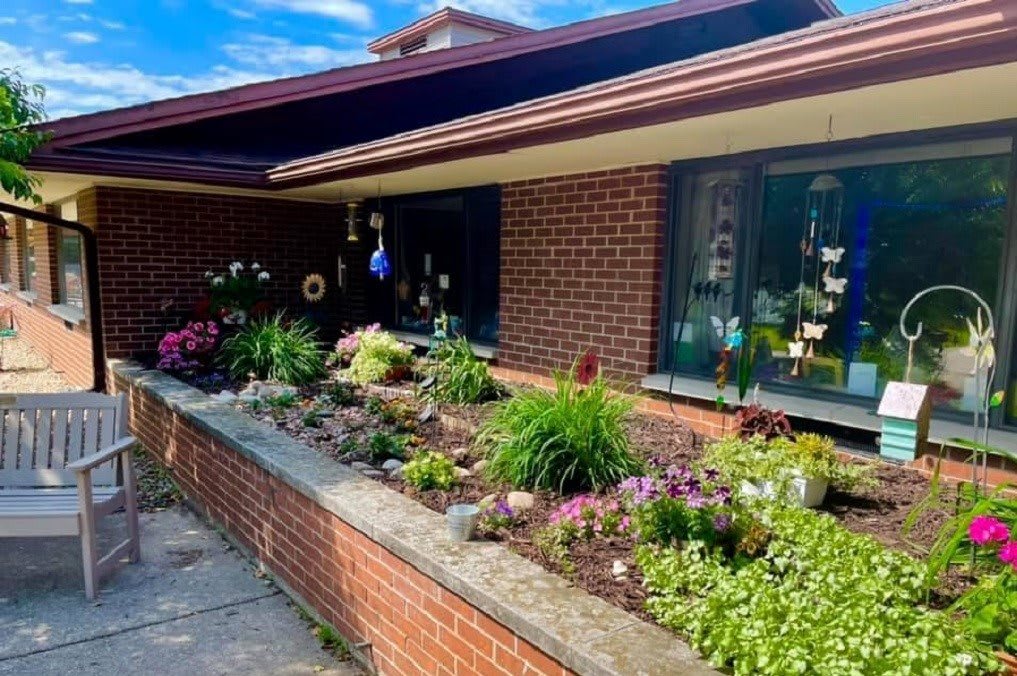
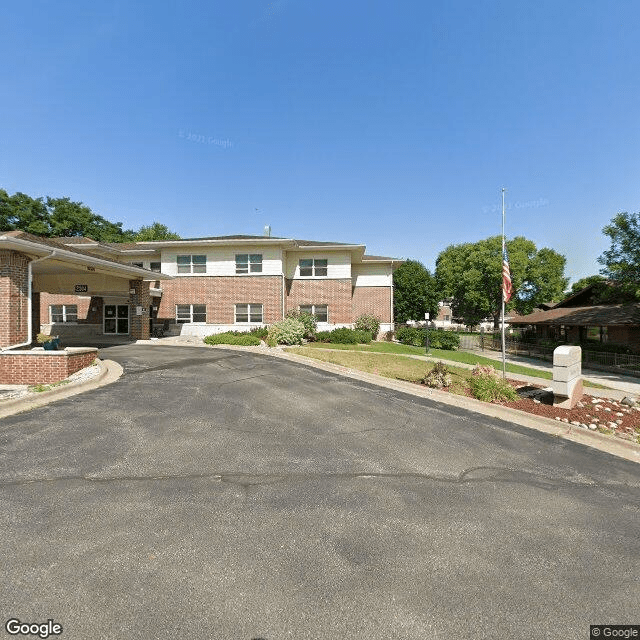
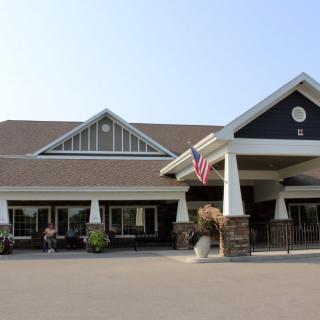
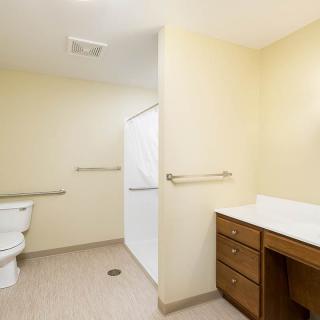
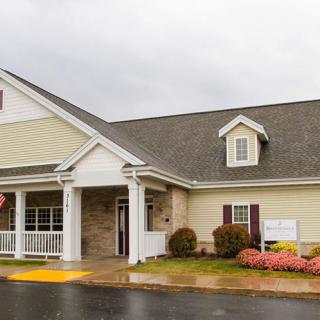
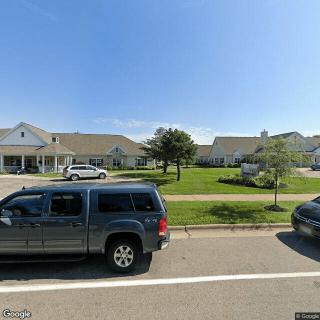
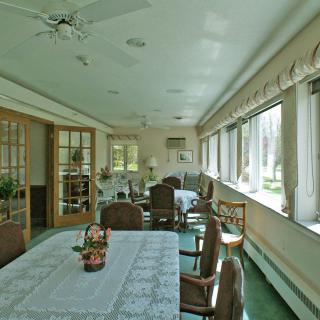
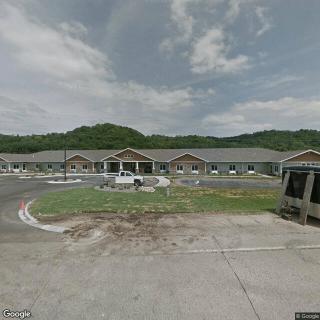
Benedictine Living Community La Crosse on seniors.fyi includes 4 photos including images showing outdoor, building, flag, exterior, clouds, brick, gazebo, trees, and more.
Nearby Communities
Benedictine Villa Assisted Living
La Crosse, WI
4.3 from 65 reviews
Fully furnished apartments with 24/7 care and restaurant-style dining.
Benedictine Manor Of Lacrosse
La Crosse, WI
Extensive amenities and round-the-clock care, including restaurant-style dining and transportation.
Chileda Institute
Lacrosse, WI
3.4 from 11 reviews
$4,974 to $6,466 / month
Small, intimate community with comprehensive assisted-living services.
Brookdale LaCrosse
La Crosse, WI
4.3 from 62 reviews
$5,100 to $6,795 / month
Warm, inviting environment with caring staff and engaging activities.
This is Brookdale
La Crosse, WI
3.8 from 12 reviews
Diabetic care available with on-site activities and off-site devotional programs.
Comfort Keepers of La Crosse, WI
La Crosse, WI
4.4 from 44 reviews
Strong access to medical services and nearby dining.
Cass Street Assisted Living
La Crosse, WI
4.8 from 5 reviews
Extensive amenities with 24/7 supervision and transportation.
SpringBrook Village of La Crescent
La Crescent, MN
3.8 from 32 reviews
$2,480 to $3,365 / month
Beautiful, well-kept property with caring staff and amenities
Bluffview Memory Care
Holmen, WI
3.8 from 18 reviews
Caring floor staff in a well-maintained facility with pleasant dining and outdoor spaces.
Assisted living facilities provide support for older adults needing help with daily activities without extensive medical care, but their costs can be high and vary by location and services offered. Families often seek various funding options and financial strategies to manage these expenses effectively while considering future needs and potential price increases.
The article discusses assisted living expenses, the importance of long-term care insurance in covering these costs, and various financing options, highlighting the need for careful policy review and early planning to address potential needs. It also clarifies common misconceptions about Medicare and private health insurance limitations regarding long-term care coverage.
Assisted living facilities offer crucial support for older adults needing help with daily activities but come with varying and significant costs, which can be financed through personal savings, government assistance programs, long-term care insurance, and home equity options. Professional guidance from experts can aid families in navigating these financial complexities to establish a sustainable budgeting approach for assisted living services.
Get PricingAsk A QuestionSchedule A TourContact Senior Advisor
By clicking submit, you agree to our Partner's Terms of Use. You
also consent to receive calls and texts, which may be autodialed, from our Partner. Your consent is not a condition to
using our Partner's service. Please visit our Partner's Privacy Policy for information about their privacy practices.



 Assisted Living
 Cats allowed
 Dogs allowed
 Activities on-site
 Air-conditioning
 Beautician on-site
 Cable or satellite TV
 Devotional services off-site
 Ground floor units
 Indoor common areas
 Kitchenette
 Outdoor common areas
 Private bathrooms
 Wheelchair accessible showers
 Wi-Fi/high-speed internet available
 La Crosse Municipal (7 miles away)
 Ambulatory care
 Diabetic care
 High acuity care
 Incontinence care
 Medication management
 Meals provided
 BBQs or picnics
 Bible study group
 Birthday parties
 Reminiscence programs
 Stretching classes
 Fully furnished apartments with 24/7 care and restaurant-style dining.

 Funding and Affording Assisted Living: A Thorough Overview
 Assisted Living Expenses and Long-Term Care Insurance: A Comprehensive Exploration
 Securing Financial Support for Assisted Living: A Comprehensive Overview