

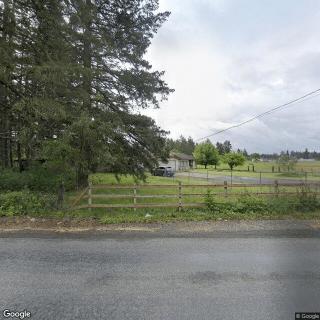
21520 82Nd Avenue E, Spanaway, WA 98387
For more information about senior living options: (866) 208-4318
Overall Review of Mcgee Guest Home
Pros
 The sheriff's department arrived promptly to address the incident, showing swift responsiveness.
- Authorities acted to manage the situation and protect residents, reflecting a commitment to safety.
- The call to police demonstrates the community's vigilance in safeguarding their neighborhood.
- The incident prompted attention to safety issues and accountability.
- The overall response highlights the value of prompt law enforcement involvement in emergencies.
Cons
 The care home is described as the worst place to send a loved one.
- The facility’s bookkeeping is mocked as a joke, with accusations of Medicaid scams.
- They allege ongoing late-payment notices and requests for scans of payments for two years.
- Even with a social worker, there is no expectation of better treatment for a family member.
- There is a suggestion to file a lawsuit to shut the facility down.
- They report safety concerns, noting that residents have wandered away from the facility.
Review
McGee Guest Home in Spanaway, WA is best understood as a last-resort option for families with no viable alternatives and a willingness to tolerate pronounced safety and financial oversight risks. The reviews depict a setting where supervision gaps and billing irregularities are not isolated incidents but ongoing patterns. In practical terms, this community rarely emerges as a trustworthy home for a senior needing reliable care, predictable billing, and secure neighborhood boundaries. For families with a care plan that prioritizes safety, accountability, and transparent finances, the recommended course is to look elsewhere first and only consider this option after exhaustively surveying nearby licensed facilities with documented safety records and clear billing practices.
Safety and security stand out as the central, non-negotiable concern. One account describes a resident wandering to the edge of a public school’s grounds, triggering sheriff involvement. The implication that this is not a one-off episode but part of a troubling pattern raises the stakes for anyone considering placement there. For an older adult who requires consistent supervision, a facility where residents can leave the premises unsupervised translates into real danger, for the individual and the surrounding community. Staffing levels, training quality, and supervision practices are not clearly documented in the available reviews, leaving families without confidence that proper safeguards are in place. In sum, safety is not merely a consideration here; it is the decisive deal-breaker.
Financial integrity and billing practices compound the risk. The reviews allege ongoing issues with billing, including Medicaid-related frustrations, late payment notices, and requests for scanned payment proofs. That constellation of complaints signals a chronic lack of administrative rigor and raises questions about how resident funds are managed. Even if direct care services were adequate in other respects, opaque or inconsistent billing undermines trust and makes budgeting precarious. For families relying on Medicaid or other subsidies, the danger amplifies: misallocations, unexpected charges, and insufficient explanations become a recurring burden. When money moves every month, clear, timely, and accountable communications about balances are essential, and that standard appears unmet here.
Pros that might be imagined do not withstand scrutiny in the available evidence. A small, home-like feel, proximity to the community, or personal attention from staff are not credibly documented as reliable advantages in the four reviews available. The absence of positive, consistent qualitative notes, no strong praise for staff, no mention of medical oversight, no highlighted routines or activities, means any perceived benefits remain unverified at best and illusory at worst. When the dominant notes focus on safety lapses and billing disputes, the supposed advantages quickly lose weight. The balance of the narrative clearly favors the negatives, making it difficult to justify any offset to the substantial drawbacks.
Families evaluating alternatives should demand a rigorous vetting process before any decision. Start with current licensing status, recent inspection reports, and survey outcomes from the state, then visit multiple times at different hours to observe real conditions. Speak with staff, current residents, and family members to gauge daily life and responsiveness. Request a copy of the resident care plan and a representative billing cycle, and probe specifically about wandering safeguards, staff-to-resident ratios, and emergency response protocols. Validate findings with independent reviews or case manager input. If red flags reappear, unverifiable ledgers, reluctance to share inspection summaries, high staff turnover, extension of the search is warranted. The cost of a wrong choice is measured in safety and peace of mind.
Bottom line: McGee Guest Home should be excluded from first-choice consideration for most families. In markets with constrained options, it may be necessary to explore it only after exhaustive due diligence and with a concrete exit plan. The prudent path is to prioritize licensed facilities that demonstrate clear safety histories and transparent billing practices, even if they carry a higher monthly cost. When comparing Spanaway options, place emphasis on proven oversight, stable staffing, and demonstrable compassion in daily care. Facilities that meet these criteria will deliver far more predictable outcomes, greater family confidence, and a safer living environment for a loved one in need of assistance.
 64 resident community capacity
 Assisted Living
 Respite Care
 Activities on-site
 Air-conditioning
 Beauty salon
 Cable or satellite TV
 Computer center
 Devotional services off-site
 Dining room
 Fitness room
 Fully furnished
 Gaming room
 Garden
 Housekeeping services
 Indoor common areas
 Kitchenette
 Move-in coordination
 Outdoor space
 Private bathrooms
 Restaurant-style dining
 Small library
 Telephone
 Wellness center
 Wi-Fi/high-speed internet available
 Community operated transportation
 12-16 hour nursing
 24-hour call system
 Ambulatory care
 Assistance with bathing
 Assistance with dressing
 Assistance with transfers
 Diabetes diet
 Diabetic care
 Medication management
 Mental wellness program
 Special dietary restrictions
 Concierge services
 Planned day trips




 Assisted Living Expenses and Long-Term Care Insurance: A Comprehensive Exploration
 Securing Financial Support for Assisted Living: A Comprehensive Overview
 Social Security Benefits and Assisted Living: Navigating Options Across the U.S.