
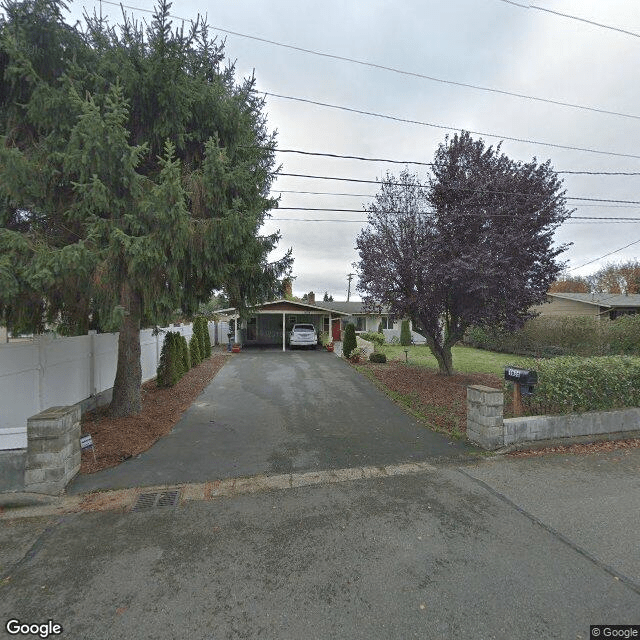
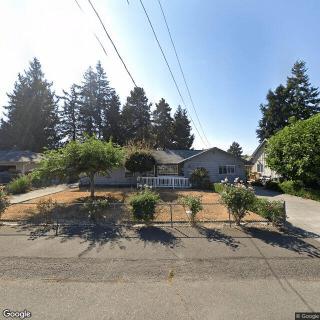
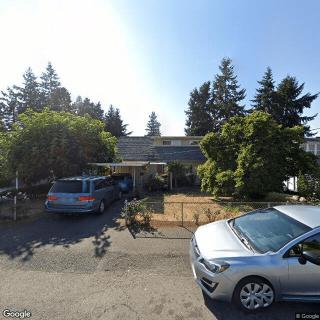
1635 S 264th Pl, Des Moines, WA 98198
To contact a resident: (253) 945-6797
For more information about senior living options: (866) 208-4318
Amani Adult Family House Costs & Pricing
Amani Adult Family House offers competitive pricing for its accommodations when compared to average costs in King County and the broader state of Washington. For a semi-private room, residents will find the monthly fee of $5,000 slightly above both the county average of $4,430 and the state average of $4,267. In contrast, private rooms at Amani are priced at $6,000, which is higher than the King County average of $5,034 and the state average of $4,772. While Amani's rates might be on the higher end within the region, they reflect a commitment to providing quality care and a nurturing environment for residents seeking adult family living arrangements.
| Floor plans | Amani Adult Family House | King County | Washington |
|---|---|---|---|
| Semi-Private | $5,000 | $4,430 | $4,272 |
| Private | $6,000 | $5,034 | $4,774 |
Senior living communities with a similar price nearby
-
from +$750 / mo
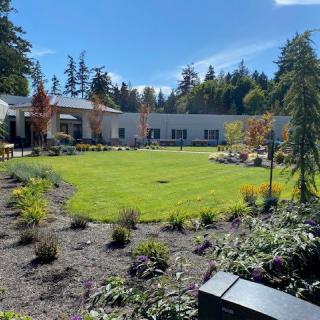
Fieldstone Rolling Bay and Fieldstone Memory Care
$5,750 to $8,895 / month22.4 miles away -
from +$500 / mo

Twin Lake Adult Family Home
$5,500 to $6,500 / month5.0 miles away -
from +$500 / mo
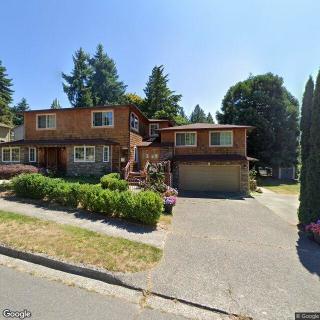
Valley Vista Adult Family Home Inc
$5,500 to $6,200 / month23.9 miles away -
About the same
Peace and Pleasant Care Adult Family Home II
$5,000 to $6,000 / month3.1 miles away -
from -$695 / mo
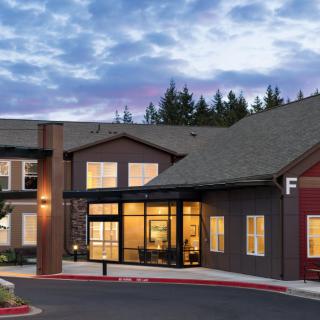
Penrose Harbor at Heron's Key
$4,305 to $7,332 / month13.3 miles away
Overall Review of Amani Adult Family House
Pros
 The staff member is welcoming and forthcoming with information.
- A connection is felt with the staff member, and they are well-liked.
- The transition has been made smoother as they work with the loved one.
- The meals, activities, and cleanliness are rated highly (a five).
- The staff tailor meals to the loved one’s eating habits.
- The staff communicate well and provide extra details.
- It would be a good second choice.
Cons
 The decor was very dark.
- The layout was awkward, with a lot of angles, sharp turns, and hallways.
- It was quite a distance from her home.
- There can be struggles with the transition.
- The living room seats were all taken.
- It would be a shared room.
Review
Amani Adult Family House in Des Moines, WA is best suited for families seeking a small, home-like setting where staff establish genuine connections and transitions are managed with deliberate attention. It is a solid fit for a resident who thrives on straightforward, dependable communication, a predictable daily rhythm, and a care team that responds quickly to evolving needs. The community rewards those who value personalized attention over a broad slate of clinical programming. Proximity matters: the home’s distance from the family’s location can color the experience, making routine visits easy or burdensome depending on travel time. For someone who wants to feel known by the people delivering care, Amani provides a palpable sense of being seen and heard, which can be a critical factor in ongoing satisfaction.
On the positive side, the care team stands out for its approachability and transparency. Amani’s staff are welcoming and forthcoming with information, which helps families build trust from the first encounter. The transition process, while not flawless at the outset, has shown real progress as caregivers learn the resident’s rhythms and preferences. Meal planning is notably responsive to individual eating habits, a crucial safeguard for nutrition and enjoyment, and the staff’s willingness to adjust menus as needed makes day-to-day life more predictable for families and residents alike. Daily activities and overall cleanliness also receive favorable notes, and ongoing communication ensures that families stay aligned with care details rather than feeling out of the loop. In short, the human element here can compensate for some structural limitations.
Yet practical drawbacks deserve clear attention. The home’s small footprint constrains privacy and common-space versatility, and the décor leans toward darker tones that can feel imposing rather than inviting. The layout features awkward angles and sharp turns, which can complicate navigation for a resident using a walker or wheelchair and may raise safety concerns over time. With five residents, the living room can run short on seating, pushing families toward shared spaces more often than is ideal. The shared-room arrangement compounds the privacy issue and can amplify noise and activity levels, making evenings and quiet moments less predictable. These realities can tilt the balance for residents who value a more expansive, private, and easy-to-maneuver environment.
The strengths, however, do offset the drawbacks to a meaningful degree for the right match. Reliable staff presence and a willingness to tailor meals reduce the stress around transitions and day-to-day routines, while clean, organized living spaces and structured activity programming contribute to a sense of order and engagement that matters as space tightens. Strong, timely communication between staff and families further cushions the impact of a smaller environment by ensuring that evolving preferences and problems are addressed promptly. Nevertheless, distance from family and the lack of private, spacious areas cannot be fully neutralized by excellent caregiving; they remain decisive factors in whether this setting is sustainable in the long term for a given resident.
Those who should consider alternatives are primarily families prioritizing privacy, mobility within a larger footprint, or a broader menu of private-room options. For households located far from Des Moines, the travel burden may erode the benefits of attentive staff and cohesive transition planning unless every visit is feasible. If private accommodations and a more open, less crowded layout are nonnegotiable, a different assisted-living option may offer a more comfortable long-term fit. Similarly, residents who require a wider array of on-site amenities, more expansive common areas, or a setting designed to accommodate higher-care needs may find other communities better suited to their trajectory.
Practical next steps involve a focused, purpose-driven visit and concrete planning. Schedule a tour with an emphasis on room options, confirm whether private rooms are available, and observe a meal or activity session to gauge how the space functions in real time. Inquire about the actual staff-to-resident ratio, especially during peak hours, and request a written transition plan that outlines milestones, communication cadences, and contingencies. Amani delivers meaningful value for families prioritizing personal attention, reliable communication, and a collaborative care approach, even as the physical layout and distance considerations demand careful, candid assessment. If privacy and mobility in a more open environment are essential, it is prudent to explore nearby alternatives that better align with those non-negotiables.
 Board and Care Home
 Activities off-site
 Beautician on-site
 Devotional services off-site
 Indoor common areas
 Outdoor common areas
 Private
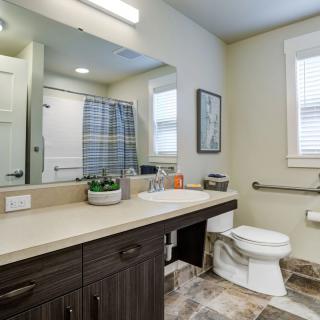
 Private bathrooms
 Respite or short term stays offered
 Wheelchair accessible showers
 Seattle-Tacoma International (6 miles away)
 Ambulatory care
 Diabetic care
 High acuity care
 Incontinence care
 Medication management
 Meals provided
 Christian services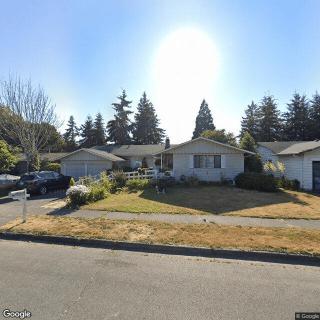
 California's Form 602A: An In-Depth Examination of Senior Care Assessment
 Comprehensive Look at Senior Blood Pressure Charts: Normal and Elevated Levels by Age
 Top Canine Companions for Older Adults