
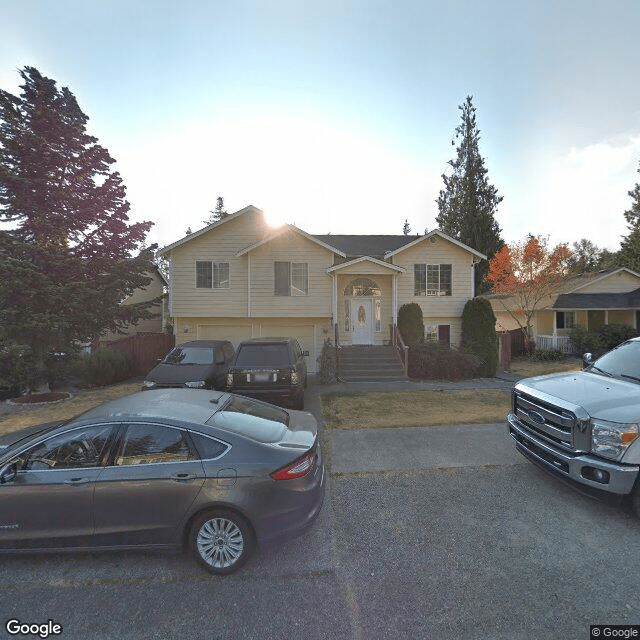
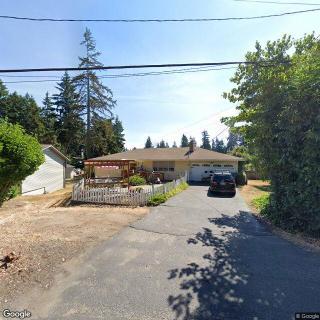
13107 110th Avenue Court Southeast, Puyallup, WA 98374
To contact a resident: (253) 445-8551
For more information about senior living options: (866) 208-4318
Imnay's AFH Costs & Pricing
Imnay's Adult Family Home offers competitive pricing for its private rooms at $3,500 per month. This rate not only stands out when compared to Pierce County's average of $4,623 but also significantly undercuts the state average of $4,772 in Washington. Such affordability makes Imnay's AFH an attractive option for those seeking quality care without the financial strain often associated with similar facilities. The pricing reflects a commitment to providing accessible and compassionate care while maintaining high standards within a welcoming environment.
| Floor plans | Imnay's AFH | Pierce County | Washington |
|---|---|---|---|
| Private | $3,500 | $4,623 | $4,774 |
Senior living communities with a similar price nearby
-
from -$500 / mo

Hummingbird Homecare
$3,000 / month8.8 miles away -
from +$500 / mo

Riverton Home Care
$4,000 to $5,000 / month23.4 miles away -
from -$500 / mo
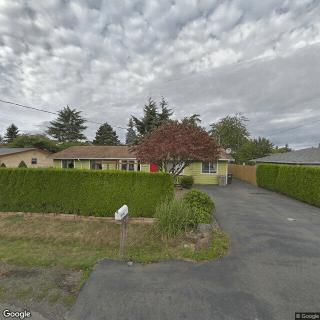
Home Care in Kent Inc.
$3,000 to $3,500 / month17.7 miles away -
from +$500 / mo
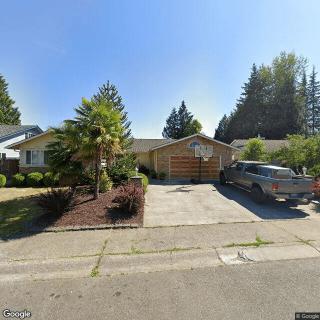
Gentle Care Home
$4,000 to $5,500 / month22.8 miles away -
About the same

Twin Lakes Haven Adult Family Home
$3,500 to $8,000 / month13.1 miles away
Overall Review of Imnay's AFH
Pros
 A Loving Home provides the most loving and personal care for residents.
- The staff makes residents feel at home from day one and ensures they are well cared for.
- The staff patiently addresses residents' concerns, answers questions, and engages them in daily conversation.
- The home keeps residents clean, well-groomed, and cared for.
- The caregivers deliver excellent care, including for residents with dementia who need total care.
- The staff truly cares about the residents and keeps families informed.
- The home comes highly recommended for anyone seeking a wonderful place for a parent needing personal care.
Cons
 The larger facility in Puyallup was horrible.
- They had to move him out of that facility because it failed to provide proper care.
Review
Imnay’s AFH in Puyallup, WA is best suited for families seeking a warm, intimate, home-like setting where a parent receives highly personal care and steady, one-on-one attention. The community earns top marks for creating a sense of belonging from day one, with caregivers who treat residents as family and who prioritize daily comfort, conversation, and reassurance for families. This is the kind of arrangement that works when a senior prefers familiar routines, needs patient, patient caregivers, and a steady stream of responsive communication about daily life and health.
Those who may want to consider alternatives are families pursuing a larger, more institution-like environment with expansive programming, broader medical oversight, or more formalized rehab and therapy services. If 24/7 on-site clinical staffing, a wide array of scheduled activities across multiple common spaces, or robust on-site medical coordination are non-negotiable, a bigger senior-living campus could be a better fit. In short, this setting excels in heart and home, but may feel limited for residents whose care needs demand breadth and scale beyond a small adult-family home.
The strongest advantages here are unmistakable and consistently documented. Residents receive genuinely loving, hands-on care that feels deeply personal, staff members are described as patient and attentive, addressing questions and engaging residents in daily conversation. Cleanliness and odor management are noted as part of the daily standard, with caregivers ensuring residents stay well-groomed and well-nourished. The reviews repeatedly highlight the emotional warmth of the environment, the ability of staff to keep families informed, and a sense that caregivers know residents well enough to anticipate needs and preferences, an attribute rarely matched in larger facilities.
Communication emerges as a core strength that substantially offsets the inherent trade-offs of a smaller home. Family members repeatedly emphasize how their questions are answered and concerns addressed without delay, and how caregivers maintain an open, ongoing dialogue about a loved one’s condition and day-to-day status. In one account, caregivers are credited with not only managing physical care but also supporting emotional needs during difficult moments, including dementia care and hospice scenarios. That level of transparency and reassurance can be the difference between peace of mind and continual worry for families navigating care transitions.
From a practical vantage point, the pros, personalized attention, consistent staffing, and home-like intimacy, offset the potential drawbacks of a smaller footprint by delivering a high-touch care experience. The trade-offs typically associated with small adult-family homes, such as fewer on-site amenities or limited medical programming, are mitigated here by a demonstrated ability to provide total care, dementia support, and hospice-compatible services with a caring, accessible team. Families should still verify the availability of specialty services, transportation options, and the frequency of professional visits if those elements are critical, but the elevated level of daily humanity and reliability described in the reviews makes a compelling case for prioritizing warmth and trust.
In sum, Imnay’s AFH represents a compelling choice for seniors who value a caregiving circle that feels like a close-knit family, one where caregivers know residents personally, respond rapidly to concerns, and keep families actively informed. It is particularly well-suited for dementia care, hospice-adjacent needs, and situations where a parent benefits from consistent, affectionate oversight in a smaller, more homelike setting. Families weighing this option should only consider alternatives if the desire is for a larger, more medic allyly integrated campus with broader programming and clinical resources. For those prioritizing genuine connection, clear communication, and deeply personalized care, Imnay’s AFH stands out as a practical, experienced, and trustworthy choice in the Puyallup area.
 Board and Care Home
 Private
 Seattle-Tacoma International (22 miles away)


 Fecal Incontinence in Older Adults: A Comprehensive Guide
 Recognizing the Journey: Understanding and Navigating Anticipatory Grief
 Encouraging Participation in Adult Day Care: A Guide to Supporting a Hesitant Parent