
2020 129th Place Southeast, Everett, WA 98208
To contact a resident: (425) 585-0744
For more information about senior living options: (866) 208-4318
Applewood Homecare Costs & Pricing
Applewood Homecare offers competitive pricing for its services compared to the broader market in Snohomish County and the state of Washington. For semi-private rooms, Applewood's cost of $3,000 per month significantly undercuts both the county average of $4,320 and the statewide average of $4,267. Similarly, for private rooms, Applewood's fee of $4,500 remains favorable when compared to Snohomish County's $4,834 and Washington's average of $4,772. This positioning not only highlights Applewood Homecare's commitment to affordability but also underscores its dedication to providing quality care within a more accessible financial framework for families seeking long-term care options.
| Floor plans | Applewood Homecare | Snohomish County | Washington |
|---|---|---|---|
| Semi-Private | $3,000 | $4,320 | $4,272 |
| Private | $4,500 | $4,834 | $4,774 |
Senior living communities with a similar price nearby
-
from +$500 / mo
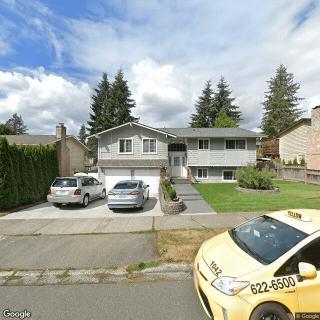
Dignity Life
$3,500 / month2.8 miles away -
from +$375 / mo

Evergreen Manor Senior Care Inc
$3,375 to $7,500 / month12.9 miles away -
from -$200 / mo
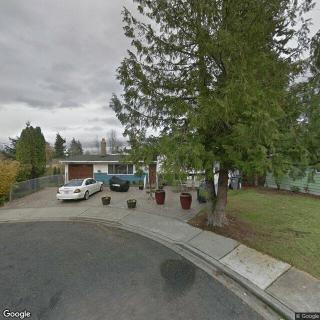
Gold Standard Care
$2,800 / month7.1 miles away -
About the same
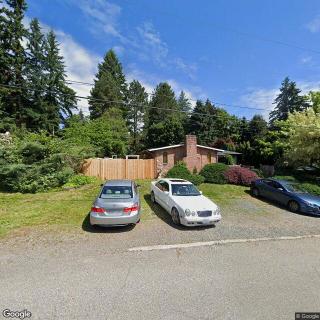
Caring Adult Family Home #1
$3,000 / month8.0 miles away -
from +$500 / mo
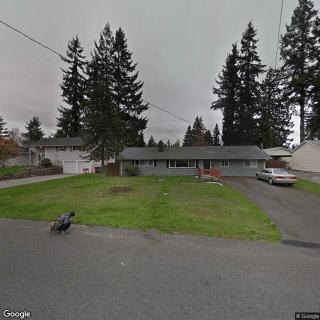
Terrace View AFH
$3,500 to $4,000 / month7.1 miles away
Overall Review of Applewood Homecare
Pros
 The signature smomed bacon is delish.
- Adult IN Home health Care takes the best care of loved ones.
Review
Applewood Homecare in Everett, Washington is best suited for families seeking reliable, in-home senior care that keeps a loved one comfortably in familiar surroundings while receiving steady, one-on-one attention. The limited public feedback, two reviews yielding a 4.5 overall with a 5-star and a 4-star rating, speaks to a small but consistently positive impression among families who prioritize dependable day-to-day caregiving and a low-disruption option for aging in place. The core strength highlighted in those experiences is a clear commitment to the loved one’s well-being, delivered through attentive caregiving and a respectful approach that centers on comfort, safety, and routine. For households where independence at home is valued as much as practical supervision, this provider presents a pragmatic and approachable path forward, rather than a traditional, communal living setting.
Alternative options become worth considering for families seeking richer social programming, on-site medical oversight, or a formal campus environment with continuous staffing and structured activities. If the priority leans toward round-the-clock nursing support, highly coordinated medical oversight, or a setting designed to foster extensive social engagement and daily programming, an assisted living or memory care community may align more closely with those goals. In cases where family members anticipate complex medical needs or a preference for a broader care ecosystem, exploring facilities that offer on-site clinical teams and robust activity calendars can prevent mismatches between expectations and capabilities.
The strongest advantages center on a caregiver-focused model that delivers dependable, relational care. The explicit note that “adult in-home health care takes the best care of our/your loved one” signals a level of trust and consistent attention that translates into timely assistance with daily activities, diligent safety checks, and daily routines that reinforce comfort and dignity. Food quality, hinted at by the mention of signature smoked bacon, suggests that meal service and everyday nourishment are treated as meaningful components of well-being rather than optional add-ons. When a home-based provider can pair reliable caregiving with thoughtful provisioning, the day-to-day experience tends to feel calmer and more predictable for both clients and families.
Those strengths offset common concerns about in-home care by allowing stable, long-tenured relationships with caregivers and predictable scheduling. In practice, the ability to assign trained aides who understand a client’s habits reduces the friction that often accompanies transitions into care. A model that emphasizes consistent personnel, clear routines, and transparent communication can mitigate the sense of upheaval that accompanies new caregiving arrangements. In turn, families gain peace of mind about safety, adherence to routines, and the ability to remain engaged in the care plan without sacrificing independence or privacy.
Nonetheless, the available data carries notable caveats. Only two reviews exist, and neither provides a broad, long-term track record to gauge reliability across seasons or changes in need. Important questions remain unanswered: hours of service, caregiver rotation policies, and the exact scope of medical or nursing support included in the package. There is no detail about pricing structures, minimums for service, or what happens if needs intensify. For families weighing options, these gaps mean more due diligence is required before committing, and comparisons with more established facilities may be necessary to confirm alignment with long-range goals.
To move forward with confidence, a practical approach involves a frank, targeted inquiry. Request a detailed care plan that outlines services, caregiver assignments, escalation procedures, and response times; ask for credentials and turnover rates for caregivers; and obtain a clear, written fee schedule with any potential add-ons. Consider a short trial period to assess consistency, communication, and the practical fit with daily life. Simultaneously, compare apples-to-apples with nearby assisted living or memory care options to ensure alignment on social programming, medical oversight, and total cost. For families prioritizing home-based, attentive care with a personal touch and reliable caregivers, Applewood Homecare warrants serious consideration. For those seeking a more social, clinically integrated environment with built-in programming, alternative communities should be evaluated before finalizing the choice.
 Board and Care Home
 Cats allowed
 Dogs allowed
 Activities off-site
 Bath tubs
 Beautician on-site
 Devotional services off-site
 Indoor common areas
 Outdoor common areas
 Private
 Diabetic care
 High acuity care
 Incontinence care
 Medication management
 Meals provided
 Christian services


 9 Stimulating Memory Activities for Seniors: Puzzles, Cards, and Much More
 Managing Nursing Home Expenses After Medicare Coverage Ends
 Is a Geriatric Care Manager the Right Choice for Your Family?