

4720 S 285th Place, Auburn, WA 98001
To contact a resident: (206) 850-0013
For more information about senior living options: (866) 208-4318
Southbrook Manor AFH Costs & Pricing
At Southbrook Manor Adult Family Home (AFH), the monthly costs for care reflect both the tailored services offered and the premium quality of living provided. The pricing stands at $6,500 for a semi-private room, significantly exceeding the average rates for King County ($4,430) and statewide ($4,267). For those seeking more privacy, a private room is available at $8,000 per month, which surpasses King County's average of $5,034 and Washington state's average of $4,772. While these costs may be higher than regional averages, they are indicative of Southbrook Manor's commitment to delivering exceptional care in an enriching environment tailored to meet the needs of its residents.
| Floor plans | Southbrook Manor AFH | King County | Washington |
|---|---|---|---|
| Semi-Private | $6,500 | $4,430 | $4,272 |
| Private | $8,000 | $5,034 | $4,774 |
Senior living communities with a similar price nearby
-
About the same

The Park at Belle Harbour
$6,400 to $15,500 / month20.1 miles away -
from -$750 / mo

Fieldstone Rolling Bay and Fieldstone Memory Care
$5,750 to $8,895 / month24.3 miles away -
from -$1000 / mo

Twin Lake Adult Family Home
$5,500 to $6,500 / month5.4 miles away -
from +$500 / mo

Fairwood Care Home
$7,000 / month9.4 miles away -
from +$500 / mo

Gloria's House Adult Family Home
$7,000 / month11.7 miles away
Overall Review of Southbrook Manor AFH
Pros
 They really care about the seniors living in their home.
- It is a great place to bring a loved one.
- The family has cared for a dad for three years.
- Daisy and Steve are amazing caregivers.
- They are trusted to take care of loved ones when families cannot.
Review
Southbrook Manor AFH in Auburn, WA is best suited for families seeking an intimate, home-like assisted living option where caregiving feels personal and consistent matters more than campus size. This is a small, family-operated residence where the leadership and daily care come from a tight-knit team, not a sprawling corporate staff. It works especially well for seniors who need daily assistance with basic tasks and benefit from a predictable routine, reliable presence, and the sense that caregivers are investing in a resident’s long-term comfort and happiness.
Those weighing alternatives should keep in mind that this setting may not fit every situation. If a senior requires extensive clinical oversight, highly specialized memory-care programming, or a broad calendar of on-site therapies and activities, a larger community with more robust medical staffing could be a better match. Families that prioritize formal care contingencies, multiple visiting specialists, or complex care coordination may find a bigger facility more aligned with their expectations. Budget considerations and the desire for a wider network of services are also practical factors to weigh.
The strongest pros here revolve around core caregiving quality. Reviews consistently highlight genuine care and a warm, family-centered approach. The message from families is clear: this is a place where a loved one is treated with compassion and respect, and where trust is built through hands-on, attentive daily care. The leadership, Daisy and Steve, anchors the operation, and their presence is repeatedly described as a stabilizing force, with one reviewer noting they are “amazing” and another describing the team as angels who look after a parent when family cannot be present. That level of devotion translates into peace of mind for relatives and safety in day-to-day routines.
On the other hand, the inherent tradeoff of a small, home-like setting is a more limited scope of services compared with larger facilities. There may be fewer on-site specialists, a leaner activity calendar, and less immediate access to advanced medical supports. For residents who require frequent clinical interventions, therapy programs, or rapid escalation pathways, these gaps can become noticeable. Yet the same intimate scale that limits depth of programming also enables sharper, more responsive customization of routines, meals, room preferences, and daily schedules.
The key question for decision-makers is whether the benefits of a close-knit, consistently staffed home outweigh the potential gaps in medical resources and programmed activities. In Southbrook Manor AFH, the answer leans decisively toward offsetting the drawbacks through trust, stability, and individualized attention. Families report that the staff’s familiarity with private histories, preferences, and care plans yields a comfort level that larger communities may struggle to match. The continuity of care, with the same caregivers often guiding day-to-day practices, reduces confusion and anxiety for residents, while the family leadership’s hands-on involvement fosters rapid problem-solving and flexible adjustments to routines.
Ultimately, this community stands out for families prioritizing intimate, person-centered care over scale and amenities. It is an excellent fit for seniors who thrive on a strong sense of home, dependability, and a caregiving team that treats each resident like a beloved family member. If the priority is highly structured programming, extensive medical services on-site, or a large network of ancillary providers, alternatives should be explored, and questions should be directed to gauge staff stability, care-plan processes, and the availability of visiting clinicians. In any transition, clear expectations about care goals, daily rhythms, and escalation plans will determine whether Southbrook Manor AFH is the right match and how smoothly a move can be managed for sustained well-being.
 Board and Care Home
 Cats allowed
 Dogs allowed
 Activities off-site
 Devotional services off-site
 Indoor common areas
 Outdoor common areas
 Private
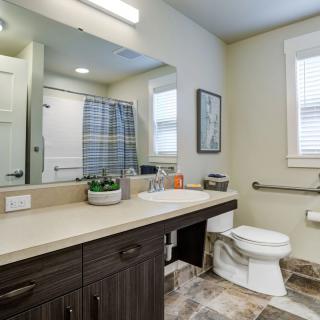
 Private bathrooms
 Wheelchair accessible showers
 Seattle-Tacoma International (7 miles away)
 Diabetic care
 High acuity care
 Incontinence care
 Medication management
 Kosher





 A Detailed Exploration of Living Wills and Advance Directives
 Comprehensive Guide to Medicare Coverage for Hospice Care
 Caring for Those Who Care: Recognizing, Understanding, and Overcoming Caregiver Burnout