
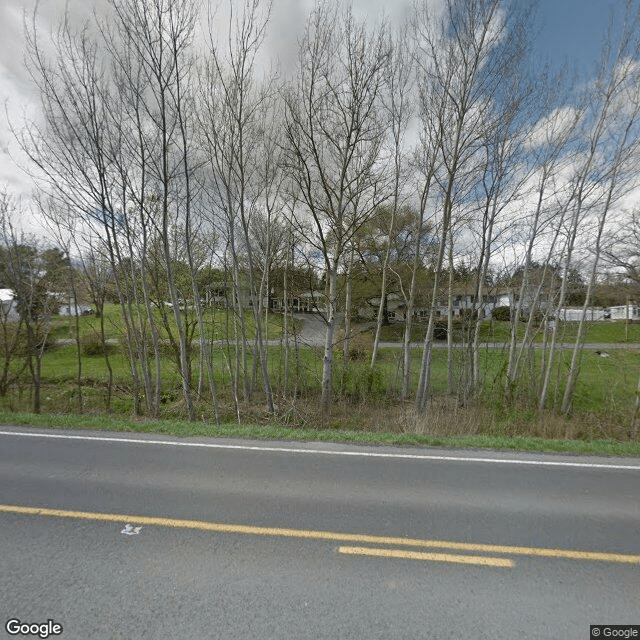
257 Toll House Rd, Maurertown, VA 22644
To contact a resident: (540) 436-3297
For more information about senior living options: (866) 208-4318
Commonwealth Care at Dutch Haven Costs & Pricing
At Commonwealth Care at Dutch Haven, the costs for care are notably competitive compared to both Shenandoah County and the broader state of Virginia. For a studio room, residents can expect to pay $1,920 per month, which is significantly lower than the county average of $3,728 and the state average of $4,436. Similarly, the semi-private room also maintains an attractive price point at $1,920 per month, in contrast to Shenandoah County's average of $2,615 and Virginia's state figure of $3,991. These pricing structures make Commonwealth Care at Dutch Haven a cost-effective option for individuals seeking quality care without compromising on financial stability.
| Floor plans | Commonwealth Care at Dutch Haven | Shenandoah County | Virginia |
|---|---|---|---|
| Studio | $1,920 | $3,728 | $4,436 |
| Semi-Private | $1,920 | $2,615 | $3,991 |
Memory care communities with a similar price nearby
-
from +$200 / mo
Dutch Haven Assisted Living
$2,120 to $2,620 / month0.0 miles away
Overall Review of Commonwealth Care at Dutch Haven
Pros
 The facility is very nice and better than the previous placement.
- The staff are friendly, caring, and compassionate.
- The staff made him comfortable in his last days and even attended his funeral.
- He enjoyed the homemade meals served there.
- It is closer to visiting him than his original location.
- The facility feels like a home away from home.
- It is a wonderful facility with amazing staff and a loving, compassionate atmosphere.
Cons
 The facility is described as a horror show of assisted living.
- Residents are allegedly overfed and never given physical or mental activities.
- It is strongly advised not to place loved ones there, especially those with dementia.
- The facility is horrible for residents' well-being, safety and mental health and should be shut down.
- Residents do not receive the care they should despite paying a lot of money.
- Residents are not allowed to go outside and are punished for trying.
- There are unsanitary conditions, including a dirty communal bathroom where staff do not clean, and patients must hold their pants up to avoid getting wet.
Review
Commonwealth Care at Dutch Haven is best suited for families seeking a warm, home-like assisted-living setting where staff are frequently described as friendly, caring, and deeply involved in daily life. It works well for residents who value daily activities, personal attention, and homemade meals, and for families that want to be able to visit easily and feel a personal connection to the caregivers. In short, this community can deliver a comforting, neighborhood-like atmosphere that feels like a true home for residents whose needs are largely assisted-living rather than highly medical.
Those considering alternatives should note that this community may not meet every high bar for safety, cleanliness, and medical oversight. Prospective residents with advanced dementia, unstable health conditions, or demanding clinical needs should explore options with more robust memory-care or skilled-nursing capabilities. Families that require rigorous transparency around care plans, nutrition quality, outdoor freedom, and consistent hygiene standards may want to look at other facilities first. The strongest caveat is the potential for significant variability in experience across shifts and staff.
The most compelling positives, a genuine sense of warmth from staff, regular engagement with activities, and meals that residents report enjoying, do carry meaningful weight in daily life. When staff are described as loving and involved, residents tend to feel at home, experiences are more social, and family members notice consistent personal attention. These strengths can offset a lot of everyday friction for residents who thrive on human connection, routine, and predictable kindness. However, the weight of the negative feedback cannot be ignored: reports of overfeeding, insufficient mental or physical stimulation, and restricted autonomy in going outside point to meaningful gaps that can erode quality of life for some residents.
The downside stories are hard to overlook. Instances cited by families include concerns about cleanliness and safety, such as inadequately cleaned communal spaces, punitive restrictions on outdoor time, and questions about whether meals meet balanced-nutrition expectations. The most alarming messages describe situations that suggest neglect or inadequate supervision, especially for residents who require careful monitoring. Taken together, these concerns suggest a pattern that may pose real risk for residents with higher care needs or for families who prize proactive safety and consistent, clean operations.
For families evaluating a placement, several practical checks can help separate fit from misfit. Request and review current care plans and daily schedules, then observe the facility during a routine period to gauge how activity programming actually unfolds. Inspect common areas and bathrooms for cleanliness and safety, and ask about incident logs, hygiene protocols, and staff-to-resident ratios. Probe the meal program, menus, portion control, and alternatives for special diets, and confirm the freedom to move about outside or engage in outdoor activities. Finally, compare the price against documented services, and scrutinize state inspection reports and any recent violations to understand what is being addressed.
The bottom line is that Commonwealth Care at Dutch Haven presents a mixed, real-world picture: strong personal warmth and engagement in some cases, but serious red flags in others. For families who prize a genuinely homelike atmosphere, consistent social programming, and attentive caregivers, it can be a compelling option, provided the care plan is clear, the environment is clean, and safeguards are visible and trustworthy. For those who cannot accept variability in safety, nutrition, and outdoor access, or who require higher-level medical oversight, better-staffed alternatives with stronger hygiene records are advisable. A disciplined, first-hand assessment remains essential, with emphasis on verification of care quality, safety practices, and resident autonomy before committing.
 Assisted Living
 Memory Care
 Activities on-site
 Devotional services off-site
 Indoor common areas
 Ambulatory care
 Diabetic care
 Meals provided




 Engaging Memory Care Activities That Enhance Quality of Life
 When to Transition from Assisted Living to Memory Care: Key Indicators, Steps, and Finding the Right Community
 Understanding the Distinctions: Assisted Living and Memory Care Explained