
4713 22nd Street, Lubbock, TX 79407
For more information about senior living options: (866) 208-4318
Overall Review of Sisters Loving Arms
Pros
 She has a room with a big window from which she can watch birds at the feeder.
- She enjoys going to the dining room to eat her meals.
- The family feels it’s like a second home for them.
- They are glad to know she’s well cared for.
- They are welcome to visit and spend as much time with her as they like.
Cons
 They would not recommend this place because several employees use illegal substances while they are at work.
- They would give zero stars if possible.
Review
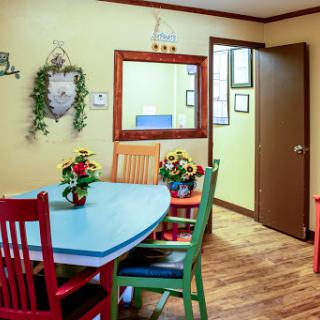
Sisters Loving Arms in Lubbock, TX is best suited for seniors who crave a warm, home-like atmosphere where family involvement feels welcome and visits are easy and frequent. It suits residents who appreciate a bright room with a big window to watch birds, a dining room experience that makes meals feel social, and a setting that reads more like a household than a hospital. This community works best for someone who does not require round-the-clock, high-intensity medical care and who benefits from a smaller, neighborhood-like environment where caregivers can develop a familiar, personal rhythm with residents. Families seeking a true “second home” feel, where the resident’s daily life centers on comfort and connection, will find the core appeal here.
That said, this is not the right fit for every senior. Those prioritizing strict staff discipline, comprehensive safety protocols, and unwavering regulatory oversight should consider alternatives. A reviewer’s strong concern, that several employees may be using illegal substances while on the job, raises serious questions about safety, accountability, and the consistency of care. Even if other experiences prove more positive, this claim is a red flag that demands thorough due diligence: verify licensing status, review state inspections, request details on background checks, and ask how misconduct is monitored and addressed. In short, if trust in staffing is non-negotiable, other options with more transparent safety practices deserve consideration.
The reported positives create a meaningful counterweight to the concerns. Residents and families emphasize a home-like atmosphere where a loved one can have a room with a birds-at-the-window view and enjoy dining room meals in a social setting. The ability for families to visit as much as needed, literally come and spend time without limitations, is repeatedly highlighted as a defining benefit. When care feels personal and attendance at meals and activities is consistent with a resident’s preferences, quality of life rises in tangible ways. For many families, those emotional and social gains carry substantial weight, helping to offset the absence of a more clinical care model.
Nevertheless, the most consequential drawbacks must be weighed carefully. The central risk is staffing quality and safety, amplified by the unverified allegation about substance use on shift. Even if the incident reports or other testimonials differ, the fear of impaired staff handling medications, assisting with mobility, or supervising daily routines is enough to alter a family’s risk calculus. The small-scale, intimate environment can become fragile if turnover is high, training is inconsistent, or supervision is lax. Prospective residents should push for concrete answers: staff-to-resident ratios, exact hours and supervision, ongoing training, and a transparent process for reporting and correcting concerns.
Beyond safety, practical considerations matter. The care setting’s balance between independence and assistance should align with the resident’s day-to-day needs, and financial clarity is essential, what is included in the monthly rate, what incurs extra charges, and how meal plan accommodations work for dietary restrictions. The described benefits, the window-view room, social dining, and generous family access, offer a compelling sense of belonging and continuity, which can dramatically improve mood and engagement. Yet the limited number of reviews and the mixed overall rating suggest that experiences may vary widely from one resident to the next. A thorough in-person evaluation is essential to confirm that the reality matches the promise.
Ultimately, the decision hinges on risk tolerance and the value placed on a home-like, family-forward environment. For families prioritizing companionship, visible care, and easy access to visitations, Sisters Loving Arms can be a solid choice, provided due diligence confirms robust staffing, clear policies on safety and misconduct, and a care plan that aligns with the resident’s medical and daily living needs. For those whose confidence in staff integrity and consistent clinical support is non-negotiable, it would be prudent to explore alternatives with stronger, verifiable oversight and a track record of incident resolution. A disciplined approach, tours, direct conversations with caregivers, requests for recent inspections, and a clear demonstration of how concerns are handled, will illuminate whether this community truly serves as a trusted home or if another option better protects safety and peace of mind.
 8 resident community capacity
 Assisted Living
 Board and Care Home
 Cable or satellite TV
 Dining room
 Fully furnished
 Garden
 Housekeeping services
 Move-in coordination
 Outdoor space
 Telephone
 Wi-Fi/high-speed internet available
 Lubbock International (8 miles away)
 24-hour supervision
 Activities of daily living assistance
 Assistance with bathing
 Assistance with dressing
 Assistance with transfers
 Diabetes diet
 Meal preparation and service
 Medication management
 Special dietary restrictions
 Transportation arrangement (medical)
 Transportation to doctors appointments







 When to Transition from Assisted Living to Memory Care: Key Indicators, Steps, and Finding the Right Community
 Assisted Living and Memory Care: Understanding Their Core Differences
 Beyond the Bingo Hall: 50+ Enriching Activities for Seniors in Assisted Living