Springfield Place Residential Care in Newberry, SC
Springfield Place Residential Care is an assisted living and memory care community in Newberry, SC.
Information last verified:
2006 Springfield Circle, Newberry, SC 29108
For more information about senior living options: (866) 208-4318
4.3 from 88 reviews
5 stars
69
4 stars
4
3 stars
2
2 stars
2
1 stars
11
Overall Review of Springfield Place Residential Care
common26 reviews mention this
Staff care and communication stand out
Residents and families repeatedly describe attentive, caring staff and steady updates.
Many reviewers say the staff is kind, friendly, and involved, and that caregivers treat residents with patience and respect. Multiple reviews also mention communication—being kept informed about changes and progress, and staff members taking time to answer questions. A few reviewers emphasize that nurses and CNAs were responsive when families were present or had concerns. Overall, residents’ day-to-day experience in the reviews is tied closely to how supported families feel by the team.
common12 reviews mention this
Rehab and skilled nursing support
Several reviewers describe effective rehab and skilled nursing help.
A number of reviews focus on rehab and strengthening, including short-term rehabilitation and therapies aimed at helping someone recover and regain function. Reviewers mention skilled nursing care that made a difference during stays, including respite check-ins and progress after admission. Some also describe the nursing team as helpful in coordinating needs and monitoring patients during the stay. Together, the feedback aligns with the community’s care focus on assisted living and continuing care that includes rehabilitation and nursing support.
common9 reviews mention this
Food and daily service are praised
Food quality and meal service come up positively across multiple reviews.
Several reviewers say the food is good or superior, and they describe overall meal service positively. Some reviews frame dining as part of a better overall experience during longer stays. The community also offers meal preparation and service and handles special dietary restrictions, which matches the recurring diet-focused references in the dining-related details. While most comments are upbeat, the reviews don’t go into much detail beyond overall satisfaction with meals.
A recurring negative theme is reports of bedbugs, roaches, and generally unsanitary conditions, with reviewers describing seeing pests in rooms and around beds. Some also mention odor and visible dirt, describing the facility as dirty or not maintained. These cleanliness complaints are paired with other concerns in the reviews, including missed attention to basic needs and feeling that care standards were not met. Even with positive remarks elsewhere, the pest and cleanliness reports are strong enough to significantly affect the overall impression.
common6 reviews mention this
Facilities and rooms feel clean
Some reviewers specifically say rooms and the building were clean and well kept.
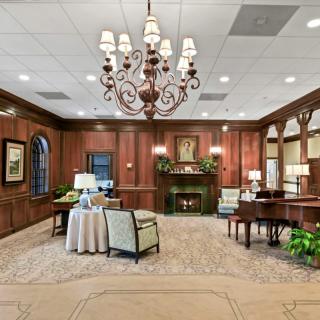
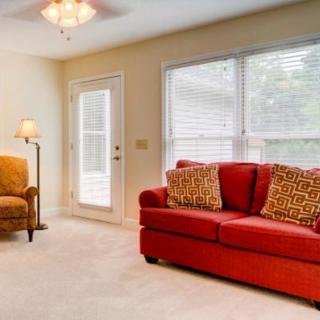
Several reviews explicitly describe the facility as clean, including clean rooms, clean common areas, and an absence of a typical nursing-home odor. Some reviewers also mention secure and well-maintained spaces during visits or after check-in. This positive cleanliness feedback appears alongside the community’s housekeeping and outdoor space offerings in the amenity list. However, because other reviewers raise pest and unsanitary-condition concerns, cleanliness impressions are mixed rather than consistently uniform.
How we summarize
Counts show how many written reviews mention each theme; a review can touch several themes, and only frequently mentioned themes are displayed.
Features
Housing
50 resident community capacity
Types of Care
Assisted Living
Continuing Care Retirement Community (CCRC)
Memory Care
Amenities
Beauty salon
Cable or satellite TV
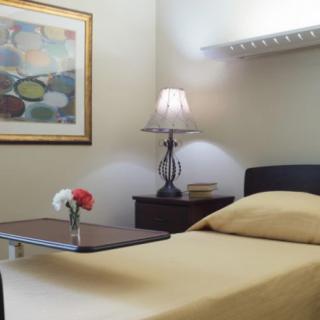
Fully furnished
Garden
Housekeeping services
Move-in coordination
Outdoor space
Private bathrooms
Transportation
Transportation arrangement
Transportation arrangement (non-medical)
Care Services
24-hour call system
24-hour supervision
Activities of daily living assistance
Assistance with bathing
Assistance with dressing
Assistance with transfers
Diabetes diet
Meal preparation and service
Medication management
Special dietary restrictions
Dining
Diabetes diet
Special dietary restrictions
Activities
Community-sponsored activities
Scheduled daily activities
Nearby Places of Interest
Restaurants
Hong Kong Chinese Buffett (0.1 miles)
Fusion Japanese & Thai (0.2 miles)
Captain D's (0.2 miles)
McDonald's (0.2 miles)
Hardee's (0.3 miles)
Sonic Drive-In (0.3 miles)
Crabbler (0.4 miles)
Physicians
Doctors Care (0.2 miles)
Newberry Foot Clinic (0.3 miles)
Midlands Oral Surgery Newberry (0.3 miles)
Newberry Family Health Center (0.3 miles)
Montgomery & Riddle Eye Care (0.4 miles)
Pediatrics of Newberry (0.4 miles)
Palmetto Bone And Joint - Newberry, SC (0.4 miles)
The features offered at Springfield Place Residential Care play a crucial role in enhancing the quality of life for residents with dementia or Alzheimer's disease. Assistance with dressing ensures that residents feel comfortable and confident throughout the day, while medication management provides structured oversight to prevent missed doses and ensure adherence to treatment plans. Meal preparation and service are tailored to meet individual dietary needs, promoting nutrition which is vital for cognitive health. Support with activities of daily living, such as bathing and transfers, fosters independence while maintaining safety, reducing the risk of accidents that can lead to confusion or distress. Finally, 24-hour supervision ensures a consistent and secure environment where residents receive immediate assistance when needed, helping to minimize anxiety and maximize support throughout their daily routines.
Nearby Communities
Springfield Place
Newberry, SC
4.3 from 82 reviews
$1,660 to $1,870 / month
Welcoming community with caring staff and nourishing meals
J F Hawkins Nursing Home
Newberry, SC
4.2 from 71 reviews
Broad care options with extensive amenities and activities.
White Oak Manor - Newberry
Newberry, SC
3.8 from 24 reviews
24/7 attentive care with responsive management and strong physical therapy services.
Newberry Housing Authority
Newberry, SC
3.6 from 63 reviews
Extensive nearby amenities and healthcare access.
Palmetto Gardens
Prosperity, SC
3.7 from 3 reviews
$1,700 to $1,800 / month
Promotes independence with outdoor access and engaging on-site amenities.
Long's Residential Care Center
Saluda, SC
4 from 1 review
$3,000 to $4,000 / month
Specialized memory care with 24-hour supervision and engaging programming.
Clinton Presbyterian Community
Clinton, SC
4.4 from 15 reviews
$1,769 to $3,735 / month
Strong activities, attentive staff, and a clean, welcoming community.
The Heritage At Lowman
Chapin, SC
3.3 from 44 reviews
Attractive facilities with pool and wellness center, bright rooms, and engaging activities.
Lutheran Homes of South Carolina
Irmo, SC
3.7 from 6 reviews
Vibrant assisted living with specialized diabetic care and off-site devotional activities.
Reminiscence therapy is a structured method for older adults, especially those with dementia, to share life stories using prompts and sensory cues, fostering emotional well-being, social engagement, and self-identity. It aims to improve quality of life by enhancing interpersonal connections and cognitive stimulation while requiring careful facilitation to avoid distressing memories.
Dementia, particularly Lewy body dementia, often involves hallucinations that can significantly distress both patients and caregivers due to disruptions in sensory processing and neurotransmitter imbalances. Effective management includes compassionate communication, environmental adjustments, and a multidisciplinary approach to care while addressing the emotional needs of caregivers.
Alzheimer’s disease is a progressive neurological disorder that significantly impacts memory and cognitive functions, accounting for 60-80% of dementia cases, with early diagnosis being crucial yet challenging. It involves brain changes like beta-amyloid plaques and tau tangles, influenced by genetic and lifestyle factors, and while there is no cure, symptom management and support for caregivers are essential.
Get PricingAsk A QuestionSchedule A TourContact Senior Advisor
By clicking submit, you agree to our Partner's Terms of Use. You
also consent to receive calls and texts, which may be autodialed, from our Partner. Your consent is not a condition to
using our Partner's service. Please visit our Partner's Privacy Policy for information about their privacy practices.

 50 resident community capacity
 Assisted Living
 Continuing Care Retirement Community (CCRC)
 Memory Care
 Beauty salon
 Cable or satellite TV
 Fully furnished
 Garden
 Housekeeping services
 Move-in coordination
 Outdoor space
 Private bathrooms
 Transportation arrangement
 24-hour call system
 Activities of daily living assistance
 Assistance with bathing
 Assistance with dressing
 Assistance with transfers
 Diabetes diet
 Meal preparation and service
 Medication management
 Special dietary restrictions
 Welcoming community with caring staff and nourishing meals

 An In-Depth Look at Reminiscence Therapy in Dementia Care
 Dementia-Related Hallucinations: Causes, Experiences, and Practical Approaches
 Illuminating Insights About Alzheimer's Disease: Ten Crucial Realities