Residents describe staff as consistently helpful, respectful, and caring.
Across the reviews, residents and family members repeatedly mention staff who are respectful and willing to help, often framing it as a reliable support system. Several reviewers also use strongly positive language about the quality of service they received and the overall attitude of the people helping them. A number of the comments connect that support to a better day-to-day chance at stability.
common5 reviews mention this
Volunteers and pantry support stand out
Volunteer-led food and clothing help is a recurring theme in reviews.
Multiple reviews describe ongoing help through programs that supply food and other essentials, with mentions of volunteers and a clothes-and-food pantry model. One reviewer also notes that fresh produce was provided, while another highlights the effort involved in accessing pantry support and that it is still worth it. Several comments reinforce that this help is active on a regular schedule and feels rewarding to those involved.
common4 reviews mention this
Immigration and relief programs help
Residents mention support programs that help with immigration and relief needs.
Reviews frequently connect their experience to immigration-related assistance, including help that was described as fast and supportive over time. Others mention specific program support, including Catholic Smiles, as helpful in improving their situation and chances for a better future. Together, these comments emphasize practical, goal-oriented support rather than just general friendliness.
How we summarize
Counts show how many written reviews mention each theme; a review can touch several themes, and only frequently mentioned themes are displayed.
Features
Housing
25 resident community capacity
Types of Care
Assisted Living
Amenities
Beauty salon
Cable or satellite TV
Dining room
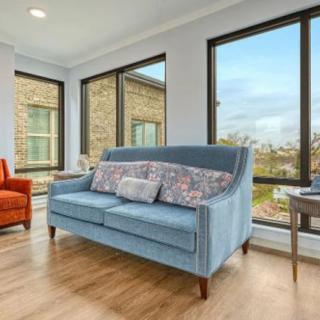
Fully furnished
Garden
Housekeeping services
Kitchenette
Move-in coordination
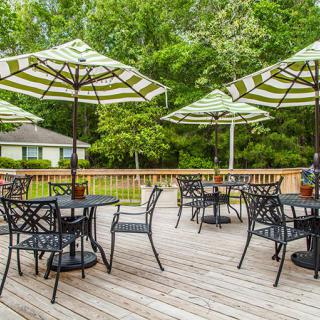
Outdoor space
Restaurant-style dining
Small library
Telephone
Wi-Fi/high-speed internet available
Transportation
Charleston AFB International (6 miles away)
Care Services
24-hour call system
24-hour supervision
Activities of daily living assistance
Assistance with bathing
Assistance with dressing
Assistance with transfers
Diabetes diet
Meal preparation and service
Medication management
Mental wellness program
Special dietary restrictions
Dining
Diabetes diet
Special dietary restrictions
Activities
Community-sponsored activities
Resident-run activities
Scheduled daily activities
Nearby Places of Interest
Physicians
Pediaric Gastroenterology and Liver Disease (0.3 miles)
Harold Dr - Nicolette Harold R Dr Nicolette DO (1.2 miles)
Dr Cordray's Office (1.8 miles)
Parkwood Pediatric Group (2.1 miles)
Harbor Town Pulmonary (2.2 miles)
Family First Medical Care (2.2 miles)
West Ashley Family Medicine (2.3 miles)
Pharmacies
Walgreens (1.2 miles)
Walgreens (1.8 miles)
CVS Pharmacy (2.4 miles)
Primary Rx (2.4 miles)
CVS Pharmacy (2.5 miles)
Low Country Diagnostics Compounding Lab (2.7 miles)
MUSC Hollings Cancer Center Pharmacy (3.4 miles)
Restaurants
Chick-Fil-A (2.2 miles)
Gene's Haufbrau (2.3 miles)
Container Bar (2.3 miles)
Edmund's Oast Brewing (2.3 miles)
Santi's Restaurante Mexicano (2.5 miles)
Edmund's Oast (2.7 miles)
Chick-Fil-A (2.8 miles)
Parks
Hampton Park Dog Run (2.4 miles)
Brittlebank Park (2.6 miles)
Medway Park (3.7 miles)
West Ashley Park (3.8 miles)
Cafes
Panera Bread (2.4 miles)
Sightsee (3.1 miles)
The Daily (3.1 miles)
Babas on Cannon (3.4 miles)
Off Track Ice Cream (4.1 miles)
Hospitals
Center For Abandoned Cats And Tomatoes (2.7 miles)
Assisted living provides moderate support for seniors seeking independence, while memory care offers specialized support for individuals with dementia or cognitive impairments through structured routines and trained staff. Key differences include care approaches, environment security measures, staff training levels, activity types, and cost considerations.
Assisted living communities offer diverse activities beyond traditional games to enhance seniors' physical health, cognitive well-being, emotional enrichment, and social connections, including fitness classes, creative expression, and intergenerational interactions. These enriching programs foster community bonds and support residents' independence and happiness.
The article differentiates between assisted living and memory care, explaining that assisted living supports seniors with daily activities while promoting independence, whereas memory care provides specialized services for individuals with dementia, focusing on secure environments and cognitive support. It also addresses staff training, safety considerations, costs, family involvement, and transition strategies for families navigating these care options.
Get PricingAsk A QuestionSchedule A TourContact Senior Advisor
By clicking submit, you agree to our Partner's Terms of Use. You
also consent to receive calls and texts, which may be autodialed, from our Partner. Your consent is not a condition to
using our Partner's service. Please visit our Partner's Privacy Policy for information about their privacy practices.

 25 resident community capacity
 Assisted Living
 Beauty salon
 Cable or satellite TV
 Dining room
 Fully furnished
 Garden
 Housekeeping services
 Kitchenette
 Move-in coordination
 Outdoor space
 Restaurant-style dining
 Small library
 Telephone
 Wi-Fi/high-speed internet available
 Charleston AFB International (6 miles away)
 24-hour call system
 Activities of daily living assistance
 Assistance with bathing
 Assistance with dressing
 Assistance with transfers
 Diabetes diet
 Medication management
 Mental wellness program
 Special dietary restrictions
 Small, intimate setting offering personalized care and proactive therapy/medical updates.

 Assisted Living and Memory Care: Understanding Their Core Differences
 Beyond the Bingo Hall: 50+ Enriching Activities for Seniors in Assisted Living
 Understanding the Distinctions: Assisted Living and Memory Care Explained