
40 Leander St, Providence, RI 02909
To contact a resident: (401) 521-2070
For more information about senior living options: (866) 208-4318
Overall Review of Hillcrest Villages
Pros
 It is described as an excellent place.
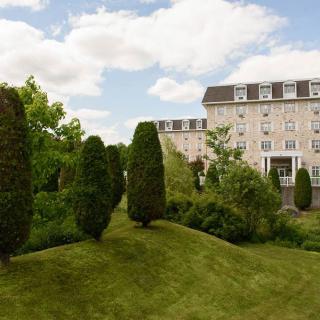
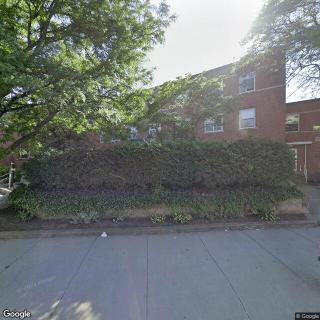
- It sits atop two pretty steep hills and is surrounded by wooded areas.
- It offers a country atmosphere while still being within city limits.
Cons
 The hills are too hard to climb, especially when they can't breathe.
- They feel they are punished for no reason and that the rules about what to do are not clearly explained.
- They feel discriminated against and believe the building does not treat them fairly.
- They plan to move and consult a lawyer due to perceived discrimination and unsafe conditions.
- They are experiencing high stress and worry, with shaking, trouble breathing, difficulty concentrating, and not eating all day.
- The staff seem unclear about procedures and were rude when they asked questions.
- Being on top of steep hills isolates them from the city, and the building went unseen by major networks for years, which they view as a significant downfall.
Review
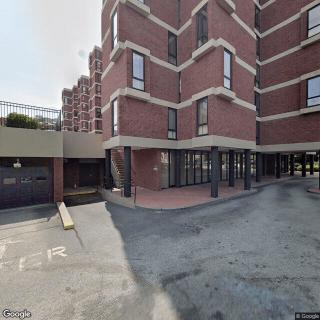
Hillcrest Villages in Providence is best suited for active seniors who prize a quiet, nature-infused setting and can navigate uneven terrain without relying on frequent, hands-on assistance. The campus sits atop two steep hills and fronts a wooded, country-like atmosphere while remaining within city limits. This arrangement supports residents who value privacy, independence, and a serene environment over bustling, highly centralized services. It works best for those who can tolerate some variability in day-to-day operations and who are comfortable advocating for their own needs when policies aren’t perfectly clear.
Those who should seriously consider alternatives are residents with significant mobility limitations, chronic breathing issues that make hills a daily challenge, or anyone who requires consistently transparent, predictable staff interactions. For families prioritizing unwavering, proactive communication and clearly laid-out rules, Hillcrest may feel frustrating at times. The property’s topography compounds accessibility concerns, and when rules or expectations are not clearly communicated, frustration can escalate quickly. A community that relies on self-advocacy rather than well-defined front-desk guidance is less suitable for residents who prefer a smoother, more hands-off care experience.
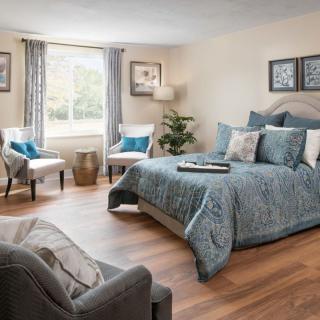
The strongest positives lie in the setting and the perceived quality of the living environment. The hillside location and wooded surroundings offer a calm, low-traffic ambience that can be a meaningful early-stage fit for those who enjoy outdoor views and a retreat-like feel at home. In addition, the community is described as excellent in its offerings by some residents, which suggests a certain level of care, cleanliness, and programming variety that can support a comfortable lifestyle for independent or lightly assisted residents. Those benefits partially offset fewer daily conveniences than might be found at more centrally oriented campuses, provided mobility and weather allow residents to access outdoors and common spaces with relative ease.
However, the drawbacks are tangible and should not be understated. The steep inclines create ongoing physical barriers for anyone with limited mobility or respiratory concerns, making routine activities and even short strolls more strenuous. The experience is amplified on hot days or in damp conditions when movement becomes riskier. Compounding this is a reported inconsistency in rules and communications; residents describe a lack of clarity about tasks, schedules, and expectations, which can erode trust and lead to unnecessary stress. Instances of perceived blunt or rude responses when questions are asked further undermine confidence in daily operations and can create an atmosphere of unease for residents and families seeking reliable, respectful interactions.
Another important consideration is the location’s visibility and safety dynamics. The property’s hillside seclusion and distance from major thoroughfares can contribute to a sense of privacy and reduced street noise, but it also means that access to rapid assistance or external services may feel delayed or less straightforward than at flatter, more interconnected campuses. A safety incident highlighted by residents, a dramatic accident with a child in the building, underscores the need for vigilant, transparent safety measures and clear communication with families about risk mitigation. While agency staff can manage emergencies, the terrain and layout heighten the importance of dependable call-response times and proactive safety practices.
In practical terms, Hillcrest Villages offers a viable path for seniors who value a tranquil, nature-forward living environment and who can navigate the campus’s physical demands with minimal tailored assistance. For those whose criteria include effortless mobility through a flat campus, unambiguous policies, consistently courteous staff, and a transparent, easily navigable rule set, alternatives merit serious consideration. Prospective families should demand a candid, operational portrait: walk the hills during different weather, probe how pest-control and safety routines are communicated, request sample policy documents, and speak with current residents about responsiveness and consistency. If independence, quiet surroundings, and a good-quality living space align with priorities, Hillcrest can be a strong match; if predictable daily operations and uniformly compassionate service drive the decision, explore other options with flatter campuses and more centralized governance.
 Theodore F Green State (7 miles away)


 Understanding the Nuances of Palliative Care and Hospice: A Comprehensive Exploration
 Fecal Incontinence in Older Adults: A Comprehensive Guide
 Recognizing the Journey: Understanding and Navigating Anticipatory Grief