

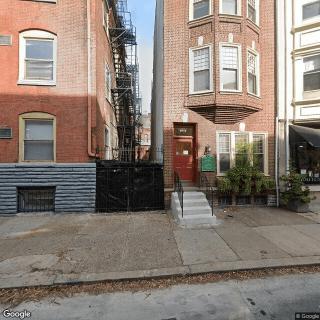
1617 JFK Blvd., Suite 350, Philadelphia, PA 19103
To contact a resident: (215) 882-8234
For more information about senior living options: (866) 208-4318
Overall Review of Assisting Hands of Philadelphia
Pros
 The agency's management and staff have been outstanding.
- They’re on a first-name basis with nearly everyone, and the owner and manager are regularly available.
- When issues arise or a different caregiver comes in, they make a point to establish a very upfront and personal connection.
- They bring the caregiver to the loved one and explain who the caregiver is and what their plans are for the loved one's care.
- This personal touch is highly valued by the reviewer.
- The owner and manager have been astute in handling any situations that arise.
- They supply all of the food for the loved one, and caregivers will go to the store to get anything needed.
- The caregivers also cook, vacuum, change the bed, and do the wash.
- They will do everything one could possibly ask for, including arranging transportation to doctor appointments.
- The reviewer is very pleased with the agency and would absolutely recommend them.
Review
Assisting Hands of Philadelphia is best suited for families that want a high-touch, in-home care model where control and communication stay tightly in the hands of ownership and managers. This agency excels when a loved one benefits from a familiar home environment, personalized scheduling, and a caregiver network that can be tailored to changing needs. The hallmark is continuous oversight: the owner and manager are closely involved, accessible by phone or visit, and actively participate in caregiver introductions, planning, and care plan updates. For households that prize transparency, immediate issue resolution, and the ability to adjust care plans on the fly, this model delivers substantial reassurance.
Those weighing alternatives should consider whether a residential assisted living setting would be a better fit. If the priority is a structured community with built-in social programs, 24/7 on-site supervision, and professional nursing support, a traditional assisted living or memory care facility may offer clearer advantages. Families needing a fixed, predictable staffing pattern with a formal daily schedule might prefer a facility where care teams operate under a centralized administration. In short, when the objective shifts from home-based intimacy to a more autonomous communal living experience, exploring other options becomes prudent.
The strongest positives here center on personal connection and practical, wide-ranging support. The owner’s ongoing involvement translates into rapid issue resolution and a sense that care is not outsourced to distant supervisors. Caregivers are introduced directly to the family and the client, with explicit explanations of who is coming and what their plan is for her day-to-day needs. The range of tasks covered, meal preparation, housekeeping, bed changes, laundry, and even errands for groceries, offers a level of convenience that can significantly reduce caregiver-family friction. Transportation arrangements to doctor appointments add another layer of continuity, enabling medical follow-through that many families struggle to coordinate on their own.
Yet, the in-home model carries trade-offs. The absence of on-site medical staff means that complex clinical needs or rapid escalation require careful coordination with external providers, which can introduce delays or gaps if not managed proactively. Caregiver availability can vary, and while the owner’s leadership helps align teams, families should prepare for occasional caregiver substitutions. The reported practice of bringing in a new caregiver after discussing plans helps mitigate confusion, but it also means some transitions are less seamless than a fixed facility schedule. Ultimately, the real value rests on the ability to keep the care plan current and the line of communication open.
For decision-making, it is wise to quantify what matters most: the desire for home-like autonomy versus the need for predictable, around-the-clock supervision; the importance of social engagement versus individualized daily routines; and the preferred degree of management involvement. Prospective clients should ask for a detailed care plan that covers daily activities, backup caregiver coverage, and how transportation logistics are handled when medical appointments run late. It’s essential to verify costs, contract terms, background checks, and ongoing supervision practices. If risk tolerance is low for caregiver turnover or scheduling fluctuations, alternatives with guaranteed staffing may be preferable.
In the end, Assisting Hands of Philadelphia represents a compelling option for families who prize a responsive, personalized in-home care approach. When the goal is to maintain independence and a familiar living space, with direct access to owners and a hands-on care team that can adapt quickly, this provider stands out. If the family recognizes that the comfort of home must be matched with robust oversight and flexible support, arranging an in-person assessment and requesting a written care plan is the prudent next step. For those seeking a more structured, facility-based environment or specialized memory-care programming, it pays to compare options side by side before committing.
 Philadelphia International (7 miles away)







 Comprehensive Guide to Qualifying for Home Health Care Services
 Powerful Realities of Elder Abuse and the Most Effective Ways to Report It
 Ten Vital Duties of a Senior Caregiver: A Comprehensive Guide