
Willow Valley Sq # 675, Lancaster, PA 17602
To contact a resident: (717) 464-6099
For more information about senior living options: (866) 208-4318
Overall Review of Glen At Willow Valley
Pros
 The nurses are very nice.
- The staff are well-mannered.
Cons
 The higher-ups are not responsive.
- The reviewer is disappointed with their mom's long-term care.
- The staff are described as thugs.
Review
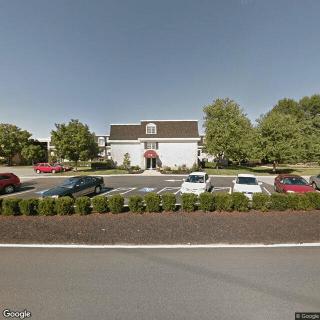
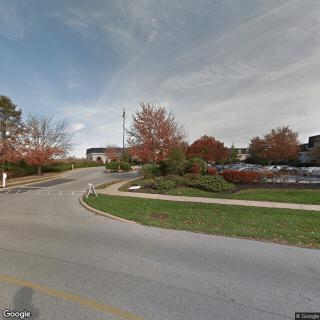
Glen At Willow Valley is best suited for seniors who want a refined, campus-style setting where frontline nursing care is the strongest selling point. Families that value visible, courteous bedside care and a welcoming, activity-rich atmosphere will find this community comfortable and reassuring day to day. The Lancaster location and the overall ambience appeal to residents who prioritize personal connection with the caregivers who are with them most often, even if they are not seeking lightning-fast responses from higher administration.
The clearest positive signal from the experience is the quality of direct care. Frontline nurses and caregivers are consistently described as kind, attentive, and personable, delivering the daily support that keeps residents stable and comfortable. This is not a generic facility heartbeat; it is the real, people-level care that families notice in routine tasks, mobility assistance, and the small, everyday interactions that determine a resident’s day-to-day quality of life. For families who can rely on those front-line relationships, the stay feels personal and well-nurtured.
Where the narrative becomes more nuanced is in the administrative layer and long-term care oversight. Several observers note a disconnect between the bedside staff and upper-level management, characterizing responsiveness from leadership as lacking. In practice, this can translate to slower follow-through on care plans, questions about scheduling or policy changes, and a sense that decisions at the top do not always align with the lived experience on the floor. One review points to long-term care decisions that left a family feeling disappointed with how a mother’s needs were addressed over time. These concerns are real and meaningful for families juggling ongoing care needs.
That tension between strong frontline care and slower administrative responsiveness is not a fatal flaw if navigated strategically. The enduring strength of the nurses and aides can offset some gaps by delivering consistent, compassionate day-to-day support, while families remain active in coordinating care and communicating directly with the caregiving team. The environment and staff culture, when viewed through the lens of daily interactions, can still feel warm and respectful. In practical terms, the advantages of front-line steadiness may outweigh the drawbacks for residents with straightforward needs who don’t require rapid policy changes or aggressive care-plan revisions on a weekly basis.
Who should consider alternatives? Families that cannot tolerate slow administrative follow-up or that demand highly proactive, integrated long-term care management may want to look elsewhere. If clear, timely leadership communication and a seamless long-range care strategy are non-negotiables, or if there is a need for robust coordination across departments (medical, social work, and billing) with quick turnarounds, exploring other communities, either within the Willow Valley family with a different operating philosophy or comparable options in the area, could be prudent. Additionally, if a resident or family perceives a problematic staff culture or expects a more uniformly responsive leadership tone, alternatives may offer a better cultural fit.
Practical due diligence will sharpen the decision. Prospective families should arrange extended tours focused on care planning and ask to speak with both the nursing director and a social worker to understand how long-term needs are managed and escalated. Inquire about typical nurse-to-resident ratios on each shift, the process for updating care plans, and how family communications are tracked and acknowledged. Request observations of a shift change to gauge how information travels between front-line teams and supervisors. Finally, clarify costs, what's included, and what elements might be subject to change; a clear, documented care plan with measurable milestones will illuminate whether the strengths align with specific care trajectories.
 Assisted Living
 Independent Living
 Skilled Nursing Facility
 Activities on-site
 Devotional services off-site
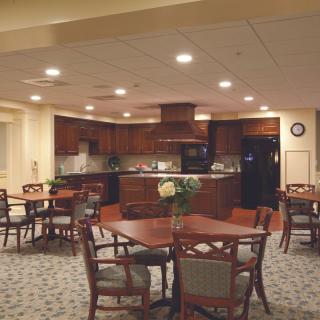
 Indoor common areas
 Ambulatory care
 Diabetic care
 Meals provided

 Medicare Coverage for Assisted Living: An In-Depth Exploration
 Choosing the Right Senior Care: A Detailed Exploration of Assisted Living and Nursing Homes
 Understanding the True Cost of Assisted Living in 2025: A Comprehensive Guide