200 Tandem Village Road, Canonsburg, PA 15317
For more information about senior living options: (866) 208-4318
Overall Review of Consulate Retirement Village Of North Strabane
Pros
 It is providing good care and has a new administration.
- The staff are amazing.
- The angels that work there are beyond reproach.
- Presbyterian Senior Care in Washington PA is a professional caring full-service facility with trained staff.
Cons
 They were completely incapable of caring for her.
- They called the ER and sent her out three times in a month because they were not staffed or trained to care for someone with Alzheimer's.
- Do not be fooled by their marketing; this is not a good place for a loved one.
- Staff turnover makes it impossible to contact anyone who is able or willing to help.
- The facility is short-staffed.
- The staff are overworked.
- The administration is only out for a buck.
- It is no longer safe.
- Residents that should be in skilled nursing are kept in personal care.
Review
This community is best suited for seniors who require moderate daily assistance and are prioritizing a lower-cost option, provided memory-care expectations are modest and medical oversight isn’t expected to be highly integrated. The available feedback consistently points to care that can be solid on a shift-by-shift basis but is highly sensitive to staffing fluctuations and the current administration. Families evaluating affordability over surgical precision in memory care will find some value here, especially if a resident’s needs remain largely custodial rather than complex medical or cognitive. The Canonsburg location matters, but the decisive factor is whether the day-to-day support aligns with a specific care level and the family’s tolerance for leadership turnover.
Those who should consider alternatives are clear: memory-care or dementia-specific needs require a facility with proven, stable dementia programming and trained, readily available oversight. The reviews recount multiple alarming scenarios where Alzheimer’s care was not managed effectively, including repeated ER visits and concerns about who is available to intervene when trouble arises. For families relying on consistent, expert memory support or requiring steady 24/7 medical supervision, options with established dementia care teams and lower risk of staffing gaps are prudent. In practical terms, Presbyterian Senior Care in Washington, PA, is cited as a benchmark to compare against, signaling that more robust dementia protocols exist elsewhere.
Pros worthy of note include frontline dedication and the emergence of a new administration. A number of caregivers are described as amazing and genuinely caring, and there is an impression that leadership changes are beginning to lift some aspects of daily care. This combination can translate into periods of attentive, personalized assistance that bring real relief to residents and families. When administration and staffing align, those positive threads show up as better responsiveness, clearer communication, and a more stable routine. The best-case scenario here is a facility that finally harmonizes its leadership with its front-line teams to deliver consistently decent care.
Yet the cons pull hard and repeatedly. Staffing instability is the most troubling thread: short-staffed shifts, overworked aides, and turnover that makes it hard to reach anyone who can assist. The effect is a ripple of missed signals, delayed responses, and a sense that residents with greater needs are not receiving appropriate attention. Several reviews warn that some residents would be better cared for in a skilled-nursing setting rather than a personal-care environment, underscoring a misalignment between resident acuity and the current care model. Administrative posture, viewed by some as more focused on cost containment than compassionate oversight, further erodes trust and raises red flags about safety and reliability.
Balancing the scales requires disciplined judgment. The favorable elements, dedicated staff in the trenches and signs of administrative improvement, can offset a portion of risk, but not the core capacity gaps that appear when dementia care proficiency and consistent leadership are lacking. Families should insist on concrete safeguards: clear memory-care protocols, documented staff-to-resident ratios by shift, accessible on-site administrators, and ongoing dementia training for care teams. Without those assurances, the odds tilt toward alternatives that can deliver steadier cognitive support and more predictable accountability.
Bottom-line guidance centers on due diligence and clear expectations. For residents who need only light to moderate assistance and who do not yet demonstrate significant memory impairment, this community can be a practical, budget-conscious choice if realistic limits are accepted. For those facing dementia, fall risk, or a demand for guaranteed skilled-nursing oversight, it is prudent to look elsewhere with proven dementia specialization and stable governance. Prospective families should schedule thorough on-site visits, request current care plans and incident logs, and verify escalation policies. The right fit hinges on whether daily operations can reliably translate leadership promises into steady, compassionate care every day.
 90 resident community capacity
 Assisted Living
 Respite Care
 Air-conditioning
 Beauty salon
 Cable or satellite TV
 Computer center
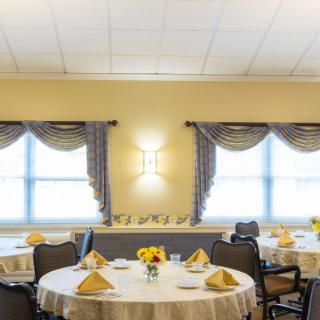
 Dining room
 Fitness room
 Fully furnished
 Gaming room
 Garden
 Housekeeping services
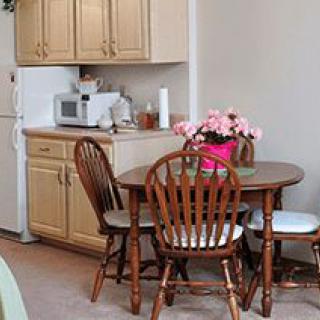
 Kitchenette
 Move-in coordination
 Outdoor space
 Private bathrooms
 Restaurant-style dining
 Small library
 Telephone
 Wellness center
 Wi-Fi/high-speed internet available
 Pittsburgh International (17 miles away)
 Community operated transportation
 12-16 hour nursing
 24-hour call system
 Activities of daily living assistance
 Assistance with bathing
 Assistance with dressing
 Assistance with transfers
 Diabetes diet
 Medication management
 Mental wellness program
 Special dietary restrictions
 Concierge services
 Planned day trips

 Senior Transition Services: Understanding Their Role, Cost, and Importance
 Exploring the Path to Senior Living: A Comprehensive Look at Independent Living and Assisted Living
 Is Assisted Living Deductible on Your Taxes? Understanding the Complexities of Assisted Living Expenses and Deductions