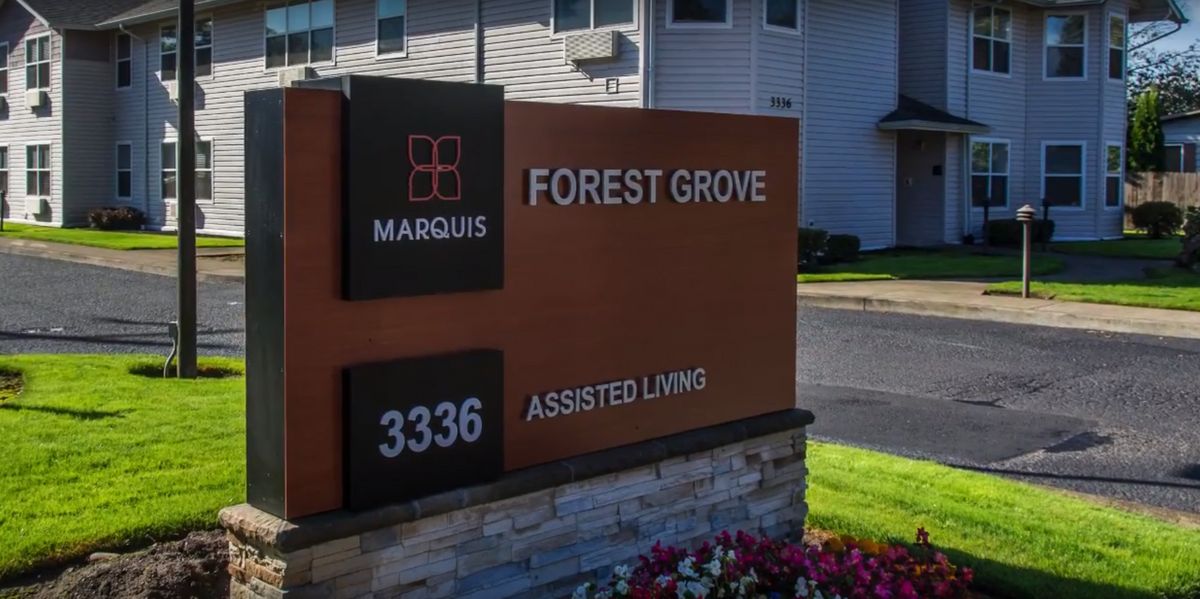


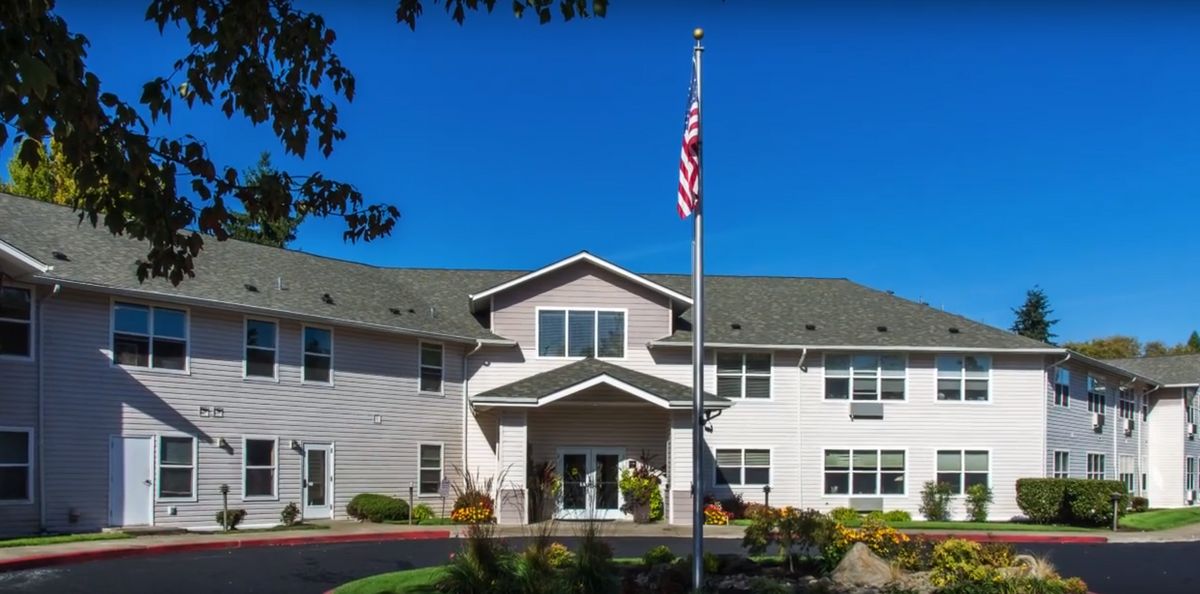





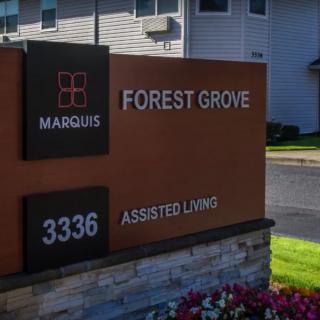
3336 19th Avenue, Forest Grove, OR 97116
For more information about senior living options: (866) 208-4318
Marquis Forest Grove Assisted Living Costs & Pricing
Marquis Forest Grove Assisted Living offers competitive pricing for its residents compared to both Washington County and the broader state of Oregon. For a studio, the monthly cost is $3,691, which is notably more affordable than the local county average of $3,909 and slightly lower than the state average of $3,815. When it comes to one-bedroom accommodations, however, Marquis Forest Grove's rate of $4,723 exceeds both the county's average of $4,082 and the state's average of $3,904. This pricing structure reflects the facility's commitment to providing quality care while maintaining accessibility in a market that varies significantly in costs. Overall, residents can find value at Marquis Forest Grove, especially in their studio options.
| Floor plans | Marquis Forest Grove Assisted Living | Washington County | Oregon |
|---|---|---|---|
| Studio | $3,691 | $3,909 | $3,815 |
| 1 Bedroom | $4,723 | $4,082 | $3,904 |
Assisted Living communities with a similar price nearby
-
from +$183 / mo

Hearthstone of Beaverton
$3,874 to $7,500 / month14.2 miles away -
About the same

Woodland Heights
$3,600 to $3,750 / month16.6 miles away -
from -$201 / mo
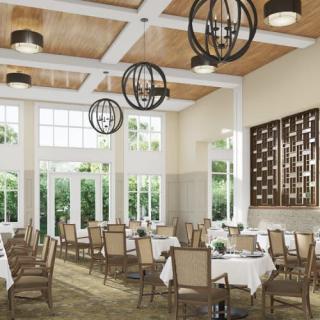
The Springs at Sherwood
$3,490 to $5,680 / month16.3 miles away -
About the same

Rose Schnitzer Manor
$3,586 to $5,641 / month17.0 miles away -
from +$154 / mo
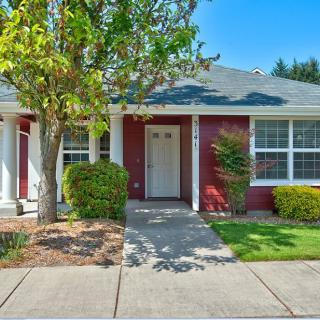
Parkland Village
$3,845 to $4,575 / month21.9 miles away
Overall Review of Marquis Forest Grove Assisted Living
Pros
 Mom has had the opportunity to make new friends.
- Mom is very happy there so far.
Cons
 There has been significant staff turnover and staffing shortages.
 - There is frequent management turnover, indicating ongoing staffing instability.
- The meals and menu are boring for mom.
- Dad was not checked on during his five-day stay.
- The staff did not follow through on things they said they would.
- Medicaid acceptance is inconsistent, limiting options for residents.
Review
Marquis Forest Grove Assisted Living is best suited for seniors who want an active social life and a relatively smooth bridge from short-term rehab into ongoing daily living. The community tends to reward residents who value friendship-building and approachable, home-like routines, even as staffing dynamics fluctuate. Families should expect an environment where new connections can form quickly and where daily life remains warm and accessible, provided expectations acknowledge periodic staff turnover and occasional limitations in menu variety. In Forest Grove, this combination makes for a practical choice for those who prioritize sociability and a straightforward transition over pristine consistency in staffing.
Those who should seriously consider alternatives are families seeking rock-solid staffing stability, steady on-site management, and a consistently varied dining program. If dependable coverage, close oversight, and predictable care rhythms are non-negotiable, it pays to compare other options where long-tenured teams and enhanced supervision are the norm. Likewise, families with residents who require intensive, attentive supervision or specialized programming, beyond routine assistance, may find better alignment elsewhere. And for anyone prioritizing diverse, engaging meals as a core value, explore facilities with demonstrated, intentional menu planning as a baseline.
The strongest pro here is social opportunity. Residents can form meaningful friendships, participate in everyday activities, and experience a sense of community that can significantly improve quality of life. That benefit does some heavy lifting against the backdrop of rehab-to-AL transitions, where a quick move can be disruptive but still enables immediate social integration. However, the main cons, staffing shortages and frequent turnover, including management changes, tend to dilute the reliability and continuity caregivers can provide. A positive mood from a resident like mom is compelling, but it does not fully compensate for inconsistent coverage and the risk of overlooked needs when turnover spikes.
Further complicating the picture is the observed inconsistency in oversight and follow-through. One review notes a lack of attentiveness during a rehab-to-assisted transition, with a family member feeling the basic commitments were not honored. Such incidents illuminate a tangible risk: even when residents are happy in the moment, lapses in supervision and accountability can arise, especially when staffing is in flux. Dining experiences, while not disastrous, have their limits, meals can feel repetitive at times, which matters to daily satisfaction but is typically easier to address than gaps in care. Taken together, the positives ring true, yet the cons remain real and recurrent enough to necessitate vigilant ongoing evaluation.
Financial planning looms large in the decision. The family comments that Medicaid may become necessary once funds are depleted, and there is awareness that not all facilities in the area accept Medicaid. This reality means prospective residents should verify current Medicaid policies with Marquis Forest Grove and map a clear funding path well before depletion occurs. If Medicaid eligibility or future coverage is a potential concern, creating a contingency plan and interviewing nearby options with explicit acceptance can prevent urgent, high-stakes moves later on. The affordability question, therefore, cannot be separated from the daily care judgment.
In practical terms, a decisive conclusion rests on what matters most to the family: sustained social vitality versus unwavering staffing reliability and care continuity. For seniors who prize connection, ease of transition, and a welcoming environment, Marquis Forest Grove offers a compelling fit, provided vigilance around staffing patterns and menu expectations remains in play. For those who must see consistently high staffing retention, proactive management, and diversified dining as non-negotiables, this community warrants careful comparison with alternatives that promise steadier teams and stronger day-to-day oversight. A well-informed tour should focus on current staffing stability, depth of managerial involvement, concrete meal plans, and a transparent pathway for future financial coverage.
 70 resident community capacity
 Assisted Living
 Respite Care
 Cats allowed
 Dogs allowed
 Activities off-site
 Air-conditioning
 Bath tubs
 Beautician on-site
 Cable or satellite TV
 Computer center
 Devotional services on-site
 Dining room
 Fitness room
 Fully furnished
 Gaming room
 Garden
 Housekeeping services
 Indoor common areas
 Kitchenette
 Move-in coordination
 Outdoor common areas
 Private bathrooms
 Restaurant-style dining
 Small library
 Telephone
 Wellness center
 Wheelchair accessible showers
 Wi-Fi/high-speed internet available
 Portland International (24 miles away)
 Community operated transportation
 12-16 hour nursing
 24-hour call system
 Assistance with bathing
 Assistance with dressing
 Assistance with transfers
 Diabetes diet
 Diabetic care
 Incontinence care
 Medication management
 Mental wellness program
 Special dietary restrictions
 Concierge services
 Planned day trips







 8 Key Indicators That Suggest It May Be Time to Transition from Assisted Living to Skilled Nursing Care
 Vibrant Senior Living: A Comprehensive Guide for Active Older Adults
 When to Transition from Assisted Living to Memory Care: Key Indicators, Steps, and Finding the Right Community