
3334 22Nd Avenue, Forest Grove, OR 97116
For more information about senior living options: (866) 208-4318
Gardens Enhanced Care Community Costs & Pricing
Gardens Enhanced Care Community offers competitive pricing for its accommodations compared to both Washington County and the state of Oregon. For a studio unit, residents can expect to pay $2,925 per month, which is significantly lower than the county average of $3,909 and the state average of $3,815. One-bedroom apartments at Gardens are priced at $3,575, again more affordable than the county's $4,082 and slightly below the state's $3,904. Lastly, for those seeking two-bedroom options, Gardens' rate of $4,495 remains competitive against Washington County's cost of $4,801 and aligns closely with Oregon's state average of $4,436. These pricing structures reflect Gardens Enhanced Care Community's commitment to providing accessible care while maintaining high standards of living for its residents.
| Floor plans | Gardens Enhanced Care Community | Washington County | Oregon |
|---|---|---|---|
| Studio | $2,925 | $3,909 | $3,815 |
| 1 Bedroom | $3,575 | $4,082 | $3,904 |
| 2 Bedrooms | $4,495 | $4,801 | $4,436 |
Assisted Living communities with a similar price nearby
-
from -$330 / mo
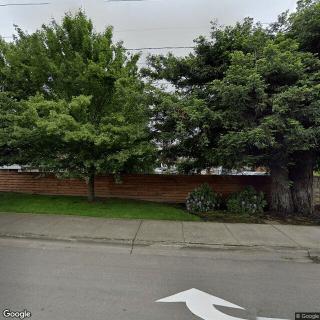
Highgate Senior Living
$2,595 to $3,095 / month23.5 miles away -
from +$565 / mo

The Springs at Sherwood
$3,490 to $5,680 / month16.5 miles away -
from -$155 / mo
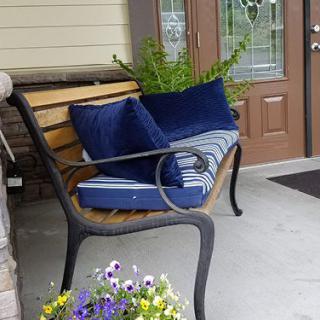
Clackamas View Senior Living
$2,770 to $3,768 / month24.5 miles away -
from -$170 / mo

Brookdale McMinnville Town Center
$2,755 to $4,195 / month20.8 miles away -
from +$540 / mo
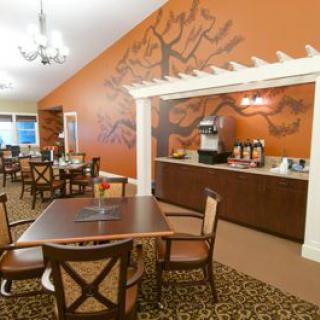
Royalton Place
$3,465 to $4,785 / month23.9 miles away
Overall Review of Gardens Enhanced Care Community
Pros
 The staff at Forest Grove Marquis went above and beyond to welcome and care for a family member entering hospice care.
- They worked hard to secure quick admission and provided excellent care during the final days.
- The staff were wonderful and attentive throughout the stay.
- The resident was allowed to keep her beloved cats with her, which made a big difference.
- She especially loved the Swedish meatballs served at dinner, and meals were often brought up to her.
Review
Gardens Enhanced Care Community in Forest Grove is best suited for families seeking a warm, home-like setting that can gracefully support end-of-life care while keeping beloved pets nearby. This community shines for seniors who value hands-on, attentive staff, small-scale, relationship-based care, and meals that feel like home. It is a strong match for households prioritizing comfort, dignity in later stages of life, and a resident-centered atmosphere where staff seem genuinely invested in daily well-being.
Those considering alternatives should note that this setting may not be the right fit for every situation. If a resident requires intensive medical oversight, highly structured rehab programs, or specialized memory-care services, other communities with more extensive clinical staffing and purpose-built dementia care may be preferable. Additionally, families facing strict pet prohibitions, or seeking a location with a broader menu of clinical therapies or more expansive programming, may want to explore options that shift focus toward higher-acuity care or different lifestyle offerings.
The strongest pro is the staff’s willingness to mobilize quickly and compassionately when hospice needs arise, ensuring a smooth admission and attentive end-of-life care. The warmth and steadiness shown in those moments provide not just comfort to the resident, but real relief to exhausted families. Equally compelling is the facility’s pet-friendly stance, which allows residents to keep cats and maintain familiar routines and relationships at a vulnerable time. This policy reduces stress, preserves continuity with beloved companions, and lessens the emotional burden on caregivers who would otherwise need to rehome a pet. Another standout is the overall atmosphere created by considerate caregivers who attend to daily pleasures, including dining experiences that feel personal and comforting.
On the dining and daily-life front, the community’s approach to meals and small, meaningful touches adds up. A resident’s positive memory of meals, like meatballs served at dinner, and staff facilitating meals to private rooms illustrate a level of attentiveness that makes daily life more lift-worthy. The combination of home-style cuisine, individualized meal preferences, and staff engagement around meals can materially improve mood, appetite, and social connection, which in turn supports overall well-being during challenging periods. While there are no explicit negatives cited, the lack of reports on medical intensiveness or memory-care programming suggests a clarified scope: end-of-life and general assisted living support within a homelike environment.
The absence of stated drawbacks should not be mistaken for limitless capability. The community’s strengths, compassionate staff, rapid hospice placement, and pet-friendly luxury, are most impactful for residents who do not require intensive, ongoing medical or rehabilitation services beyond basic assisted-living supports. Families should be mindful that for residents needing robust memory-care programming, extensive physical therapy, or complex clinical management, other facilities with more formalized care tracks may deliver a closer match to those needs. Still, within its defined niche, the balance of warmth, autonomy, and practical care is hard to beat.
For families evaluating options, Gardens Enhanced Care Community emerges as a prudent, purpose-built choice for end-of-life-ready seniors who still crave personal connections, pet companionship, and dignified daily living. Prospective residents should prioritize a direct tour focused on hospice readiness, pet policy specifics, and the day-to-day cadence, what activities look like, how staff ratios feel in practice, and how meals are personalized. Ask about what “enhanced care” truly covers day-to-day, and seek clarity on what happens if medical needs intensify. The bottom line is clear: for families navigating late-life transitions with a beloved animal companion in mind, this community offers a compassionate, practical home where care is personal, pets are welcome, and dignity leads the day.
 56 resident community capacity
 Assisted Living
 Air-conditioning
 Beauty salon
 Cable or satellite TV
 Computer center
 Dining room
 Fitness room
 Fully furnished
 Gaming room
 Garden
 Housekeeping services
 Kitchenette
 Move-in coordination
 Outdoor space
 Private bathrooms
 Restaurant-style dining
 Small library
 Telephone
 Wellness center
 Wi-Fi/high-speed internet available
 Portland International (24 miles away)
 Community operated transportation
 24-hour call system
 Activities of daily living assistance
 Assistance with bathing
 Assistance with dressing
 Assistance with transfers
 Diabetes diet
 Medication management
 Special dietary restrictions
 Concierge services
 Planned day trips





 Comprehensive Insights into Activities of Daily Living (ADLs) and Their Assessment
 Guiding Elderly Parents Who Refuse Assisted Living: 6 Practical Steps
 Your Comprehensive Guide to Luxury Assisted Living: Elevated Facilities, Amenities, and Costs