Wake Forest Care Center offers competitive pricing for its long-term care services, particularly when compared to the surrounding region. For a semi-private room, the monthly cost is $2,200, significantly lower than the average in Wake County at $4,391 and also below the state average of $3,584. This positions Wake Forest Care Center as an attractive option for those seeking affordability without compromising on quality. Additionally, for a studio room, the center's rate of $5,000 is slightly above Wake County's average of $4,757 but remains reasonable compared to North Carolina's overall average of $4,020. This balance allows families to consider long-term care solutions that fit their financial needs while ensuring a supportive environment for their loved ones.
Floor plans
Wake Forest Care Center
Wake County
North Carolina
Semi-Private
$2,200
$4,391
$3,584
Studio
$5,000
$4,757
$4,020
Assisted Living communities with a similar price nearby
Residents and families consistently describe caring, attentive staff.
Across many reviews, families say staff are kind, attentive, and quick to address needs or questions. Several reviewers also mention long-term familiarity with the team, and describe feeling comfortable with the care provided. A smaller set of reviews raises serious concerns about responsiveness and day-to-day support, including reports of management being unresponsive and staffing falling short at certain times.
differentiator5 reviews mention this
Memory care support stands out
Memory care gets specific praise for dementia-focused support.
Several reviews specifically discuss the Memory Care experience, describing training and compassion for residents with dementia. One family says their loved one is well looked after and gets the assistance they need, while another describes a smooth transition and good progress after moving in. A separate review focused on Memory Care describes declines in multiple service aspects over time, which contrasts with the positive experiences others report.
caveat4 reviews mention this
Cost can feel high
Some families feel pricing is higher than expected.
A few reviews call out cost as a concern, with one writer saying it is the highest among alternatives they evaluated. Others describe feeling overcharged relative to what they experienced, including complaints about service and support. At the same time, several other reviews do not mention cost as a negative, suggesting opinions vary.
caveat3 reviews mention this
Food quality is mixed
Dining reviews are split between strong praise and complaints.
Some residents and families describe the food positively, including comments that it is very good. Other reviewers mention meals arriving late or describe concerns about nutrition, with one saying there are few alternatives and that meals skew fried and salty. Overall, dining appears to be a mixed point in the reviews rather than a consistent highlight.
caveat2 reviews mention this
Activities feel inconsistent
Activities aren’t consistently described across reviews.
One review highlights monthly themed Family Nights as a meaningful way for families to connect and support one another. Another reviewer says there is no specific activities schedule, adding that some activity options are limited. This combination suggests that activity programming may vary depending on expectations and timing.
How we summarize
Counts show how many written reviews mention each theme; a review can touch several themes, and only frequently mentioned themes are displayed.
Features
Types of Care
Assisted Living
Pets
Cats allowed
Dogs allowed
Amenities
Activities on-site
Devotional services off-site
Indoor common areas
Transportation
Raleigh-Durham International (17 miles away)
Care Services
Ambulatory care
Diabetic care
Dining
Meals provided
Activities
Activities on-site
Devotional activities offsite
Nearby Places of Interest
This area of Wake Forest, North Carolina offers a variety of amenities within close proximity. There are several cafes and restaurants for you to enjoy a meal or grab a cup of coffee with friends. Additionally, there are pharmacies and medical facilities nearby, providing easy access to healthcare services. For those seeking spiritual fulfillment, there are places of worship in the vicinity. The availability of parks and theaters offers opportunities for outdoor recreation and entertainment. Transportation options such as Enterprise Rent-A-Car are also available for your convenience. With hospitals like Duke Raleigh Hospital and WakeMed Health & Hospitals in close proximity, you can rest assured knowing that quality healthcare is easily accessible. Overall, this part of Wake Forest provides a blend of convenience, entertainment, and healthcare facilities that make it an attractive option for senior living.
Cafes
Back Alley Coffee Roasters (0.5 miles)
Panera Bread (2.3 miles)
Starbucks (7.2 miles)
Panera Bread (8.3 miles)
Starbucks (12.4 miles)
Starbucks (13.7 miles)
41 North (15.1 miles)
Pharmacies
CVS Pharmacy (0.6 miles)
Walgreens (1.8 miles)
Target Pharmacy (2.1 miles)
Walgreens (2.2 miles)
CVS Pharmacy (4.2 miles)
CVS Pharmacy (10.4 miles)
Walmart Pharmacy (11 miles)
Places of Worship
St Catherine of Siena Catholic Church (1.2 miles)
Gethsemane Lutheran Church (9.5 miles)
Beacon Baptist Church (12 miles)
Parks
E. Carroll Joyner Park (1.8 miles)
Horseshoe Farm Park (6.3 miles)
Durant Nature Park (7.1 miles)
Buffaloe Road Athletic Park (9.5 miles)
Marsh Creek Park (11 miles)
Eastgate Park (11.3 miles)
Williams Park (11.5 miles)
Physicians
Family First Primary Care (1.8 miles)
Duke Primary Care Heritage Pediatrics (1.8 miles)
Burton Family Medicine (2 miles)
Wake Skin Cancer Cente (2.1 miles)
Duke Primary Care Wake Forest (2.3 miles)
Wake Specialty Physicians Women's Center (2.5 miles)
Orthopaedic Specialists of North Carolina Pa (2.7 miles)
Wake Forest Care Center offers competitive pricing for its long-term care services, particularly when compared to the surrounding region. For a semi-private room, the monthly cost is $2,200, significantly lower than the average in Wake County at $4,391 and also below the state average of $3,584. This positions Wake Forest Care Center as an attractive option for those seeking affordability without compromising on quality. Additionally, for a studio room, the center's rate of $5,000 is slightly above Wake County's average of $4,757 but remains reasonable compared to North Carolina's overall average of $4,020. This balance allows families to consider long-term care solutions that fit their financial needs while ensuring a supportive environment for their loved ones.
Vibrant Senior Living emphasizes active senior living communities that promote independence and engagement through diverse amenities and activities, fostering wellness and social interaction among older adults. These communities range from independent to assisted living, with a focus on personal growth, family involvement, financial planning, and leveraging technology to enhance residents' experiences.
Transitioning from assisted living to memory care is driven by an individual's cognitive decline and specific needs, requiring careful evaluation of indicators like increased confusion and wandering. The process involves consulting medical professionals, researching suitable communities, considering financial and legal aspects, and ensuring effective communication for personalized care plans.
Assisted living provides moderate support for seniors seeking independence, while memory care offers specialized support for individuals with dementia or cognitive impairments through structured routines and trained staff. Key differences include care approaches, environment security measures, staff training levels, activity types, and cost considerations.
Get PricingAsk A QuestionSchedule A TourContact Senior Advisor
By clicking submit, you agree to our Partner's Terms of Use. You
also consent to receive calls and texts, which may be autodialed, from our Partner. Your consent is not a condition to
using our Partner's service. Please visit our Partner's Privacy Policy for information about their privacy practices.

 Assisted Living
 Cats allowed
 Dogs allowed
 Activities on-site
 Devotional services off-site
 Indoor common areas
 Raleigh-Durham International (17 miles away)
 Ambulatory care
 Diabetic care
 Meals provided
 Caring staff in a clean, engaging community with a variety of activities.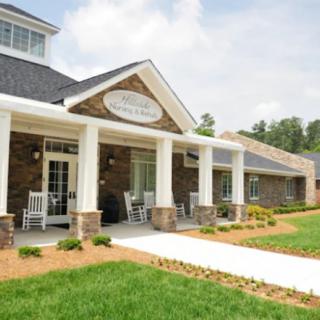

 Vibrant Senior Living: A Comprehensive Guide for Active Older Adults
 When to Transition from Assisted Living to Memory Care: Key Indicators, Steps, and Finding the Right Community
 Assisted Living and Memory Care: Understanding Their Core Differences