
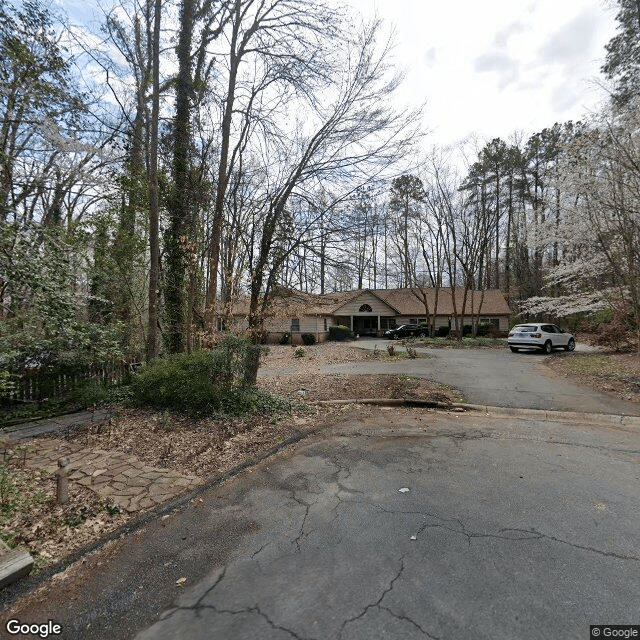
3505 Oriole Place, Charlotte, NC 28269
To contact a resident: (704) 494-8737
For more information about senior living options: (866) 208-4318
The House of Peace Costs & Pricing
The House of Peace offers competitive pricing for its private rooms at $3,750 per month, which is considerably lower than the average costs in Mecklenburg County and the wider North Carolina area, where private room rates stand at approximately $4,417 and $4,425 respectively. This pricing strategy not only reflects The House of Peace's commitment to providing affordable options for its residents but also positions it as an attractive alternative within the local market. Residents can benefit from a high-quality living environment while enjoying significant cost savings compared to similar facilities in the region.
| Floor plans | The House of Peace | Mecklenburg County | North Carolina |
|---|---|---|---|
| Private | $3,750 | $4,417 | $4,425 |
Senior living communities with a similar price nearby
-
About the same
Wellness Watchers - Matthews, NC
$3,700 / month15.2 miles away -
from +$250 / mo

UP at 14009 Thompson
$4,000 to $5,000 / month15.4 miles away -
from -$250 / mo

The Ivey- Adult Day Services
$3,500 to $4,500 / month13.6 miles away -
from -$250 / mo

Karizma Infinities Residential Care Home
$3,500 to $6,000 / month20.3 miles away -
from +$625 / mo

Wellmore of Tega Cay
$4,375 to $6,400 / month24.8 miles away
Overall Review of The House of Peace
Pros
 The family felt they had found something special at House of Peace after touring.
 - They were impressed by the small six-bed size, homey feel, and the dedication of Tracie and Ramona.
- They believe the staff are flexible and adaptive to their father’s changing needs.
- They describe House of Peace as a blessing for their father and their family.
- They note tangible improvements in cleanliness, order, and daily care compared to the previous facility.
- They have heard from outside providers that House of Peace is the best facility they have ever worked with.
- They experience a sense of relief and peace of mind knowing their loved one is being well cared for.
- They characterize the staff as amazing and the level of care as unmatched.
- They regard the home as a hidden treasure for caregivers and loved ones.
Cons
 That facility unfortunately declined and ultimately became unsafe.
Review
This community is best suited for families seeking a deeply intimate, memory-care-focused environment where a loved one with Alzheimer's or other forms of dementia can receive highly personalized attention in a home-like setting. The House of Peace stands out for those who value small‑scale privacy, steady routines, and a serene atmosphere in which caregivers truly know the residents. It is especially appealing to families who want reassurance that staff will be flexible as dementia progresses and that daily care feels like an extension of home rather than a clinical routine. Those needing a large campus, extensive medical nursing, or broad social programming may want to consider alternatives.
The core strength here is the small six-bed footprint, which translates into remarkable attentiveness and a level of hands-on care rarely found in larger facilities. From the outset, the personal touch is evident: a homey feel, a clean, well-kept environment, and staff members who are consistently described as warm, practical, and devoted. The transition into House of Peace is described as calm and confident, with team members guiding families through the process and easing the shift for both residents and loved ones. Such an arrangement matters when memory care demands highly responsive communication and timely, targeted strategies as conditions evolve.
Pros are amplified by a staff culture that prioritizes individualized care. The reviews celebrate the caregivers’ ability to adapt to changing needs, offering timely counseling, guidance, and suggestions that are perceived as precise and reliable. Family members repeatedly credit the house with delivering improvements over prior facilities, cleanliness, orderly routines, and the daily attention that keeps a loved one looking and feeling more dignified. The sense of peace that permeates the home, neatly folded laundry, tidy rooms, and consistently good meals, contributes to measurable reductions in family stress and creates a reassuring daily rhythm for residents.
Beyond the basics, the house supports meaningful engagement and modest independence. Residents are encouraged to participate in activities that stimulate mind and body, while remaining in a setting that respects their pace and preferences. Respite care is highlighted as a particular strength, with families feeling confident that their loved ones will be cared for with the same warmth and rigor during shorter stays. The surrounding neighborhood is described as quiet and safe, reinforcing a mood of quiet dignity that complements the practical care on offer. In short, the environment reinforces the broader care philosophy: comfort, dignity, and a sense of belonging.
A candid assessment must acknowledge that the strongest advantages come with certain trade-offs. The small scale naturally imposes limits on capacity and breadth of services that a larger community might offer, particularly around intensive medical oversight or rapid escalations in care needs. For families whose loved ones require more robust nursing capabilities or a wider array of on-site specialty programs, alternatives with bigger teams and more comprehensive clinical resources may be more suitable. Yet these potential downsides are largely mitigated by the house’s proven responsiveness, the demonstrated ability to tailor plans to individual trajectories, and the consistently high staff involvement that families cite as the bedrock of trust and security.
Bottom line: for families prioritizing a truly person-centered memory-care experience, The House of Peace delivers exceptional value. The combination of a six-bed, home-like setting with exceptionally attentive, flexible staff yields a level of care and peace of mind that is hard to match in larger facilities. Alternatives become relevant when the priority shifts toward broader medical services, larger communities, or more extensive group programming. Prospective families should visit with questions focused on staffing ratios, daily routines, and how care plans are updated as needs evolve. If warmth, personalized attention, and a serene, domestic atmosphere are non-negotiables, this community warrants strong consideration.
 Board and Care Home
 Activities off-site
 Bath tubs
 Beautician on-site
 Devotional services off-site
 Indoor common areas
 Outdoor common areas
 Private
 Respite or short term stays offered
 Charlotte Douglas International (13 miles away)
 Ambulatory care
 Diabetic care
 High acuity care
 Incontinence care
 Kosher
 Adventist services
 Buddhist services
 Islamic services



 Comprehensive Exploration of Living Wills and Other Advance Directives
 A Detailed Exploration of Living Wills and Advance Directives
 Comprehensive Guide to Medicare Coverage for Hospice Care