

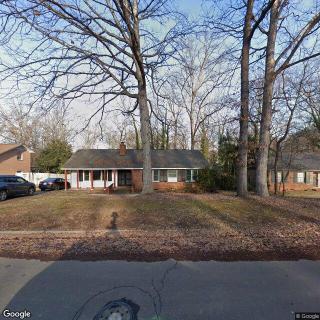
4815 North Sharon Amity Road, Charlotte, NC 28205
For more information about senior living options: (866) 208-4318
East Towne Costs & Pricing
At East Towne, the monthly costs for accommodations present a compelling value compared to both Mecklenburg County and the broader context of North Carolina. For a semi-private room, residents will find the rate at East Towne set at $2,500 - significantly lower than the county average of $4,191 and well below the state average of $3,584. Similarly, those considering a studio can enjoy a competitive price of $3,000 per month, again more affordable than Mecklenburg County's average of $3,941 and North Carolina's average of $4,020. These pricing strategies not only underscore East Towne's commitment to providing accessible living options but also highlight its appeal in an increasingly competitive market.
| Floor plans | East Towne | Mecklenburg County | North Carolina |
|---|---|---|---|
| Semi-Private | $2,500 | $4,191 | $3,584 |
| Studio | $3,000 | $3,941 | $4,020 |
Assisted Living communities with a similar price nearby
-
from -$98 / mo

Carmel Hills
$2,402 / month7.5 miles away -
from +$245 / mo

MerryWood on Park
$2,745 to $4,995 / month6.6 miles away -
from +$180 / mo

Brookdale Charlotte East
$2,680 to $3,925 / month1.1 miles away -
from -$165 / mo

Spring Arbor
$2,335 to $4,260 / month24.2 miles away -
from -$135 / mo

Brookdale Robinwood
$2,365 to $5,768 / month22.7 miles away
Overall Review of East Towne
Pros
 East Towne is described as a great community with caring hearts and professionalism evident throughout the facility.
- East Towne’s staff are protective, responsive, and highly regarded, leading to strong recommendations for the Charlotte Metro area.
- East Towne has renovated, with visitors noting a refreshed, welcoming environment.
- The staff are described as great, friendly, and helpful, contributing to a clean, neat, and comfortable atmosphere.
- East Towne is praised for taking excellent care of residents and helping them feel welcome and settled.
- East Towne is considered good value, with Medicaid acceptance and a clean, well-maintained campus.
- East Towne offers engaging activities and a large dining room, contributing to a homey, spacious setting.
Cons
 The management lies to residents about concerns with their loved ones, offering minimal information to keep them quiet.
- The facility’s phones are never answered, making it impossible for families to reach a resident.
- There are frequent complaints that the kitchen runs out of food and that meals are salted, not suitable for residents on certain diets.
- The staff are described as lazy and unresponsive, with mail for residents often delayed or stolen.
- Pricing is deemed unfair, with wealthier residents paying much more for the same care than those with less money.
- The place feels more like a nursing home than a community and lacks sufficient resident activity.
- There is poor communication, with staff not informing the correct persons about residents.
Review
East Towne Assisted Living in Charlotte is best suited for families seeking a budget-conscious option where warmth and personal attention are prioritized, especially when Medicaid/SSI coverage is a practical necessity. The community is repeatedly described as having caring staff and a genuine sense of heart from leadership, with professionalism evident in day-to-day operations. For families who value a homey atmosphere, friendly residents, and a place that accepts lower-income funding without sacrificing basic care, East Towne can deliver meaningful peace of mind. The recent renovations create a more welcoming public space and improve overall upkeep, which helps residents feel more at ease in their surroundings. Yet the experiences vary widely, and several families report significant frustrations that cannot be ignored when weighing options.
Those who may want to consider alternatives include families prioritizing consistent communication and flawless administrative execution. A number of reviews flag persistent phone access issues and gaps in responsiveness, which can make coordinating care feel frustrating or opaque. If reliable, timely communication with staff and administration is nonnegotiable, other communities with stronger incident-response protocols and clearer accountability may be a better fit. Additionally, families seeking a robust, bustling activity calendar or a dining program that consistently meets varied dietary needs may find East Towne’s offerings more limited, especially on weekends or quieter shifts. Location and a nursing-home-like ambiance are also downsides for some, suggesting a broader market search could yield more vibrant options.
The most compelling pros at East Towne, compassionate caregivers, a sense of community, and lower-cost care, do appear to offset some drawbacks, but not all. Residents and families repeatedly note that staff are kind, approachable, and willing to address concerns when they surface, which matters greatly in daily life. The facility’s willingness to work within Medicaid frameworks can drastically reduce out-of-pocket costs, opening access for seniors who would otherwise struggle to afford assisted living. Renovations improve the environment, and some families report meaningful social interaction, activities, and a positive mood among residents. Those positives can temper concerns about staffing changes or occasional miscommunications, but they do not fully erase the impact of inconsistent service and questioned management practices.
However, the cons carry real weight and warrant bracing for with a clear plan. Several reviews paint a troubling picture of governance, claims of misrepresentation, inconsistent staffing, and a perception that phone calls go unanswered, and even more alarming reports about food shortages, inconsistent meal quality, and late or missing mail. While some residents have favorable experiences, these factors collectively undermine confidence in reliability and transparency. Families should push for concrete assurances: current menus and dietary accommodations, guaranteed mealtime consistency, documented response times for concerns, and explicit procedures for mail handling and nighttime access. Asking to meet the kitchen and dining leadership, as well as the administrator, can reveal how seriously operations are structured.
In deciding for East Towne, families should prioritize practicality over idealism. If budget, Medicaid-accepting care, and a warm, resident-centered atmosphere are the top levers, East Towne can be a solid match, so long as there is a plan to monitor communication, ensure dietary needs are met, and verify that the staffing model remains stable. For those who require near-perfect reliability in phone access, a bustling activity environment, flawless dietary management, and transparent, responsive leadership, alternatives with stronger track records in these areas will likely provide greater peace of mind. A disciplined, in-person evaluation, tour, meal observation, conversation with several staff members, and a candid discussion with the administrator, will reveal which path is the most prudent. In practical terms, proceed with due diligence, align expectations with pricing realities, and insist on concrete, measurable care commitments before making a final commitment.
 120 resident community capacity
 Studio apartments
 Assisted Living
 Activities off-site
 Air-conditioning
 Bath tubs
 Beautician on-site
 Cable or satellite TV
 Computer center
 Devotional services off-site
 Dining room
 Fitness room
 Fully furnished
 Gaming room
 Garden
 Ground floor units
 Handicap accessible
 Housekeeping services
 Indoor common areas
 Kitchenette
 Laundry
 Move-in coordination
 Outdoor common areas
 Private bathrooms
 Resident parking
 Respite or short term stays offered
 Restaurant-style dining
 Small library
 Telephone
 Wellness center
 Wi-Fi/high-speed internet available
 Charlotte Douglas International (11 miles away)
 Community operated transportation
 12-16 hour nursing
 24-hour call system
 Ambulatory care
 Assistance with bathing
 Assistance with dressing
 Assistance with transfers
 Diabetes diet
 Diabetic care
 Incontinence care
 Medication management
 Mental wellness program
 Special dietary restrictions
 Art classes
 Catholic services
 Concierge services
 Day trips and outings
 Jewish services
 Karaoke
 Live dance or theater performances
 Live musical performances
 English





 Choosing the Right Senior Care: A Detailed Exploration of Assisted Living and Nursing Homes
 Understanding the True Cost of Assisted Living in 2025: A Comprehensive Guide
 Understanding Medicaid Coverage for Assisted Living: A Comprehensive Guide